


For years, the prevailing narrative around the UK economy has been one of stagnation, uncertainty and structural underperformance. Yet beneath the doomy headlines, the data – and what we’re seeing on the ground – tell a more upbeat story.
Citi’s UK Economic Surprise Index, which measures whether UK data is over or undershooting analysts’ expectations, is back in positive territory. Economic growth is tepid, with UK GDP rising by 1.3% in 2025 as whole. Nevertheless, that’s better than 2024’s 1.1% rise despite a drop in the number of payrolled employees last year. Could this hint at long-awaited improvements in the UK’s perennial productivity problem?
And the UK’s private sector is growing at a much more encouraging clip. In January, the composite PMI survey, which measures UK manufacturing, services and construction sector activity, rose at its fastest pace since April 2024.
Foreign direct investment (FDI) flows into the UK are improving sharply. A recent McKinsey report notes that the UK is now the third most popular destination worldwide for greenfield FDI, behind only the US and India. I was pleased to see the report highlighted the UK’s strength in pockets of advanced and high-tech manufacturing.
A rewarding road trip
I saw this strength in action on a cold, wet morning recently when I headed to Cardiff and Bristol to visit three key players in the area’s impressive high-tech industrial landscape: Melrose, Oxford Instruments and Renishaw. (We own both Melrose and Oxford Instruments.)
Trips like this are a terrific way to get right under the hood of the businesses we invest in. You get to meet management in situ and to quiz them about anything and everything. As well finding out more what the businesses do, you find out just how they do it. And you get a tangible sense of each business’s pulse – its culture, efficiency and sense of purpose.
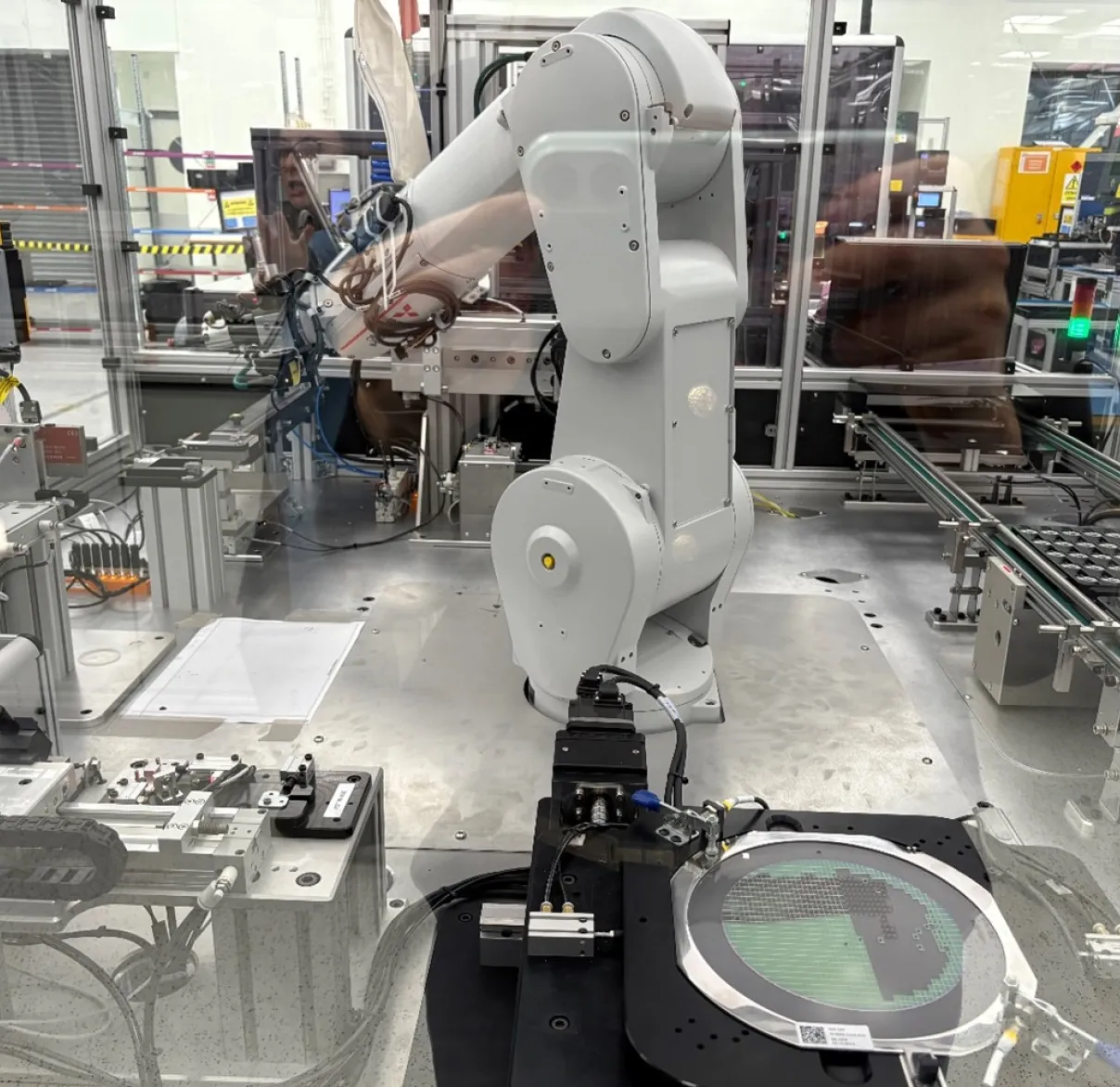
Melrose is an aerospace engineer, producing flight-critical engine components and aero-structures (wings, fuselages, etc). Here, I got to see specially designed robots working to speed up production of parts for the newest passenger aircraft.
And I also got a fascinating look at ‘additive manufacturing’, where parts are ‘printed’ or layered rather than carved out from blocks of metals and other materials. That means there’s much less waste and individual parts can be more intricate. Safety regulations make for a long and rigorous evaluation process when introducing new parts into the aircraft industry, but additively manufactured parts are now starting to be used across the industry.
As its name suggests, Oxford Instruments designs and manufactures high-tech scientific instruments. It was the first commercial spin-off from Oxford University and its core purpose is to bridge academic research with industrial applications. Here, I watched a tabletop spectrometer analyse cancer cells at pace. I also got to see minerals being tested and their constituent parts visually stripped out to understand what rare earths they may contain.
Renishaw specialises in high-precision metrology (measurement) tools and sensors. It has robots hard at work on complex manual tasks, while also integrating new machinery into its production processes to make them more efficient.
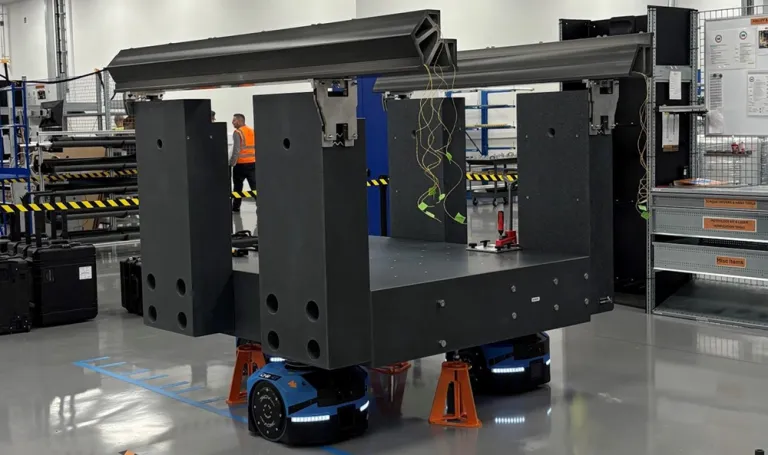
The three blue machines in the photo below replace the need for a forklift truck. They can carry the granite instrument around the factory floor without needing people to marshal the process or for instruments to be inspected as they’re moved from one place to another. Small, but mighty.
Melrose, Oxford Instruments and Renishaw are global businesses which generate most of their revenues from international markets rather than here in the UK. The theme at all three was not so much that demand is accelerating, but that they’re making important efficiency gains to contain their costs and deliver at pace. Investment in tech is central to these gains.
Many manufacturing processes are being rejigged to materially enhance productivity. These changes aren’t intended solely to improve in-house operational efficiency. They’re also trying to help their customers make productivity gains too. That can involve sizeable research and development commitments. But it can have a big impact on order pipelines when successful.
Firms like Melrose, Oxford Instruments and Renishaw are redefining what it means to make things in the UK. They balk at high-risk ‘transformational’ initiatives. Instead, they’re firmly focused on targeted, pragmatic and high-bar investment to unlock incremental gains.
To my mind, that kind of approach opens up a clear path to potentially very attractive value-creation.