
Leading the charge in EM tech
For much of the past decade, global equity markets have been driven by a small group of dominant US technology companies - the so-called Magnificent Seven. Their scale, innovation and earnings power have shaped capital flows, benchmark returns and investor behaviour.
But outside the US, a different set of tech leaders in China, India, South Korea and Taiwan has quietly been compounding value. These companies’ multi-decade growth strategies are shaping the global AI buildout, while dictating how cutting-edge tech is distributed to and consumed by billions of people in EM. In short, we believe they occupy irreplaceable positions in the global tech infrastructure.
We group these companies under the acronym START: Samsung, Taiwan Semiconductor Manufacturing Company (TSMC), Alibaba, Reliance and Tencent.
While these companies may benefit from long-term trends, outcomes are uncertain and investors could get back less than they invest—particularly in emerging markets, where risks can be higher.
Taken together, they offer investors a compelling alternative route into structural tech growth - one that combines powerful earnings momentum with significantly lower entry valuations than the Mag7 (Alphabet, Amazon, Apple, Meta, Microsoft, Nvidia and Tesla).
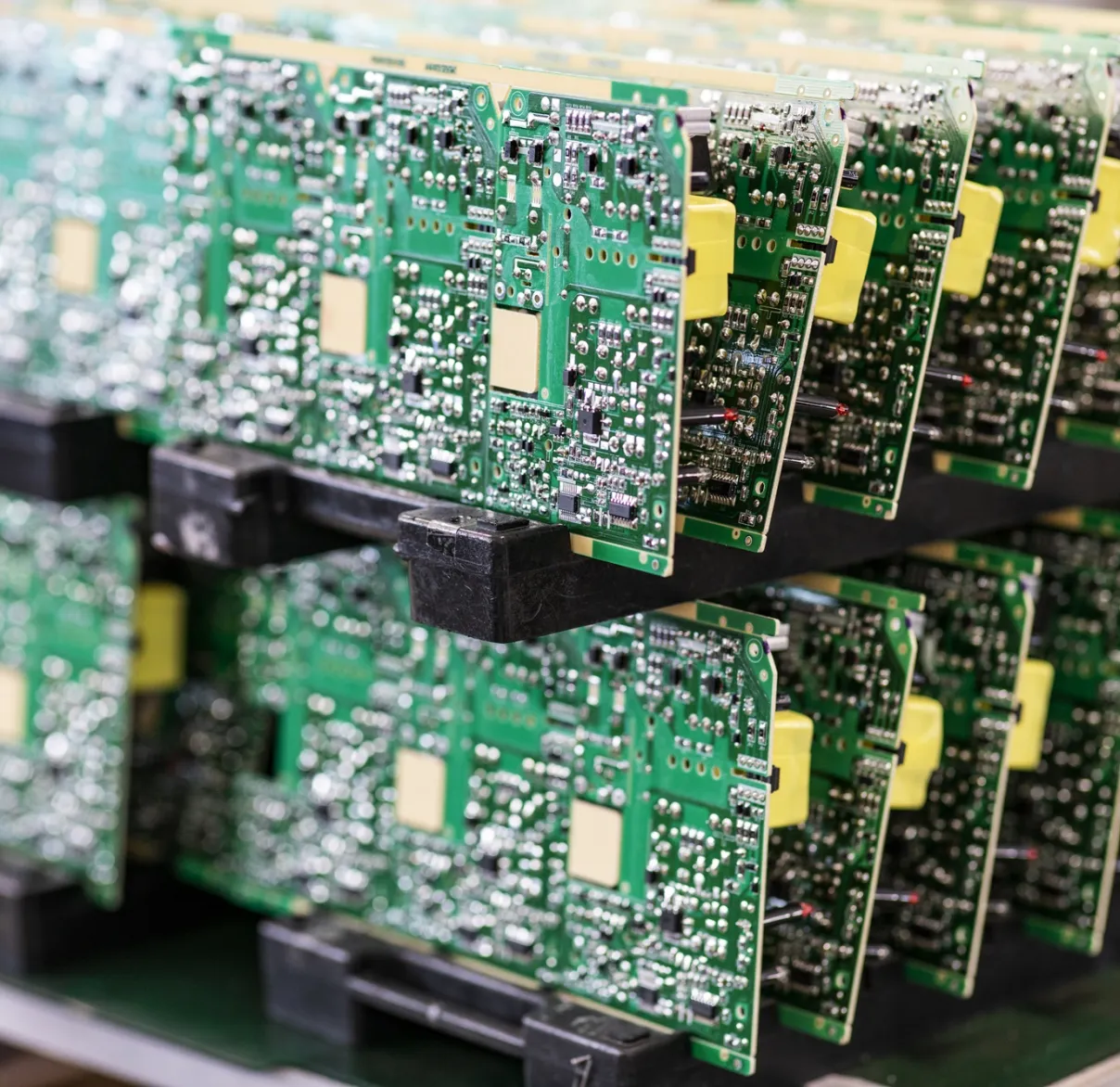
Korea’s Samsung and Taiwan’s TSMC are in the chip business – specifically, they manufacture the chips needed to power AI. TSMC produces around 90% of the world’s high-end chips, while Samsung is the world’s leading memory chipmaker.
China’s Alibaba operates the biggest e-commerce ecosystem in the world and is Asia-Pacific’s largest cloud infrastructure provider. Through its Jio subsidiary, India’s Reliance owns the backbone of the country’s digital economy. And China’s Tencent operates WeChat, the ‘super-app’ that bundles together messaging, social networking, e-commerce and digital payments for around 1.4 billion people.
What unites this fabulous five is not their geography but their function.
Each controls a key bottleneck in global and EM tech - whether that’s advanced chip manufacturing, high-bandwidth memory, platform-level consumer lock-in or mass-market digital distribution. START’s importance is, therefore, both global and local.
The Mag7 is largely concentrated in global tech’s software and application layer, whereas the START group has commanding positions in its production and distribution layer. Both layers are essential. And both are benefiting from the AI revolution. But the START basket is trading at more than a 50% discount to the Mag7 on a growth-adjusted basis.
As the global profit pool has grown ever more dominated by a narrow group of US mega-caps, especially the perceived beneficiaries of AI within the Mag7, this would seem to sharpen the case for delving more deeply into the global tech stack and looking beyond the US opportunity set.
More growth, cheaper prices
Over the 12 months to 31 May 2026, the START basket has delivered a total return of approximately 120% versus the Mag7’s 54%. And those higher gains have been accompanied by less systematic risk: the START group’s beta over that period stands at 1.17 versus the Mag7’s 1.43.
Yet the START basket is trading at a fraction of Mag7 multiples. On a 12-month forward price/earnings growth (PEG) basis, the START basket currently screens at 1.3x versus the Mag7’s 2.8x.
This sizeable discount reflects, among other things, the higher geopolitical/regulatory uncertainty involved in doing business in EM, the START group’s different monetisation profiles (their skew towards higher user volumes rather than higher average revenue per user (ARPU)), plus liquidity constraints.
But the START group’s steep valuation discount to the Mag7 is only part of the story.
The other is relative earnings momentum. While the Mag7 have benefited from strong investor flows and buoyant sentiment, the START firms’ rally over the last year or so has been underpinned more directly by exceptionally powerful earnings growth.
The START stocks’ earnings upgrades for 2026 are outpacing their share-price performance, meaning the valuation opportunity is getting more attractive even as the stocks’ prices rise.
That’s an unusual and powerful dynamic. Strong price performance typically drives multiple expansion - stocks get more expensive. But in the START basket, earnings estimates are being upgraded faster than stock prices are increasing, ensuring that forward price/earnings (P/E) multiples are compressing. The stocks are going up, while simultaneously getting cheaper.
Tech companies are expected to spearhead overall EM earnings growth in 2026 and tech is now the largest sector in the MSCI EM Index. Recent index snapshots show that tech now makes up roughly one-third of MSCI EM. That’s about the same as tech’s weighting within the S&P 500, representing a huge shift in the index’s make-up over the last 10-15 years.
The state-owned banks and super-cyclical energy and commodity producers that once dominated MSCI EM have made way for higher value-add, higher margin tech firms, including world-leading businesses with significant scale.
This shift from capital-intensive, state-owned firms to high-margin tech leaders shows how EM tech stocks have transitioned from relatively cyclical investments into true growth stocks. We believe this shift has improved the fundamental quality, risk-adjusted return potential and overall ‘growthiness’ of the EM equity opportunity set.
Headlines versus critical infrastructure
The START thesis is not a trade. It is a structural investment case built on five companies that own the digital production means of the 21st century. They fabricate the chips, manufacture the memory, operate the networks, run the cloud infrastructure and control the platforms through which billions of people live their digital lives.
The Mag7 gets all the headlines, but START is getting the capex, the patents, the spectrum licences and the fabrication capacity. These are companies underpinned by physical, regulatory and network-effect barriers that take years - sometimes decades - to build.
As AI scales from experiment to infrastructure, as EM digital economies mature, and as supply chain diversification reshapes global manufacturing, we believe that it’s the infrastructure layer - not the application layer - that may offer the most compelling risk-adjusted return potential.
In our view, START is not just a complement to Mag7 exposure. For valuation-conscious investors, it could prove the more compelling risk-adjusted bet.
The infrastructure has been built. The opportunity remains. And the price of admission looks highly attractive.
This is an excerpt from the Rathbone Global EM Equities team’s report ‘A Magnificent Opportunity? The START stocks leading the charge in EM tech’. You can read the full report here.