

Article last updated 23 February 2026.

Our 6 UK-based stock-picking funds with investments in the UK and abroad
Our 4 bond funds offering different risk levels, returns, and markets
6 genuinely active, globally focused, directly invested strategies
Our 7 sustainable and ethical funds come in equity, fixed income and multi-asset varieties
Invest in our funds by contacting us directly or using a third party platform
Search our full library for information about a specific fund
Search our full library for information about a specific fund
See the assessment of value reports for our funds
Our target market information can help you meet new Consumer Duty requirements
TCFD Reports from Rathbones Asset Management
Our approach to governance, risk management, and transparency under FCA rules
Search our A-Z for definitions of industry terms and acronyms
Listen to the monthly news and views from the Rathbone multi-asset investing team
Read market commentary from our fund managers
Meet the team at Rathbones Asset Management
Our responsible investment principles ensure that the companies we invest in operate in the long-term interests of shareholders
Read the latest new from Rathbones Asset Management
Get in touch with the team
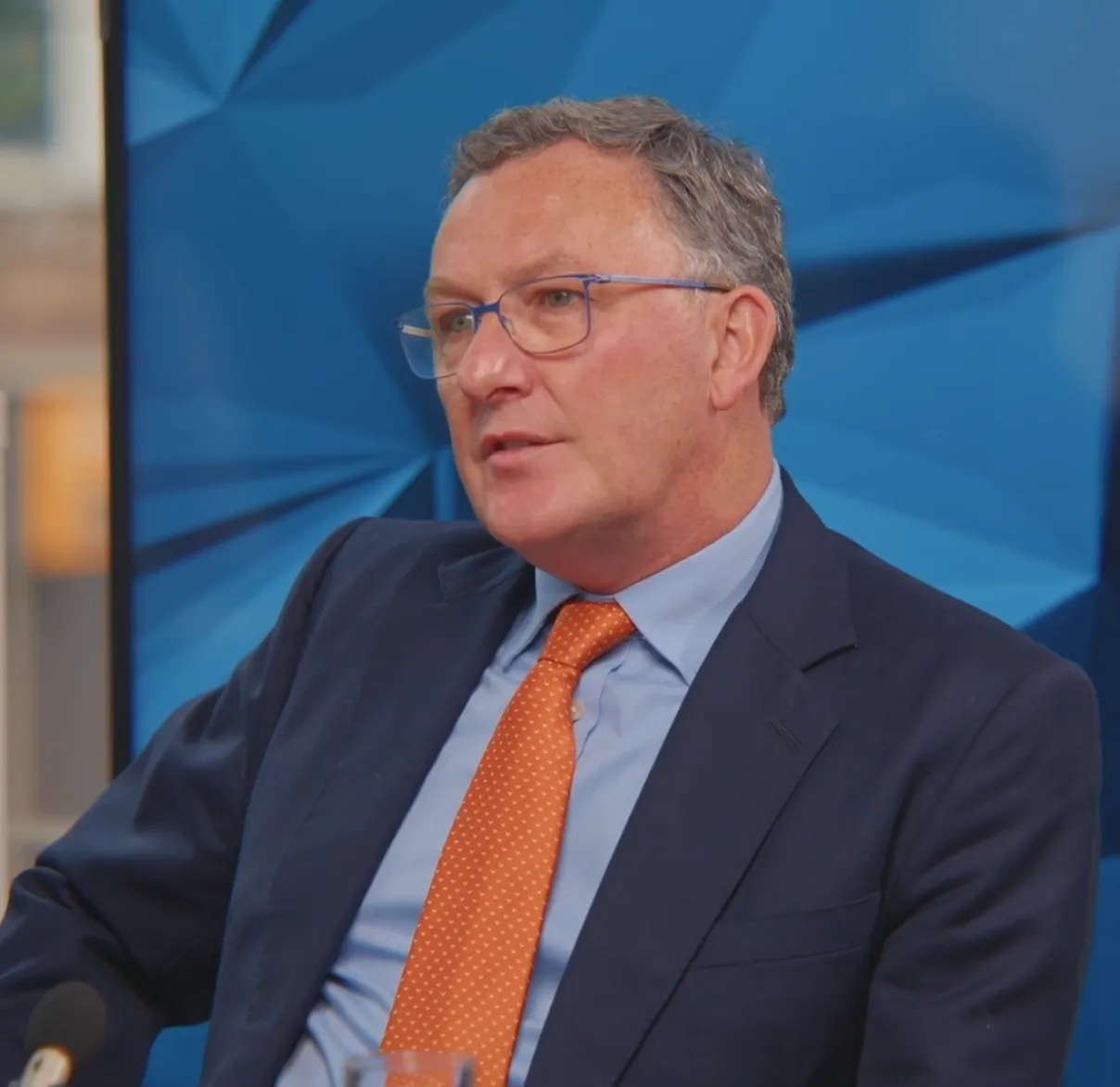
Watch Tom Carroll, CEO of Rathbones Asset Management and co-panellists discuss the future of active management and what the industry can do to attract the next generation of investors.
Article last updated 23 February 2026.
Companies represented: Gresham House; Rathbones Asset Management; Lazard Asset Management
Participants: Mark Colegate (host); Tony Dalwood; Jeremy Taylor; Tom Carroll
Mark Colegate: Hello and welcome to Asset TV’s CEO Roundtable with me, Mark Colegate. There is so much changing in the world and world order at the moment. What does that mean for asset managers and their business models over the next three to five years? Well, to discuss that and a number of other topics, I’m joined here in the studio by three UK CEOs. Let’s meet them. They are Tony Dalwood, CEO of Gresham House. We’re also joined today by Jeremy Taylor, CEO for Lazard Asset Management for Europe, and by Tom Carroll, CEO for Rathbones Asset Management. Jeremy, let’s start with you. I mentioned this world where there just seems to be a lot of change. Globalization feels like it’s going to reverse. Pax Americana is fraying around the edges. A lot of those certainties we’ve all had for the last 20, 30 years feel like they’re not quite so certain. How do you then think about that in terms of what that means for your business in the years to come?
Jeremy Taylor: Look, I mean, we should always start by thinking about it from an investment perspective. And I guess I’d highlight two areas. First of all, regional investing. You know, the US has dominated market performance for the last decade plus. And it’s really time—2025 was a pivotal moment where US equities weren't the top‑performing asset class. So we’ve seen big allocations to emerging markets, Japanese equities, and it’s really time for investors to think about their asset allocation. The second point, which we’ll probably all discuss, is inflation. And inflation and people’s perceptions of inflation are going to start to change over the next few years. You know, we’ll talk a bit about changes from US administration, but supply shocks across the globe and, you know, changing consumer perception in Japan even, are, you know, really moving, you know, views around inflation, and that should point us more towards real assets over time.
Mark Colegate: Thank you. Tony, what are your thoughts? Not least because Gresham House is probably a bit more of a boutique, a bit more of a private market specialist than perhaps your peers today.
Tony Dalwood: I’d like to position it as such certainly, and I think the aspect that we’re focused on is increasingly global. I think if I go back to the ’90s and the early mid‑’90s, and we look at asset allocation there for if you were a UK investor, you had 60 to 70 percent in UK equities and then a bit in bonds, a bit in real estate, no private markets at all even to the year 2000. Globalization, particularly driven by consultants in the ’90s all the way through, has led to global equities becoming the theme effectively. And then starting in the year 2000, we had very much people beginning to think about private equity. That’s now evolved to being 5 to 15 percent of people’s portfolios. And then 10, 15 years ago, more private classes coming in, infrastructure, and then people’s sophistication and understanding has meant that people have gone not just PE or infrastructure, they've gone core plus, value add, they've gone, “I want mezzanine private equity, I want venture capital, I want mega buyouts, I want healthcare buyout specific, I want US North mid‑market buyouts.” Point being is the allocations have grown considerably, the sophistication and complexity has grown as well. And as part of that, people have had to start to understand these new asset classes. But more importantly is what they can do for your portfolios. And people are beginning to get access and an understanding that you can help portfolio construction to have these asset classes, particularly if you’re a long‑term investor. People talk about long‑term, consultants particularly talk about long‑term, and unfortunately then start talking about it on three months, every three months saying, “How’s your quarter been?” But they do still want people to talk long‑term, and that’s absolutely a characteristic of private markets because you don’t want liquidity every 3, 6 and 12 months. And that’s where it led to the next evolution I think of private markets where people are typically up as a whole now 15 plus percent, 20 percent, some are up 50, some in endowments, some let’s call them sophisticated sovereign wealth. And new asset classes are beginning to occupy that space in addition to infrastructure, private equity and so on, that likes what we’re in, natural capital, which includes forestry, energy transition, which is substantial. And that’s now intrinsically part of—you’ll see that grow literally over the next 5 to 10 years as people begin to understand the characteristics of that. And of course, they do have other benefits whether they be sustainability benefits or regional benefits.
Mark Colegate: Okay. Thank you. And Tom, what are your thoughts?
Tom Carroll: I think the way I look at it is, I mean there’s two aspects to it. One is the impact on long‑term returns. And, you know, you only have to look at what’s been happening for the last 20 years, you know, since China joined the World Trade Organization. I think estimates are that that global trade has added quarter percent to half percent to global growth per annum since then. So if we start to see a reversal of that, then I think that will have a long‑term impact on returns. And going back to the point about asset allocation, I mean I think, you know, obviously private assets from your perspective, but from my perspective, you know, we’re looking at how much has been invested in the US and you can see, yes, it’s been the best‑performing market. And I’m not quite old enough, but back in the late ’80s Japan was 45 percent of global indices and look at it now, 4 or 5 percent of the index. So these things do move in cycles, long cycles, but they do change. So I do think we need to think about what are the opportunities outside of the US, developing more of regional expertise. And it’s no coincidence that the two most recent teams we’ve brought into our business are an Asian equity team and a global emerging market team because I think we need to broaden our exposure, make sure clients have, you know, access to expertise across the globe and not just focus on the US because it’s the biggest market and it’s been the safest place to invest for the last 20 years or so.
Mark Colegate: And we’ve talked a lot perhaps more about sort of equity markets, but if you look at the bond markets, this is probably a slightly stereotyped view, but if you talk—the view from the economists and actually from a lot of your strategy—the industry strategist at the moment is: there’s a lot of debt out there, long‑term that’s not good and they keep piling it on, but short‑term it’s great for GDP and returns. But your clients must be investing not just for 2026, but till 2035, 2050 or beyond. So how do you think about, you know, the short‑term sugar rush versus what you may have to have sorted out for them on a longer‑term Tony.
Tony Dalwood: I think it’s a critical point. And I mean government debt around the world is—has never been at these levels apart from when post‑wars, Second World War, First World War type of thing. And that—and that’s quite an important point. Consumer debt actually, retail debt is much lower and it’s quite interesting that those numbers are lower and that’s why you’re seeing perhaps consumers still being quite resilient or robust and house prices around the world still relatively robust. But I think your point is absolutely valid. And—and if we’re not careful, there’s so much government involvement in society that they are beginning to crowd out private sector capital. And that is critical. Yes, governments are there and public capital to facilitate where the market doesn’t work, but not to replace it. And where we’ve got—because it has knock‑on effects to employment, to wages, to—to areas of entrepreneurialism, growth capital, it’s really significant. So I think if there was one theme, there’s many themes, but one theme, one is the crowding out of private capital and we have to be really careful.
Mark Colegate: Thank you.
Jeremy Taylor: I mean, fixed income should always be part of your diversified asset allocation. We spent a long period of time with a ZIRP policy where there was zero return in fixed income. So you print 5 percent, you know, returns, then as a—at a low risk level, they should be part of your makeup. But ultimately, we should provide solutions to clients where they need to asset allocate. And, you know, you've got a whole series of risk profiles that we should deliver to, and that’s where, you know, the fixed income component comes in.
Mark Colegate: Thank you. And Tom, just coming back to the inflation point. Um, on the one hand if—if the world decouples and people start to stockpile things like commodities, you can see prices going up, that’s inflationary. But on the other hand, you’ve got AI which we’re told is going to be, well, fantastic, but part of the fantastic story is it’s going to be deflationary. You got a sense which—whether the inflation bit or the deflation bit...
Tom Carroll: It’s so hard, isn’t it? Because, you know, everyone—we can see what’s happening in the market at the moment, everyone’s trying to grapple with what are the real implications of AI over the medium to longer term. Um, and clearly you’ve got a lot of disinflationary forces there. And as you said, the other geopolitical trends are inflationary. So, you know, my feeling is that we sort of settle at inflation rates slightly higher than—well, higher than we’ve had over the last 20 years, but still, you know, I think we’re in a reasonably robust place. Um, I guess the question is, with that sort of mildly more inflationary outlook, are you being paid enough to hold fixed interest securities at the moment? I mean, the spread, particularly in corporate bonds, is—is pretty tight right now. You know, you’ve got much more well‑informed people such as Jamie Dimon, the Governor of the Bank of England, warning about the impending crisis in private credit. And then going back to your point, I mean I think—I don’t know where the tipping point is, but across OECD countries I think we’re at 85 percent of GDP...
Tony Dalwood: We’re 100 percent.
Tom Carroll: Yeah, US is well over that. So at what point do bond markets say, “Enough is enough,” and—and you see that sort of impact on—on bonds. So, you know, love the idea we can now get a yield on bonds and yes, they should be part of the portfolio, but they’re not the safe place that we would like to sort of balance them against equities at the moment.
Jeremy Taylor: It’s interesting coming back to the inflation point, there are really kind of two changes in the US which have started to—will start to feed through. First of all, the impact of tariffs on a supply shock basis. You know, corporates didn’t change their pricing overnight, but that pricing is likely to breed—bleed through into the consumer. And then secondly, with all the focus around energy, energy transition, energy security, and the tight electricity market in the US, we’re likely again to see that push energy prices up over time. And that’s a core component of inflation which feeds through to the consumer. So, you know, we’re likely to see slightly higher inflation going forward and, you know, against your asset allocation, yes, probably reducing fixed income, increasing real assets should be part of that discussion.
Tony Dalwood: And I agree with that and I think it’s something that people haven’t spent much time on in the last 30 years because of inflation being such a—at low level. But with the recognition that it has become maybe built‑in over the next 10, 20 years at much higher relatively to where it was historically, inflation‑linked assets will become more relevant. And of course, valuation of those inflation‑linked assets is going to be key, and real assets, as well as private assets, will play a much greater role in people’s allocations as a result of being able to get that inflation linkage.
Mark Colegate: But Tony, I suppose one thing in those private assets is people often need to borrow money to buy them in the first place and so forth. So just coming back to this point about government debt, when there is leverage in a system, particularly in private markets, how do you make sure that you don’t—you and your investors don’t get caught out by second or third order events? I mean, I suppose, you know, you might say we’re in private, we’re in private credit, nothing to do with government bonds, but if something goes wrong in the government bond market, you might sort of think it’s amazing how quickly it did show up in private credit and we didn’t realize there was this connection.
Tony Dalwood: Two points. One is if you take forestry, typically you don’t have a huge amount of leverage. Some people do choose to do it, but we typically don’t. But I think importantly is you say to do a lot of assets, private equity particularly, there’s a significant amount of leverage and the underwriting case needs to be robust. But if the scenario you talk about, which is government defaults or government risk, I mean there’s no hiding place. I mean you’re into gold, you’re into commodities. And I think we’re beginning to see a bit of that. And people haven’t made the linkage between some of the government debt and the fact that gold’s going through—and other metals are going through the roof, but you’re seeing oil now actually move a bit. So it’s possible, probable if the scenario you—which is not a great one—you’ll see everything—all bets are off on all assets there.
Mark Colegate: But it doesn’t have to be an absolute disaster. I mean you could argue the US government defaulted in the early ’70s when it said it’s not going to pay you back in gold. There was a nice way of doing it, you know, it—they had their crisis, but it was inevitable...
Tony Dalwood: Yeah, but you believe at the end of the day they were backstopped, they could do it. If the UK said that, that would be I suspect and if you took Argentina said that, you’ve got a different outcome because people know what that type of scenario plays out.
Mark Colegate: Okay. Just in terms of things like real assets like timber, I’ll get a sense from Tom—come to you first. I mean we’ve lived in a world that’s more about sort of industrialization and moving on to all sorts of exciting digital things. To then say to people we’re all heading back for the land, I mean is that quite a tough sell to investors, do you think?
Tom Carroll: No, I think clients want that sort of exposure. I think it’s just trying to get the exposure has been the issue. I think when we talk to clients about what would they like to see from us—look, we can never provide that access for them, but we’re conscious that, you know, as we’re talking about the long‑term asset allocation opportunities, there is definitely merit in looking at private assets as part of a long‑term portfolio for certain clients. We can't do it, but we will definitely partner with others who have got the expertise in that area. Um, and I just think, you know, it’s again getting this balance in portfolios is right. You know, I find it astonishing that we could sit here and say if you’re building a portfolio from scratch, you would put 80 percent into one asset class being US equities and within that 50 percent of it could be made up of 10 stocks. It just doesn’t make any sense. So diversification, I know it’s the oldest theme in investment, but it is so important. And I think in that sort of scenario, private assets, whether it’s physical or whatever, make a huge opportunity for clients to sort of balance their portfolio and get better long‑term returns.
Jeremy Taylor: I mean, I’ll make the point because we could help you out. We run a listed infrastructure strategy, actually just for 20 years this October. And you know, that team searching the world to find a universe of about 120, 130 stocks where the asset base has a direct link to inflation. It’s a return on capital based asset base and really by analyzing that narrow universe, you can through a listed portfolio select 25, 30 stocks that have real revenues and real returns. And it’s been a—actually it was a strategy which was so successful 10 years ago we actually closed it. Um, closed it to new separate accounts. We obviously kept the funds open. And we’ve just started marketing it again in the last two years because we see, you know, this inflation point picking up. And it’s a great way to help again diversify your portfolio as one of those components.
Mark Colegate: But for you as asset managers and you’ve touched on this Tom, this idea of sort of partnering with people if you haven’t got the in‑house expertise. I mean, do you see something like Rathbones as a business that could partner with somebody and sort of how exclusive would you want the partnership to be? If they had an expertise that you—at that point they’re—your sell is that you’ve got distribution they haven't got.
Tom Carroll: We’ve got distribution, we have, you know, within the wealth business within Rathbones there’s clearly a—what is it, 120 odd billion of assets who want over the longer term to have exposure to private assets, infrastructure, whatever it is. The question, you know, do I want to build that in‑house? You know, I think now is too late unless we go and make a major acquisition to sort of, you know, interesting what Schroders did today, but you know, it’s interesting how do we bring it together without me having to sort of make a major acquisition or build it in‑house. And it is about partnering with firms. And I think it’s a strategic partnership rather than just saying, “Right, I’m going to buy your fund this week and if it doesn’t work, I’ll sell it.” It’s much more about trying to build this long‑term partnership. So that’s the approach we’ve been engaged in for the last 12 months, just considering how we best do that.
Mark Colegate: And Tony from your perspective, obviously you’ve got some of these alternative assets, you distribute them yourselves. I mean, as Gresham House, what do you think about partnerships?
Tony Dalwood: I think clearly over the whole of history is around relationships and solutions and then partnerships. And we’ve had them over time, one of our greatest success was where we had a partnership with one of the local government pension schemes, which was Berkshire, when we were listed, because we took ourselves private two years ago. And that worked very well for them in terms of them wanting to get access to local investment in the UK in infrastructure‑like investments. And that worked very well for them, that was a great partnership. And I would encourage those type of solutions particularly within private assets because you want to be able to tailor a solution. The trickiness is always, you know, how do you work together, the chemistry, and then also the economics around that. And when you’re in private assets, they are 10, 20 year style arrangements, so you must make sure you've made the right partner. But it is really interesting because some of these things are now coming right up the agenda in terms of allocation to these new areas. And you’re seeing like the pools in the UK, you’re seeing the Aussie super funds, they are beginning to select partners. And we—we’re right in the middle of those things and we do want to partner with people.
Mark Colegate: What’s the difference between a partnership and just a series of transactions?
Tony Dalwood: Alignment. If you want one word, it’s alignment. You’ve got to try and get aligned. A transaction you tend to have somebody on the other side or around the side of the table with you, whereas if you’re a partner, you’ve got a long‑term alignment around the economics, the outputs that you’re trying to achieve and then when you get to problems to work with those people shoulder to shoulder.
Jeremy Taylor: I always say partnerships are defined by what happens when things go wrong. And that’s your point about alignment. I mean realistically, you know, we build solutions for clients, we look at risk management, but over a period of time, you’re going to go through different market cycles and you’re always going to go through a stress point at some stage. And a partnership really rings true when you can help a client evolve that strategy and ensure that it fits their requirements over time. A series of transactions is just buying and selling funds.
Mark Colegate: But thinking through from this, do you have any—anybody got any qualms about this private markets? I mean we’re starting to hear phrases like democratization of private equity, everybody should have this stuff. The Canadians have got 30 percent of their pension funds so we should. I mean I can see the sales opportunity, but could it go wrong? What egg could it leave on the face of either individual firms or of the entire industry?
Tom Carroll: As the listed specialist I guess, I’m probably going to be more cynical than the others. Um, I think it really comes down to transparency. Um, you know, we hear a lot about a lot of assets, particularly in private credit, chasing fewer and fewer deals, less due diligence being done, margins being tighter. So and yet we don’t really know what’s in a lot of these deals. So again, it’s concerns over that. So I think my concern is more short‑term, we’ve had a good run, is now the time to be putting a lot of clients into private assets generally? That’s different to sort of taking a long‑term view on infrastructure or something like that, which I think is different. Um, but I have no doubt over the long term it’s the right thing for clients to have some exposure to these, but I think it’s just creating the balance and making sure people can manage the liquidity aspect versus the potential long‑term returns.
Tony Dalwood: I would obviously agree. I think the fact is what applies to public markets applies to private, how you value things, the underwriting case, your investment process, the robustness of and the capabilities of the people. Critical in private as well as public. The overlay occasionally of course is the leverage. And in private equity often people will cite that as being, you know, that’s how you get your returns. Actually the analysis suggests that 50 percent of the value comes through operational improvements and so on, but there is more leverage. So therefore when things do go awry and earnings do disappoint, they—it tends to have more dramatic effects quicker. So I do think leverage is relevant. However, being in the private markets you do have the opportunity to put things right over a medium‑term basis. When you’re running a listed company, you don’t have that opportunity, you have—it’s very transparent and it’s—you don't always have the opportunity to make investment for the long term, to do right thing for the long term, because you’ve got to do quarterly calls, quarterly numbers you’ve got to hit, and that’s a challenge.
Mark Colegate: So if you didn’t have to do quarterly calls in public markets, what—what do you think would be the right number of times a year or a decade to report public company that would give the management long enough to have a long‑term view, but not such a long‑term view that they could go horribly wrong you had no input. It’s like being a football manager, I mean you’re here for the long term but then if you don’t get three results that are right you’re out.
Tony Dalwood: Look, you definitely need to be able to hold yourself to account on a regular basis. Clearly annually, I think six‑monthly is reasonable, but the depth of requirements from six‑monthly, people should recognize that, you know, you want the C‑suite of people that are driving the business to be focused on the business. And it’s ironic when things are going well the shareholders and the investors, they just don’t want your time, and actually that’s probably a good time for them to get involved and start talking. And when they don’t—when things aren't going so well they take up all your time and you haven’t got the time to address the value that you need, and that’s the time they should be stepping back and letting you get on with things. But I think there is no right answer to that at all. Um, but certainly the public markets, some of the issues around the public markets, we’ve had a halving in the number of companies in the public markets in the last 10, 15 years in the UK, particularly on AIM. Um, and there’s a reason behind that or several reasons behind that and one of them is the increasing short‑termism of the public markets across the globe.
Mark Colegate: Well, if we focus in on asset management as a sector, and Tom you referred to the news out as we’re speaking this morning that Schroders and Nuveen are looking at coming together. So Jeremy, what do you think the future for UK asset management firms is over the next three to five years? Is it consolidation?
Jeremy Taylor: No, there’s no question about it, the last five, six years have been very tough for active management. They've been tough partly because of the point about US equities and the concentration around US equities, and that’s made investment performance challenged in that area of the market. I think there was a statistic that 92 percent of active managers in US equities underperformed. Um, but realistically, you go through cycles and this is just a cycle in concentration around the market that’s had impact on broad asset managers. 2025 was a pivotal year for us. Um, we took our European business through $100 billion for the first time and raised over $25 billion last year in particular. Um, if you look at why where that came from and how it was driven, it was really a case of shifting from, you know, very concentrated global equities or US equities and starting to allocate elsewhere around the world. And I think that movement just reflects the shape of the underlying markets. So coming back to your point, yes, it has been challenging for the last five, six years, but I actually see quite a positive outlook going forward. Um, I don't think about scale in terms of products, not scale in terms of the overall business. You know, if you have a billion dollar plus product, then you’re starting to generate scale. You know, what Schroders and Nuveen are doing today is entirely up to them, but I think asset management businesses can grow through good performance, good investment performance for clients, and that’s fundamentally what we should focus on as asset managers.
Mark Colegate: But do you have any concerns at a different level, the investment bankers are saying, “Well, everybody else is a lot bigger than Lazard, you really got to do something dot dot dot.” And for Lazard, we could substitute pretty much the name of any other asset management company and, you know, a trillion in assets is the new 500 billion AUM and off it goes.
Jeremy Taylor: We’ve managed 175 years plus so far, I think we’ll carry on.
Tom Carroll: I think there is—there are advantages to the vertical integration model because, you know, I think we all know the pressure that’s coming or is—has come but is going to continue in terms of end cost to client. And the more we can reduce that for them while at the same time, you know, we’re very focused on active management while still giving them the best of our investment skill set is really important to us. I guess when I look at the active debate, I mean I think we do seem over the last couple of years to have abandoned the active is better than passive and I think that’s sensible because I think active is here to stay, is going to continue to grow. So we’ve got to really think about why do we have a position as active managers, where can we add value? And it really comes back to thinking about: are there asset classes where we can systematically add value? Um, and I think that’s again going back to my point, you know, that’s why we brought in an Asian team recently, brought in an emerging market team recently, our fixed income propositions we’re beginning to broaden them up because again they’re all areas where we feel we can add a lot of value over index funds. And then we’re looking through our range of funds and thinking which of the, you know, do we genuinely have people who’ve proven long‑term skill in adding value? And again, you know, talk about funds we have, there’s a—we have a global opportunities fund which, you know, same manager’s been running it for 23 years, he’s delivered 2.4 percent per annum alpha over that period, outperforming on rolling five‑year basis over 85 percent of the time. And yet you have one bad year, which was last year, and you’ve got a lot of people saying, “Oh, you know, it’s time to move on.” And I think it’s this short‑termism and people thinking really that active management is dead is a real challenge for us. And I think as active managers we all have to get out and really think about where we’re adding value and how we communicate that because, you know, a lot of people, if you do the golf club chat, a lot of people have just accepted now that the only thing to do is buy index funds.
Mark Colegate: But Tony, I’m sure you have this issue. You can have managers who are very good, but their style’s not in favor and it can last for quite a long time. But for you sitting above the business, how long are you prepared to sit there, almost cross‑subsidizing them until such time as they’re going to get their four, five, ten years in the sun?
Tony Dalwood: I have quite experience with this because in the ’90s I worked for a business called PDFM which was regarded as a very, very value‑oriented investor. And what I learned so much, in particular as long as your story was coherent and you followed the process of your story, clients if they bought you in the first place want that story and that process and philosophy to win. And if you then explain that things do go in fashion and are in and out of cycles and so on, typically clients will understand that and have their portfolio accordingly. They may have a value manager, growth manager, momentum manager and they will build their portfolio and solutions accordingly. So as long as you stick with your process and have a good enunciation of that through sales pitches and dialogue, you can have a long time. And as I say, Phillips and Drew had a—PDFM had a very long time of underperformance, significant underperformance as we were out the market as the TMT bubble came in the late ’90s. Um, but we held on to 90 percent of clients. Why? Because it was a very simple message: paying 70 times for Vodafone we thought was wrong because it was never going to grow into that. And surprise, surprise, you know, 25 years later, Vodafone is 75 percent lower still, 25 percent lower. Now my point is, if you’ve got that robustness of process philosophy and you can enunciate it with your clients, then you will have time and it will get you a long time in order to have it in the underperformance because you believe you can make that money back. And—and that does, you know, those things, having that philosophy behind all of things I hear here, but also within our business whether it’s in energy transition, infrastructure, forestry, natural capital, is underpinning what you want to do for clients.
Mark Colegate: But how do you think about a manager where—let’s take value and let’s assume we’re in a period where value is totally out of favor and it’s just going horribly wrong. They’re very talented, but the more they stick to their value guns, the worse it gets. I mean, how do you get them to sort of sail a little closer to the shore, but without having a style drift? I mean, at what point do you have to have that conversation?
Tony Dalwood: As a manager—I mean I previously was a fund manager—you do not want somebody coming in from on high and saying, “Please change the way you do things.” Sure. Okay. So subject to that, you know, you—as long—when you look at investment, the longer‑term time periods that you can get for investment, you can then build your time, your story around these things come and go. And so you can never always see the catalyst, but you do know that things will change. And that’s always the way. And—and you know, and when it comes, but if you take the value versus growth, it is—the whipsaw is amazing how quickly it can change, and I’ve seen it over how many cycles in the last 30 years, right? And it really, really can change. So summary is as long as you can use data to talk about how history—and unless you’ve got somebody on the other side of the table saying, “Yeah, but it’s different this time,” and then you do know that you are at the right point in time that things are about to change. Because history repeats itself.
Tom Carroll: But also, you know, valuations really matter, don’t they? I mean this is what is crazy about the whole people just backing—following the index and then you just get this cycle of money going into passive stock, into the biggest stocks in the market, valuation’s being pushed up, more money going into passives, pushing the valuation even higher. And, you know, going back to your point, being able to take a stand against that and say, “Well, look, this has gone too far. Great companies, but the valuation’s just too high,” and being prepared to sell them is really tough when the market is running the way it was. Um, but that’s what, you know, good fund managers do.
Mark Colegate: We’re almost out of time, but one topic I did want to touch on is future investors. Where are they? What do they want? Does traditional asset management provide it at the moment? Jeremy, I know you’ve got quite a lot of thoughts on this.
Jeremy Taylor: I mean look, we go back to the savings industry because that’s where we work. Fundamentally over the last 20 years, there’s been a shift in the responsibility for your own personal financial well‑being from the company you work for or the government through to yourself. So no surprise over time people need to be better educated around their own finances and around their own savings. You know, ETFs are starting up in Europe, you know on the active side, something that we’re very keen to participate in. And I ask myself, are they a better vehicle? Is this the right vehicle for, you know, for the next generation? I think what they appreciate is the almost the instant gratification of knowing the price that they’re paying, you know, paying for in the fund or the strategy they’re buying into. Um, but ultimately when we think about the next generation, we should just be making it easier for them to save money over time.
Mark Colegate: So you’re thinking in terms of what people would see on a smartphone—would that—sorry, that’s possibly unfairly stereotyping your view down, but that’s where people get information.
Jeremy Taylor: I mean fundamentally our client base is a very long‑term institutional or wealth management client base. And I think investing should be viewed through a very long‑term lens. But, you know, we need to appeal to the next generation as well. And I think over time we should ensure that the strategies that we all run are available to them.
Mark Colegate: Tony, what would that look like given one argument you can make about private assets is the less often you value the blinking things, the more it can look like a smooth part of your portfolio?
Tony Dalwood: Look, I think the clear growth areas today, the Nuveen‑Schroders deal, there’s some suggestion that a big part of that was the wealth channel that Nuveen are trying to get get hold of. And so the clear growth areas of long‑term investment from whether they be vehicles like LTAFs, pension, wealth, that’s structurally growing as pointed out that, you know, the government is no longer providing and therefore you have to do it yourself. And so it’s very clear that the superannuations are beginning to move into the areas we are, the private assets and the natural capitals of this world. And they will increasingly gravitate to the ones that are the largest in the world, like we are, top 10 easily in natural capital and forestry. And people will gravitate to that. And then what it is is about what is the vehicle structure to get into those. Um, it’s important to educate these investors about all things, characteristics, long‑term investment, what other benefits. The next generation are more focused than ever on non‑financial returns. They want financial returns, and quite rightly, and that is primary, but they want to know the sustainability, whether it’s improving their region or their local or their country in any way. Social good is in those sorts of education processes now part and parcel of what we do for clients.
Mark Colegate: Okay. Thank you. Tom.
Tom Carroll: I think the first thing we need to address is the fact that most people in the country don’t invest. Um, and don’t think that investing is for them. I mean the Investment Association are doing a lot of work around this as we know at the moment around advertising campaigns and looking at sort of risk warnings. But, you know, the amount of people that have investment advice in this country again is tiny. That’s why I find it bizarre when the markets, you know, panic over, you know, firms like St James’s Place, you know, being replaced by AI advice because the opportunity is enormous. The number of people who just don’t get advice, don’t look at investing in the stock market. So for me the first thing is give people the education, get them into, you know, thinking about investment. And then it’s up to us to be able to educate on a broader sense about what are the right products for you, you know, what are the right investment vehicles, you know, what do you want to do for a long‑term investment. And so I think if we do that, then it comes down to the issues about ease of access, you know, all those things which the younger investors want to have. So I think it’s more fundamental than, you know, whether it’s ETFs or UCITS they’re buying, I think it’s getting them interested in investment and then we can make it as easy as possible for them to participate.
Tony Dalwood: If there was one thing to do, it is insert into the curriculum when you’re young how to look after your finances. It’s like guaranteed. And then there’s almost none of that and it’s given the amount of responsibility you have to take on as you get older, it really should be inserted into a educational curriculum.
Mark Colegate: Okay. We are out of time, we have to leave it there. Tony Dalwood, Jeremy Taylor, Tom Carroll, thank you very much.
Tony Dalwood: Thank you.
Tom Carroll: Thank you.
Jeremy Taylor: Thank you. Thank you, Mark.

1 min
Ready to start a conversation? Please complete our enquiry form, and our distribution team will be in touch.
The value of your investments and the income from them may go down as well as up, and you could get back less than you invested.