Video transcript
Speakers
- Victoria Bartlett – Senior Investment PR Manager, Rathbones
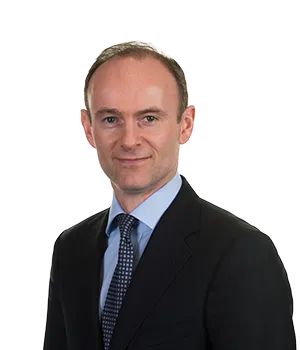
- James Thomson – Fund Manager
Transcript
Introduction and fund overview
Victoria: Hello and welcome. I'm Victoria Bartlett, Senior Investment PR Manager at Rathbones. I'm delighted to be joined today by James Thomson, who heads up the Rathbone Global Opportunities Fund at Rathbones Asset Management.
Today's conversation is all about getting under the hood of the strategy, the philosophy, the process and, ultimately, why investors should be paying attention. James, great to have you here. Thanks for joining us. Can you start by telling us a bit about your background and what your fund is designed to do?
James: I'm the lead manager of the Rathbone Global Opportunities Fund and have run the strategy for the last 22 years at Rathbones Asset Management in London. Some people now call me a veteran, which seems to sit somewhere between a compliment and an insult.
I'm originally from Bermuda and moved to the UK many years ago. This is the only strategy I manage, so it has my full attention. I also invest much of my own wealth alongside our clients.
When I started managing the fund, it had around £5 million of assets under management. Today it manages approximately £3.5 billion. Over that period it has been tested through multiple market cycles and crises. I've made mistakes, learned from them and adapted.
The fund is an actively managed global equity strategy focused on profitable growth companies in developed markets. We leave emerging markets, Japan and early-stage investing to other specialists. We seek reliable, recurring and accelerating growth, while avoiding businesses that depend on boom-and-bust dynamics or unpredictable outcomes.
Diversification is central to our approach. We typically own between 50 and 60 stocks, with no individual position exceeding 4% of the fund. The portfolio spans a broad range of sectors, demand drivers and themes, creating what we believe is an all-weather approach to investing.
Investment philosophy and portfolio construction
Victoria: If we strip everything back to the foundations, what are the core ideas that anchor your approach to investing?
James: We focus on quality growth businesses that demonstrate resilient, reliable and repeatable long-term growth. We look for companies gaining market share within growing markets, supported by scalability, pricing power, differentiation and strong cultures.
We avoid turnaround situations, special situations, sunset industries and investments where outcomes depend heavily on factors outside management's control.
Stock selection is only part of the process. Portfolio construction is equally important. The challenge is combining investments in a way that creates an appropriate balance of risks and rewards.
While it may be tempting to concentrate entirely on themes such as artificial intelligence, that creates vulnerability if conditions change. We prefer a variety of demand drivers and economic exposures, helping the portfolio remain resilient across different environments.
Managing risk through diversification
Victoria: You mentioned risk and reward. How do you balance that within a growth portfolio?
James: Diversification remains the starting point. We diversify by geography, sector, company size and demand driver, while also controlling position sizes.
Today's market is characterised by significant concentration, particularly within popular index-tracking strategies. Many investors may not fully appreciate how much exposure they have to a small number of very large companies.
One aspect that differentiates our approach is what we describe as a weatherproof bucket of more recession-resistant businesses. This was introduced following lessons learned during the 2008 financial crisis, when it became clear the fund needed more balance and resilience.
These holdings include businesses in healthcare, consumer staples and essential services. Examples include catering companies, healthcare equipment providers, insurance businesses, grocery retailers, pest control firms and waste collection companies.
Approximately 20% of the portfolio is invested in these more defensive holdings. While they may not lead performance in strong bull markets, they help provide resilience during market dislocations and have become one of the most valuable enhancements to the strategy.
Research process and idea generation
Victoria: I'd love to get into the detail. How do new ideas move from interesting to investable?
James: I often describe our process as following a secret sauce. We look for characteristics that tend to be associated with successful investments while avoiding those that historically create poor outcomes.
The most important ingredient is our network of analysts and industry specialists. Successful investing depends on identifying talented experts, whether they are highly experienced industry veterans or younger analysts with fresh perspectives.
We regularly engage with specialists across many sectors. Recently that has included analysts covering US insurance, aerospace and defence, homebuilding, home products and retail.
The objective is to develop a comprehensive understanding of both the opportunities and the risks behind every investment idea. Our role is to separate what truly matters from what is simply noise.
This process helped us identify investments in companies such as Amazon, Rightmove, Visa, Costco, Walmart and Nvidia at relatively early stages of their growth journeys. It has also led us to lesser-known businesses such as Amphenol, which has been a particularly successful investment over time.
What differentiates the strategy
Victoria: There are many funds available to investors. What sets this one apart?
James: This is a long-established strategy with a proven long-term track record. It has evolved over time, adapting to changing market conditions while remaining focused on its core principles.
I invest alongside our clients and seek to act with honesty and integrity. In a world increasingly dominated by automation, algorithms and passive investing, I believe human judgement and the willingness to think differently remain valuable advantages.
Lessons learned and market outlook
Victoria: As a fund manager, what is the most important lesson you've learned and still apply today?
James: One lesson is the importance of remaining open-minded and adaptable. A certain amount of doubt can be healthy because it helps prevent overconfidence.
Investors need to be willing to acknowledge mistakes and change course when the facts change. In my experience, overconfidence is one of the greatest risks in investment management.
I'd also argue that investing is more art than science. Common sense, adaptability and patience remain critical elements of long-term