
In early 2021, the global economy was recovering from the pandemic, governments were committing unprecedented sums to green infrastructure, and public awareness of climate risk had reached a tipping point. We launched our sustainable multi-asset funds in response to our clients’ clear and growing demand for multi-asset investment solutions that offered robust sustainability credentials, allowing portfolios to align with both financial objectives and personal values.
It was an interesting time to launch these funds – markets were characterised by exceptionally low interest rates, abundant liquidity and strong policy support for sustainability, which together drove elevated valuations across many asset classes. In particular, companies seen as high-quality ‘sustainable champions’ benefitting from structural growth trends were trading at significant premiums, as investors increasingly rewarded durable business models and strong environmental, social and governance (ESG) credentials. At the same time, enthusiasm for green energy and broader ESG themes led to pockets of exuberance, with some businesses’ values stretched far above underlying fundamentals.
And in 2022 the world changed again.
Russia's invasion of Ukraine in February 2022 sent energy prices spiralling, triggered the worst inflation shock in a generation and kicked off the fastest interest rate hiking cycle in modern history. The geopolitical order that had held since the Cold War began to fracture – not just from external threats, but from within, as the incoming US administration openly questioned commitments to NATO. The world – and markets – were turned upside down.
The clean-tech paradox
The consequences for sustainable investors were sharp. Clean-tech investment indices have roughly halved in value over the past five years. The iShares Global Clean Energy ETF, one of the most widely tracked benchmarks, fell about 65% from an almighty peak in early 2021 to its bottom halfway through last year. Valuations that already looked frothy in a world of low interest rates suddenly looked very stretched when money was no longer free. Many sustainable companies are high-growth businesses, and high-growth businesses are more sensitive to changes in the cost of capital. That's not a flaw in sustainable investing – it's just maths. Against this backdrop, our approach at launch was to remain disciplined: focusing on companies with genuinely sustainable returns and long-term growth drivers, while avoiding paying over the odds for an investment, helping shield our portfolios through this downturn.
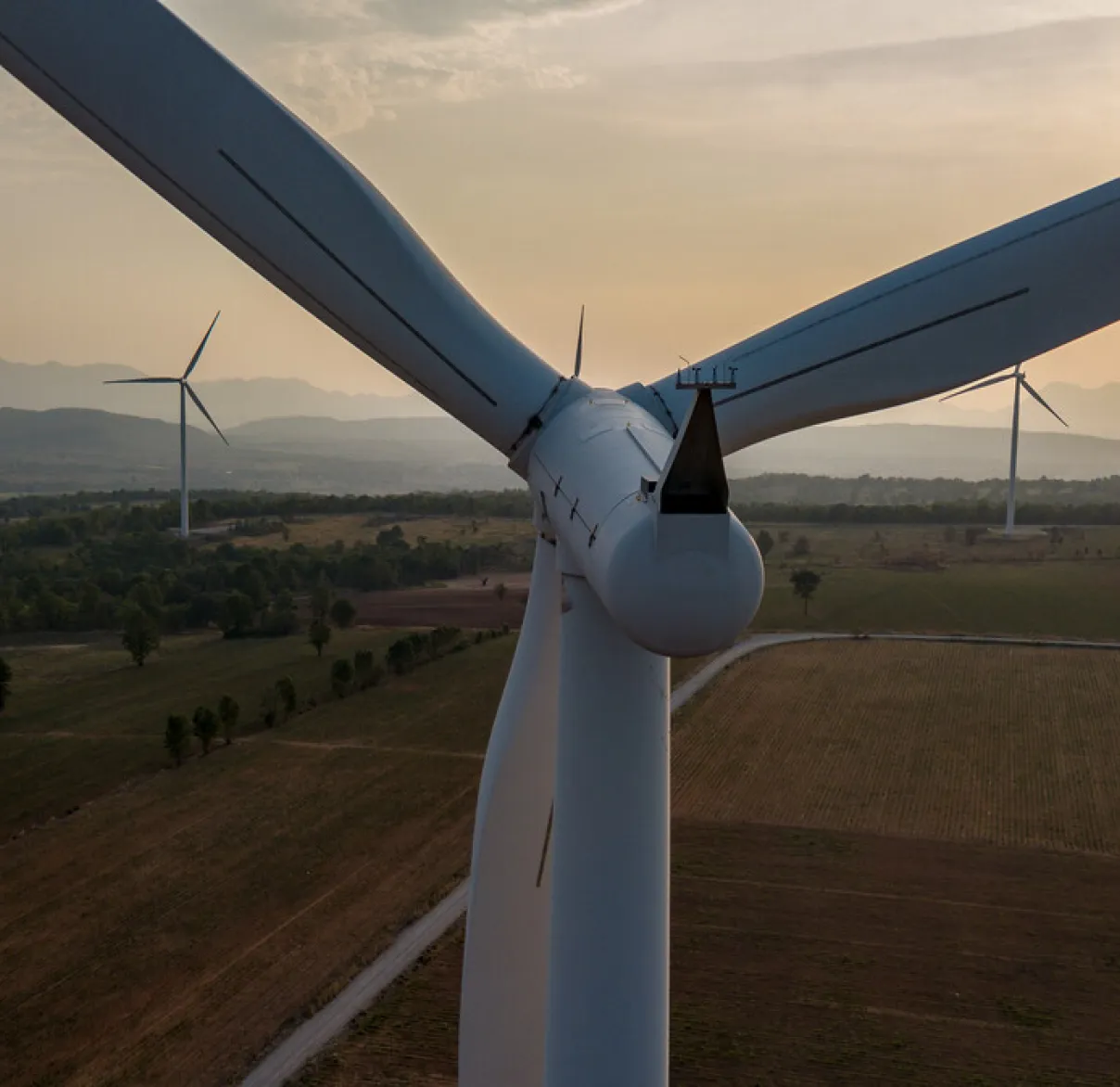
Yet while clean-tech share prices and profits were struggling, clean technology itself was proliferating rapidly. Renewables' share of global electricity capacity hit 46% in 2025, according to the International Renewable Energy Agency (IRENA). While their share of generation is lower, at roughly 30%, it’s continuing to rise – solar power alone met three-quarters of the increase in global electricity demand last year, according to Ember’s 2026 Global Electricity Review. Clean-tech power works, deployment is accelerating, and the planet is genuinely better off for it.
Since valuations have reset and the infrastructure buildout to support greater electricity use for AI and all the other (much larger) demands for power are accelerating, cleantech companies have bounced back strongly over the past year.
We're finding genuinely compelling value in the electrification supercycle – particularly in the power networks and grid infrastructure that make the energy transition actually work. Some of these companies we have owned since inception, like SSE, Littelfuse and National Grid, where valuations still looked sensible and have generated decent positive returns over the past five years. Others we have added over time, like Amphenol and Schneider Electric.
Managing the skews
At the same time as rates were rising, oil and defence stocks were surging. Carbon-heavy energy companies had their best run in years on the back of the Ukraine supply shock and changing geopolitics. Defence spending commitments across Europe pushed arms manufacturers to extraordinary outperformance. Most sustainable funds, ours included, don't hold these companies. That created a significant, unforeseen and sustained headwind.
The changing landscape led some fund managers to adjust their processes and start including oil and defence holdings. We understood the pressure, but we took a different view. While geopolitical developments in recent years have prompted broader debate across the industry – particularly around defence – our approach has been to maintain discipline and consistency in applying our original criteria, which exclude activities that don’t align with the UN Sustainable Development Objectives, rather than reacting to shorter-term shifts in the external environment. This reflects our belief that credibility with clients depends on having a clear, rules-based sustainability framework that is resilient through cycles, rather than one that’s adjusted in response to changing narratives.
Sustainable funds often carry inherent industry skews because of the types of investments they can and can't make. This is, in part, an unavoidable consequence of aligning your values with your investments. It’s also important, therefore, to ensure clients understand the criteria you apply to sustainable funds so they’re clear on what you cannot own. We have been acutely aware of this style skew from the start and have worked hard to mitigate these effects wherever possible. This has meant balancing our portfolios so they’re not overly exposed to ‘growth’ companies. It means finding interesting, sustainable companies that are supplying better alternatives to less-sustainable industries – businesses that give us the economic exposure we want without compromising our sustainability criteria. This helps balance the style risk of our funds. Businesses like insulation and roofing supplier Owens Corning and industrial vacuum and compressor maker Atlas Copco. At other times, that’s meant using specialised structured products that help protect against specific risks such as those linked to interest rate markets, or alternatively taking exposure to currencies heavily influenced by energy markets, and also inflation-linked bonds.
This isn't always easy, but it's central to our approach to managing risk.
A label that means something
Looking back, I'm genuinely proud that the sustainability process we put in place at launch proved robust enough to handle a period that would have been almost impossible to imagine when we designed it. We had the flexibility to navigate a rapidly shifting world without needing to make significant changes to our process.
We still don't hold defence or carbon-heavy energy companies. Our framework was built with the understanding that sustainability isn't static – companies evolve, geopolitics shifts, and what counts as a genuine contribution to sustainable development changes with it.
This shifting sustainability landscape may well have contributed to the FCA's decision to introduce the Sustainability Disclosure Requirements. We're proud that all four of our Greenbank Multi-Asset Portfolios now carry the Sustainability Focus label – recognition that what we say on the tin matches what's inside.
After five years in which the word ‘sustainable’ has been stretched, stress-tested and occasionally abused, that clarity matters more than ever. Investors and their advisers deserve to know exactly what they're buying and what to expect.
Five extraordinary years on, sustainable investing looks very different from when we started. The fair-weather enthusiasts have moved on. What remains is something more honest, more grounded and with valuations now far more sensible. We think the next five years will reward those who stayed for the right reasons.