



Article last updated 2 July 2026.

We help a wide range of clients invest well so that they can focus on what matters.
Who we helpFocusing on you and your individual goals.
Helping turn the success of your business into financial security for your family.
Working with you, for your clients.
Helping charities invest in line with their mission and values.
We work with lawyers, accountants and other professionals.
Looking for someone to create an investment portfolio for you?
Our combined investment and planning service for a holistic approach to your finances.
Need help reorganising your finances and planning for the future?
Structure your wealth for the future by bringing together legal, tax, family, and investment considerations.
Looking for investments that align with your values? See our sustainable investment options.
Rathbones’ dedicated personal injury (PI) and Court of Protection (COP) team.
Helping clients with £5m or more to protect, grow and structure their wealth for the long term.
Private, corporate, and investment banking services through our partnership with Investec bank.
Learn more about what it’s like to work at Rathbones, and search our current vacancies.
Learn more about our Board, Executive Committee and our approach to corporate governance.
Find the Rathbones Group Plc financials, reports, investment case and key events.
Read the latest news from Rathbones Group.
Our secure online portal and app, designed to give clients a clear view of their investments with us.
Our driving purpose is to help more people invest well, so they can live well.
We believe in doing the right thing for our clients and for others too.
Our awards and industry recognition reflects our commitment to exceptional wealth management.
Explore a range of topics affecting your finances, from retirement planning to the latest legislative changes.
Read about the key investment themes affecting global markets.
Listen in to or watch our specialists in one of our podcasts.
Explore our articles, reports and events on investing responsibly.
Timely insights, real conversations. Watch live or catch up anytime.
Whether you have a question about our services, or need to talk someone specific, we can help.
ContactsFind your local Rathbones office. We have 21 across the UK and Channel Islands.
Find the contact details for your Rathbones team by searching our people’s directory.
Our team will be in touch to help you book a no obligation consultation with an adviser.
Access the contact details for our media team.
Need to contact us about something else? Here you'll find all the options.
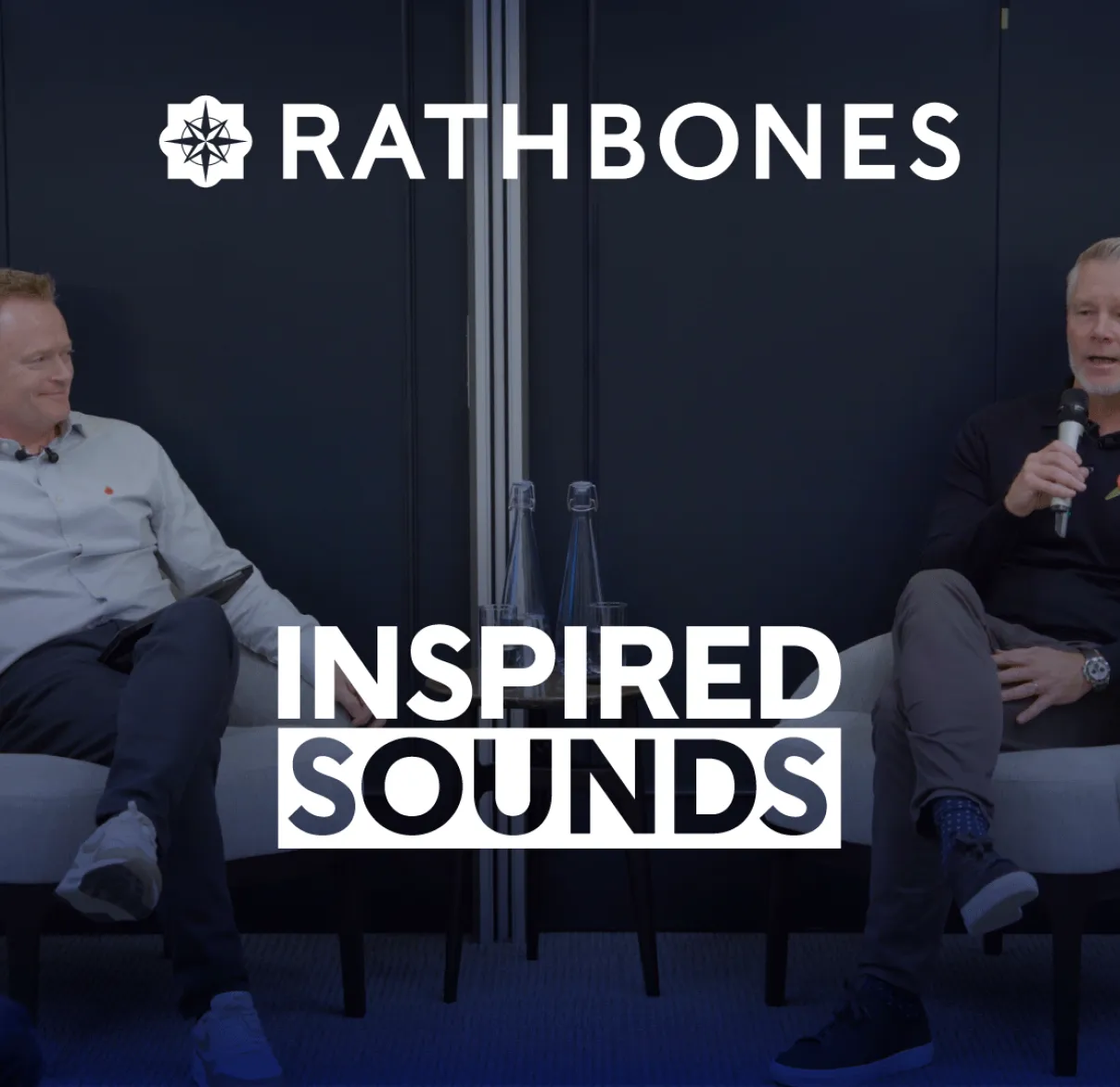
We are joined by the incomparable Steve Hewitt, former CEO of Gymshark, who led the brand’s journey from £4m in revenue through to the almost mythically rare unicorn status, reaching a $1.45bn valuation in 2020.
For any entrepreneur, this is success at the highest level. In conversation with Divisional Director, Nick Jones, Steve reflects on his deliberate departure from the corporate playbook including a process of unlearning which led to the cultivation of a values-led culture rooted in a simple idea: being a good human with a strong moral compass. So, when you’ve achieved a once-in-a-generation success… what comes next?
Article last updated 2 July 2026.
Steve Hewitt
I worked out that if I ever got the chance to lead an environment and build and create an environment which is always around people, I'm not going to do it like this. It was built on fear. It was built on “we have to win or we go home.” And as you know as founders, you just don't win every single day, right? It's bloody hard work.
We didn't build Gymshark for a financial event and I would never recommend that because I think you'll make some really bad short-term decisions. Build your business if it's going to outlast generations. And if you do that, the numbers and the valuation will look after itself.
That's why I don't care about shareholders. I do care about shareholders because I'm a shareholder in many businesses. But don't build your business for shareholder value. Build your business because it's right for the business and right for the brand.
I come from a working‑class, true northern background, and which then by default means I love the underdog. So after spending six months of not doing very much after stepping down from the board at Gymshark, I was like, “What do I do next?”
And I worked out I'm rubbish at lots of things but I'm pretty good at a couple of things — and the thing that really drives me is backing the underdog. I love the underdog.
Nick Jones
Hello and welcome to Inspired Sounds, Rathbones’ exclusive podcast dedicated to supporting and empowering entrepreneurs.
In each episode, we dive into the journey of inspirational entrepreneurs and founders who share the thrills and spills of their own journey. We hope you enjoy listening.
I'm Nick Jones, Divisional Director responsible for the Rathbones office in Birmingham. Thank you for coming. Thanks for joining us this evening.
We've been friends for quite a long time — really too long — so I'm really looking forward to having this conversation, talking through your experience.
You're widely known for Gymshark as we've got on the screen, but I wonder if we could start with For Now, which you founded in late 2022. Could you tell us about that and the reasoning and objective of that?
Steve Hewitt
Yeah, no — not where people normally start, so that’s thrown me a little bit! Sorry.
So yeah, when you're lucky enough — and I talk about being lucky — because you need a bit of luck to be CEO of Gymshark through to unicorn status for seven years, spending ten years at the brand and becoming chair after CEO…
By the way, if you ever get offered a chair role, decline it. The most boring role on earth.
I love helping create stuff and I'm obsessed with people. But ten years of Gymshark — you’ve got the picture on the screen — it was literally like a rocket ship.
People say to me, “Why leave that organisation?”
I was only supposed to be there for three years. I'm actually only 25 years old.
I promised Ben Francis and his dad Steve that I’d help get it to a certain level — and it was so much fun I stayed a lot longer.
Purpose is huge for me. You can have all the money in the world, and you work out very quickly that money gives you one thing — choice. And that's really it.
So at my ripe young age, after finishing with Gymshark two years ago — almost to the week — and stepping down from the board, I thought: What do I do next?
I worked out I'm terrible at golf — it's the only game where the harder you try, the worse you get. And I'm even worse at gardening.
Those two things combined made me think about what to do next, because I was a 10% shareholder in a business valued at $1.5bn back in 2020. What do you do with that? How do you start there?
I'm from the northeast of England — apologies if you can’t understand me. My mam — we don't say mum — says there are two kinds of people in this world:
Those who are Geordies and those who wish they were.
I come from a working‑class northern background. By default, I love the underdog.
So after six months of doing nothing after stepping down, I thought: What's next?
I'm rubbish at a lot of things but pretty good at a couple. What drives me is backing the underdog.
A lot of founders start their organisations trying to solve a problem or fix a bad experience they’ve had.
Speaking to people tonight — I’ve been more inspired in 10 minutes than I have in the last six months.
When you’re lucky enough to work post‑Gymshark not needing to earn any more money, you ask: So what do I do?
At Gymshark, we had £100m in the bank, no debt, no external funding. Philip, my CFO, loved that moment. Finance people, eh?
But for me… we should have given more back. CSR work. Charity work. We did nothing. That was my responsibility as CEO.
People say, “You took Gymshark from £5m to £500m.”
I did a terrible job in many respects — one being we didn't give back.
The turning point came on a train journey…
…Saturday morning, he [Alli] called me and said, “Steve, it’s Alli from the train.”
I said, “Alli, good news — you’ve got a week’s work experience. I need to speak to your college to do a risk assessment and you're going to start in two weeks’ time.”
He said, “How on earth have you managed that?”
I said, “Well, the one thing I didn’t tell you is that I work at the business.”
He started swearing at me down the phone. Anyway, we came off the call — he said, “Brilliant. Here's my email address. You’re going to send me all the details?” And just before we got off the phone he said, “What do you do at Gymshark?”
I said, “I'm the CEO.”
He was like — and you can imagine the swear words after that point.
Anyway, he came in, he did a week’s work experience. This kid was the most inquisitive human I’ve ever met. And you work out sometimes in life somebody just needs a little bit of a break up that ladder. He’d fallen foul through bad parenting and bad luck. He’d fallen into a friendship group where he was probably going down a slippery slope.
He went on to a customer service role at Gymshark. Then we found out two years ago he went on to university — he’s now at the University of Exeter. He still writes to me every single year saying, “This is how I’m getting on.” It was great.
People say to me: “That was a sliding door moment for him.”
Yes — but more importantly it was a sliding door moment for me.
So you ask: how do you replicate the rocket ship journey of Gymshark for ten years? We made lots of mistakes. But that moment gave me purpose — that I’ve got the ability and the permission to change somebody’s life who’s just an underdog.
Then you start doing that — getting into charity. And you work out that if you give all your money away to charity, you don’t have any money left yourself. So it became: how do I give back sustainably?
The other thing I worked out is I’m pretty good at building and scaling businesses — businesses that are a couple of million quid to fifty million quid, becoming a hundred‑million‑pound‑plus businesses.
So we built a team to help scale those businesses. And the money we make funds the charity work we do — and still do.
So that’s For Now.
Nick Jones
So can you share a couple of examples of fast-growing businesses you've worked with, just to set the scene?
Steve Hewitt
Yeah. Excuse my French here — quick show of hands, how many founders in the room?
Quite a lot — you’re all lunatics.
Founders are absolute lunatics. They generally start their business because they’re trying to solve a problem they’ve experienced, or trying to find a gap.
There’s another phrase that defines founders better: “magical chaos.” They bring magic — but boy, do they bring chaos.
The businesses we work with are generally in the sweet spot of £5–30m.
One example: a jewellery brand called Dew — based in London. I know nothing about jewellery.
Liv Jenkins, the founder, reached out on LinkedIn and said, “Steve, we need help.”
They’d got the business to £1m but were losing money and didn’t know what they were doing.
I replied saying, “Thanks Liv — I can’t help. I know nothing about jewellery.”
She said, “Yeah, but you know how to build a brand.”
We met for coffee. She told me the brand was named after her mum, Deborah Weise, who died of cancer three years prior. Back to the underdog — straight to my heart.
Then I found out her brother committed suicide a year and a half after her mum died — he couldn't handle life. I was doubly in.
I called Philip — my CFO — and said we should invest. He said, “Steve, we don’t invest without proper due diligence.”
I said, “Philip, sometimes you need to take a punt.”
The business went from £1m to £15m, EBITDA 15%. And we didn’t even do the work — we just gave that young team confidence.
Another example: Refy — a beauty brand in Manchester. Founder Jess Hunt, big beauty influencer, but the real brains is Jenniq. They were doing £5m.
I asked: “What’s your gross margin?”
She said: “82%.”
I said: “I’m in.”
The maths have to work.
She showed vulnerability — “I think I’m onto something but don’t know how to take it to the next level.”
We built her a North Star. She’s now a guest celebrity Dragon on Dragon’s Den this season. The brand went from £5m to £55m in a couple of years.
Again — zero credit to me. We’re facilitators.
Female founders are winning at the moment.
Nick Jones
You're exactly right. Absolutely. Brilliant. Thanks, Steve. And you've mentioned “North Star” a couple of times there, which we'll come on to shortly. But before we do that, you've talked about founders and fast‑growing businesses. Prior to Gymshark, you were at Reebok.
Can you share with us the pros and cons of your experience of Big Corp?
Steve Hewitt
Yeah, Big Corp. After moving out of Newcastle at 18, I did a four‑year degree in Manchester — learned how to drink alcohol pretty well in those four years — got a lousy, very average degree, but then got the opportunity to work in America for five years.
The first place I stopped was Kansas. Anybody been to Kansas City? Good — you're lucky. It’s got a wonderful American football team, the Chiefs — my team — and now massively famous because of Taylor Swift and Travis Kelce.
Kansas City was my first stop. Then I got the opportunity to move to San Diego, California. San Diego and Newcastle are very similar — the commonality stops at “close to the water.”
My first introduction to work was corporate — Reebok. The corporate world lets you become a very strong generalist. If you’d asked me after uni if I could move myself around a P&L or understand working capital, I'd probably have lied and given a terrible answer.
Corporate invested in me. A lot of what we applied at Gymshark came from that experience. Phenomenal experience.
But the corporate world also teaches some very dodgy things.
I happened to be part of the “fast‑track” team — one of the alpha males who would “rather die than lose.” My boss at the time — I won’t mention his name — said, “We need more alpha males in this business. That’s how we’ll grow the brand.”
But what I saw was that if you didn’t fit that category, you were disregarded. Treated like a second‑class citizen. Pigeonholed.
I realised that if I ever got the chance to lead and build an environment centred around people, I wasn’t going to do it like that.
It was built on fear.
It was built on “we have to win or we go home.”
And as founders know — you don’t win every day. It’s hard work.
So corporate taught me two things:
That's not to say all corporates are bad — but it was done with less soul than I would have liked.
Nick Jones
So you were able to carry forward the parts you wanted, and leave the parts you didn’t. Interesting.
So — Gymshark, 2014. You met Ben, you met Lewis, and I think you met Ben's dad as well. Can you share your thoughts on that initial meeting — and did they change?
Steve Hewitt
I didn’t have any grey hair before that.
I’m big into values, the way you treat people. I hate arrogance, I hate ego. Ego kills businesses. Unfortunately, a lot of leaders have ego because they lack vulnerability — which is actually a superpower.
I met Ben and Lewis — co‑founder; he never gets talked about, but he was there from the start. The business was 18 months old. It had gone from £0 to £4m in two years. Seven people. Average age: 19½ — either siblings or high‑school mates.
I took that average age up. Don’t be cheeky.
We met at a Hilton Hotel in Bromsgrove. I hate ego — and they both had Audi R8s. One gold‑plated. One baby blue. Fine — I don’t care if someone drives a nice car. But doing donuts in the car park before a meeting? That was… something.
The guy who introduced me asked, “How did it go?”
I said, “I can’t. These guys…”
If Ben was here, he’d say, “Yeah, I was super arrogant.” They were the smartest guys in Bromsgrove — everything they touched turned to gold.
So could I work with them?
People said it was a big risk leaving corporate to work for two 20‑year‑olds and five high‑school mates. But I thought: worst case, I can get another job. So actually — not a big risk.
Positively: I also saw Gymshark was building a new type of brand that didn’t exist in 2014.
Back then, TikTok didn’t exist. Instagram and YouTube existed but not in the way brands use them now. Adidas, Nike, Reebok built brands by making a huge amount of product and flooding retailers globally.
These guys said:
“We’re not doing that. We’re building community. On YouTube. With a small product range.”
They made a product big brands didn’t — fitted bodybuilding aesthetics. That didn't exist.
They were lunatics. Chaos everywhere. But pioneers.
Shopify — everyone knows Shopify. Gymshark was Shopify’s third customer globally. Became their second-biggest in two years.
My first introduction was pure chaos.
Steve Hewitt
So my first introduction to the guys at Gymshark was absolute chaos.
I’ll tell you a small story before I go into what we introduced into the business to take it to the next level.
I’m obsessed with people — behaviour, values, standards — that’s how you build environments. But you also have to pay people well and incentivise them properly, because a pat on the back doesn’t pay the mortgage.
I remember saying to Ben, “How do you incentivise people?”
He said, “We’ve got a great bonus programme, Steve. Have you heard of rock‑paper‑scissors?”
I said, “Yeah…”
He used to call me “Dad” at this point, by the way. I’d say, “Hey, I’m not that old.”
He said:
“At the end of the year the seven people — well, five people, because it didn’t include me and Lewis — we get £1,000 each. But you have to come to my office.”
His “office” was a desk.
“You have to do rock‑paper‑scissors — best of three. If you win, your £1,000 goes to £3,000.”
I thought: £3,000 for a 19‑year‑old is pretty good money for playing a game.
I said: “What happens if you lose?”
He said: “Oh, you get nothing.”
I thought — oh my goodness. We’re not going to incentivise people on a business that’s gone from nothing to £4m in two years by playing rock‑paper‑scissors.
People ask: “What was the defining moment of Gymshark?”
There was one defining moment — and it wasn’t success.
It was failure.
Black Friday 2015.
They’d built this incredible community. Tens of thousands of people landing on the website. They never did discounting except on Black Friday.
The systems completely crashed.
We lost 40% of our customer base overnight.
If Gymshark applied that percentage to today’s numbers — around 10 million active customers — it would kill the business.
People think the defining moment must have been success. No — it was failure.
I remember Ben saying, “I don’t want to do this anymore.”
He looked as old as I do now.
I asked him one question:
“Do you want to be the biggest fitness brand in Bromsgrove — a lifestyle business? Or do you want to become a true global brand?”
He said he wanted to be the British answer to Lululemon in Canada, Adidas in Germany, Nike in America.
So I said:
“Well, now we need to hire people in areas where you think you’re God.
And Ben — you have an ego.”
I also said:
Rule 1:
“Never play your Founder card in a meeting — I’ll throw you out.”
Rule 2:
“Never play your Majority Shareholder card — I hate when businesses make decisions for shareholder value before brand value.”
Rule 3:
“You can’t be late.”
Ben was always 20 minutes late. Traffic. Kids (which he didn’t have). Donuts in the car park. Whatever excuse.
But lateness tells people you don’t respect their time.
I said, “If we’re going to build something, we can’t do that.”
To his credit — he listened. And that’s when his arrogance turned into humility. If you interviewed him today, he’s the most humble guy — rich, successful, under 35, great hair — I hate him.
But he’s humble, and he's achieved a lot with the right people behind him.
Nick Jones
So was that experience where the North Star approach comes from?
Steve Hewitt
Yeah. I’m not going to do a keynote, but I’ll explain the framework.
Founders are magical chaos. They’re not disciplined. They’re like butterflies on a leaf — always chasing a bigger leaf.
“We’ve got a big opportunity this week… oh wait, bigger next week… oh wait…”
You never finish anything. The brand never resonates.
The North Star is four buckets:
Values and standards
How you behave as a brand.
How you behave as an employer.
How employees behave.
This is how you build environments.
I’m obsessed with people. AI won’t replace that — people are still the biggest asset.
Nick Jones
...So does that bring us nicely on to the lessons that you learned during that period?
Steve Hewitt
Yeah. I’ll flick through because there's probably… actually, I’ll talk about one value set before I go on to lessons learned.
The other thing I love about founders is: where you bring the chaos, you also bring the magic.
Magic for me is disruption.
We had to be the speedboat where everyone else was the oil tanker.
Where everyone was zagging, we were zigging.
During COVID, where everyone was bailing out of real estate, we signed a Regent Street store because we believed physical retail would return.
The photo on screen is our first attempt at physical retail in New York — on Lafayette and Mulberry Street. Nike launches their exclusive sneakers there.
We launched our store with product that was (honestly) terrible.
But we launched off one Instagram post.
When we turned up on the Saturday morning, the queue to get in was a kilometre long.
Eight‑hour queue.
So:
Be disruptive.
You won’t develop your business by chance — you’ll develop it by change.
But be disruptive within discipline. Keep your business simple but disruptive.
Lessons Learned
There were five big ones.
We would rather have a hole than an ahole in the business.**
I don’t care how talented you are — if you break the environment, you're gone.
The people I had to exit were often the most commercially brilliant — but ego‑driven.
One guy, Chief Product Officer, improved our PO by 5 percentage points — huge.
But if I’d been to Tenerife, he’d been to Elevenerife.
We’ve all met them.
And they quietly kill the culture.
Canada Geese Analogy
I'm obsessed with Canada geese.
They’re the only birds that fly in V‑formation — they reach their destination more efficiently than any other birds.
Some fly a little high, some a little low — that’s fine.
No organisation is perfect.
But when one bird flies in the opposite direction — that’s a culture killer.
And it’s usually your highest performing person.
But they can’t stay.
If you can get your business to fly like Canada geese — my goodness, you’ve got something special.
Nick Jones
So these elements built Gymshark to unicorn status. Can you talk a little bit about the sales process? I don't know if the intention at the outset was to build a business to sell, or whether it was based on the values rather than building something to sell.
Then you get to the point where private equity are talking to you. What was your experience of dealing with that professionally for the business?
And secondly, as you said earlier, you had equity in Gymshark — so that resulted in a financial event for you and your family. Had you been able to afford yourself any time to plan what you were going to do with the proceeds of that?
Steve Hewitt
Um — no. That’s the short answer.
To your first question:
Did we build Gymshark for a financial event?
No.
We built Gymshark to outlast generations. That was the view.
If you speak to Ben even today — back when I first met him — I’d say:
“We probably need to de‑risk at some point.”
Ben would say:
“I’m never selling this business to anyone.”
I think what he meant was:
“I want to control the narrative of where this brand and community is going.”
Not that he didn’t want to de‑risk.
I meet a lot of people now who almost whisper, “I’m building this for a financial event.” There’s nothing wrong with that. Making money isn’t a dirty phrase.
But what you work out when you have that moment is:
Money gives you one thing — choice.
It doesn’t make you happy.
Some of the happiest people I know are the wealthiest — and some of the unhappiest people I know are also the wealthiest.
To answer the first part:
We never built Gymshark for a financial event, and I wouldn’t recommend building a business that way.
If you do, you’ll make bad short‑term decisions.
Build your business to outlast generations.
Build it based on what’s right for the brand.
If you do that — valuation looks after itself.
That’s why I don’t care about shareholders.
Well — I do care, because I’m a shareholder in many businesses —
but don’t build your business for shareholder value.
Build it for the brand. The rest takes care of itself.
The Private Equity Process
We were at £400m revenue. Very high EBITDA. Very cash‑rich — we’d talked about Philip’s joy at £100m in the bank, no debt.
We were given great advice:
You should de‑risk.
So we de‑risked.
We went out to market.
We partnered with PwC — until I found out Tom Copeland, who ran the team, was a Sunderland fan. I’m a Newcastle fan. Working with a Sunderland fan?!
He wouldn’t have got the gig if I’d known earlier.
Tom’s now a good mate.
You need someone in your corner independently — someone who knows the landscape.
People often say private equity is the devil. There are some devilish ones. But let me put it in simple terms:
Partnering with PE is like getting married.
You do not want a divorce.
Divorce is expensive, painful, and messy.
So:
Date before you marry.
We had 32 organisations circling us when we went out to de‑risk ~20–25% of the business.
We whittled 32 down to 5 quickly based on this:
“Don’t tell us how to build our community.”
“Do not touch our culture.”
Sixteen PEs dropped out overnight.
Ben panicked: “What have we done?!”
I said: “We’ve just filtered out the wrong ones.”
Don’t follow the size of the cheque.
General Atlantic were NOT the biggest bidder.
But they were:
the best culture fit
the best value‑add fit
strong in retail, where we needed help (we were strong in e‑com)
A bad non‑exec is someone who takes the cheque and adds no value.
Same with PE.
So we partnered with GA.
Managing the Relationship
Our Chief Legal Officer said:
“Steve — once they’re in, keep them at arm’s length.”
I said: “Why?”
He said: “They’ll tell you how to run the business.”
I said: “I’m not doing that. They’ve just invested millions. I’m going the other way.”
I told General Atlantic:
“I’ll tell you good news early — and bad news even earlier.”
So at board meetings, nothing is a surprise.
Back to my mam — she gave great advice:
“If you don’t lie, you can’t get found out.”
So we didn’t lie.
We gave them everything — good and bad.
And when times were hard (and they were), they supported us.
Treat PE with respect, and they’ll be great partners.
The Financial Event
I’m from Newcastle. There’s that much broken glass the dogs wear sandals.
I had a great upbringing — but working class.
So when tens of millions drop into your account on 16 September 2020 — what do you do?
First:
You sort of… poo yourself a little bit.
Then you smile.
Best advice we got:
“Don’t do anything with it immediately. Sit on it. Get used to seeing it.”
We probably sat on it too long — we should have invested with someone like Rathbones earlier. Let it work instead of sitting as cash.
I’m not a wealth expert. Best advice we got was:
Diversify.
Don’t back one horse.
So we did:
Then — don’t change your friendship group.
When you come into money, suddenly you get new “friends” who ask about your family — they don’t even know how many kids you have.
Keep your circle.
For me, it was still talk of Newcastle United winning the Premiership over a pint of lager at the local club.
Money doesn’t give you the right to treat people like dirt.
Stay the underdog.
Nick Jones
Can we—I'm sure there are going to be questions from the audience, which we’ll come on to in a minute—but just one final point.
Can you tell us about your work with Birmingham Children’s Hospital, forming a group there called Change Makers, which supports the hospital and which Rathbones are very proud to be part of?
What was the hospital looking at when they started talking to you?
Steve Hewitt
Birmingham Children’s Hospital came to me coming out of COVID and said:
“We’re struggling to raise money. Everybody’s hunkering down.”
They were right—people panicked. They said:
“We’re struggling to raise money… can you help?”
So I did a North Star session with their fundraising team—about 50 people.
Back to the Canada geese analogy:
There weren’t actually any “birds flying in the opposite direction,” which was helpful.
But they weren’t aligned.
They were like a 2‑out‑of‑10 organisation in alignment terms.
We got them much more disciplined, identifying the key drivers to raise funds.
I asked:
“What’s your marketing asset?”
They said:
“We do content… we’ve got stories…
We’ve got a nice little logo…”
I said:
“No—what’s your real marketing asset?”
They didn’t understand.
So I said:
“You have the best marketing asset in the world: sick kids.”
You will not have a better marketing asset.
It sounds awful—but it’s true.
If you want to raise money, you need to become unbelievable storytellers—because you have unbelievable, sometimes sad but often incredibly inspiring stories.
That was the first piece.
Second: I asked, “How do you raise money with the business community?”
They said:
“We go for ‘Charity of the Year’—maybe with Rathbones, maybe with other partners.
And then the next year we have to pitch again.”
So I asked:
“You don’t have a recurring revenue model with organisations?”
“No—we can’t make that happen.”
I said:
“Yes, we can.”
So we built Change Makers.
Rathbones is part of it.
We now have nearly 50 organisations in the Midlands.
We’ve raised just over £1.6 million in less than a couple of years.
They never even thought about doing it that way.
So it was about being disruptive with their model but anchoring everything back to purpose—classic North Star.
As a family office, we donate heavily into that.
I need to do more in the northeast, too. I tried to buy Newcastle United a few years ago—that’s a lie.
But the new owners definitely have more money than I do.
It’s about investing into things that make you feel you’re making a difference.
Nick Jones
Yeah. The purpose, and being able to make a difference.
Steve Hewitt
Yeah. And that probably starts with family as well.
We paid off all family members’ mortgages—we didn’t tell them.
That was the best moment.
Nick Jones
It’s a lovely story.
Steve, thank you ever so much for sharing your time with us.
Closing Narration
Thank you for joining us today.
We hope you’ve enjoyed listening and watching.
To tune in and meet our next exciting guest in the Inspired Sounds series, press the follow and subscribe button.
Hear more inspiring stories from a range of successful entrepreneurs who've previously spoken with us on Inspired Sounds.
Whether it's stories from successful entrepreneurs, how to make the most of your money and manage your personal finances or hearing what inspires acclaimed writers, scientists and thinkers, our podcasts explore the pursuit of living well.
Ready to start a conversation?
The value of your investments and the income from them may go down as well as up, and you could get back less than you invested.
Wealth Management