



Article last updated 1 June 2026.
|
Quick take
|

Article last updated 1 June 2026.
|
Quick take
|
US stock market valuations are well above their long-term averages, when we consider their price relative to expected earnings over the next 12 months
And positive performance over recent years has relied on the results of a small number of constituents – mainly tech stocks – driving the majority of returns. Around 30% of stocks in the S&P 500 beat the index in 2023, 2024, and 2025. That’s the most extreme concentration since the 1990s. So far in 2026 performance has remained narrow, with just under 40% of stocks beating the index.
Are these facts reason for concern about investing in stock markets? Investors always need to stay vigilant. But looking outside the US, valuations are only slightly above average in mainland Europe and emerging markets
In the UK, valuations are very close to average. In Japan, they’re a fair amount below that.
Looking at AI stocks specifically, net margins look very strong, compared with companies in the US’ Nasdaq 100 index of tech stocks during the peak of the 2000 tech bubble. This isn’t a perfect comparison, but it’s a reasonable one. They also have stronger free cash flow generation: total cash produced after operating expenses and capital spending. They have healthier balance sheets, too. This suggests that the underlying business models of the companies in our AI basket are less fragile than those of the tech stocks during the 2000 bubble.
And AI stock valuations are much lower than bubble-era tech stocks, based on the same forward price-earnings measure we used at the beginning of this slideshow.
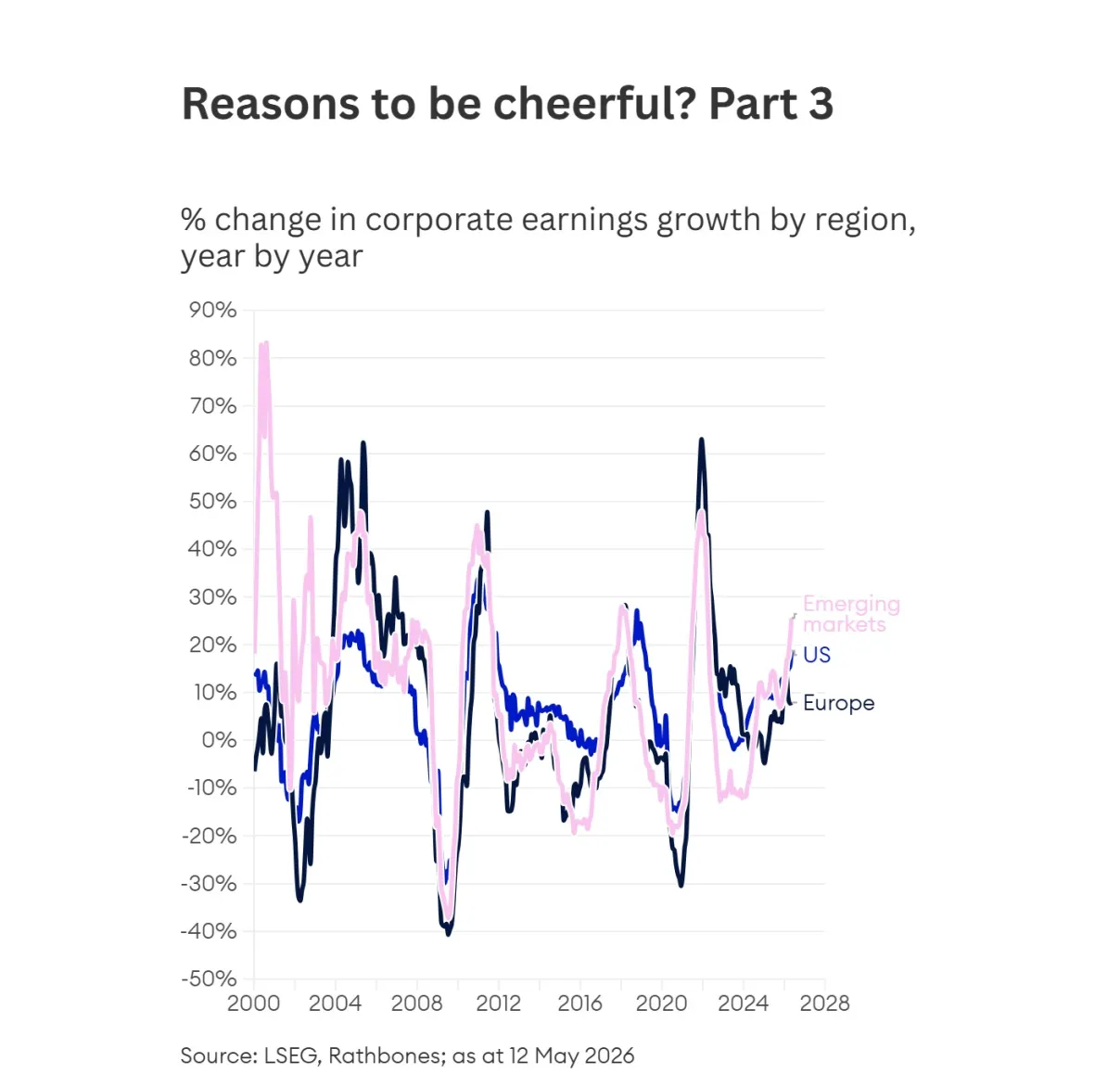
Moreover, although stock markets have been volatile since the Iran conflict began, earnings growth has improved across regions, particularly in the US and emerging markets. Earnings revisions by companies have also tended be positive rather than negative. These factors continue to support markets.
Finally, attempts by investors to distinguish AI winners from losers have driven a marked divergence in the performance of different stocks. For example, software companies are in the firing line over fears their businesses could be disrupted. Investors are particularly concerned about companies that provide ‘software as a service’, where software applications are hosted by a third-party provider and accessed over the internet. Investors fear these businesses could be disrupted by users creating their own software tools created by AI.