


A discussion around our thinking and positioning of the multi-asset and model portfolios.
Article last updated 10 November 2026.

We help a wide range of clients invest well so that they can focus on what matters.
Who we helpFocusing on you and your individual goals.
Helping turn the success of your business into financial security for your family.
Working with you, for your clients.
Helping charities invest in line with their mission and values.
We work with lawyers, accountants and other professionals.
Looking for someone to create an investment portfolio for you?
Our combined investment and planning service for a holistic approach to your finances.
Need help reorganising your finances and planning for the future?
Structure your wealth for the future by bringing together legal, tax, family, and investment considerations.
Looking for investments that align with your values? See our sustainable investment options.
Rathbones’ dedicated personal injury (PI) and Court of Protection (COP) team.
Helping clients with £5m or more to protect, grow and structure their wealth for the long term.
Private, corporate, and investment banking services through our partnership with Investec bank.
Learn more about what it’s like to work at Rathbones, and search our current vacancies.
Learn more about our Board, Executive Committee and our approach to corporate governance.
Find the Rathbones Group Plc financials, reports, investment case and key events.
Read the latest news from Rathbones Group.
Our secure online portal and app, designed to give clients a clear view of their investments with us.
Our driving purpose is to help more people invest well, so they can live well.
We believe in doing the right thing for our clients and for others too.
Our awards and industry recognition reflects our commitment to exceptional wealth management.
Explore a range of topics affecting your finances, from retirement planning to the latest legislative changes.
Read about the key investment themes affecting global markets.
Listen in to or watch our specialists in one of our podcasts.
Explore our articles, reports and events on investing responsibly.
Timely insights, real conversations. Watch live or catch up anytime.
Whether you have a question about our services, or need to talk someone specific, we can help.
ContactsFind your local Rathbones office. We have 21 across the UK and Channel Islands.
Find the contact details for your Rathbones team by searching our people’s directory.
Our team will be in touch to help you book a no obligation consultation with an adviser.
Access the contact details for our media team.
Need to contact us about something else? Here you'll find all the options.
A discussion around our thinking and positioning of the multi-asset and model portfolios.
Article last updated 10 November 2026.
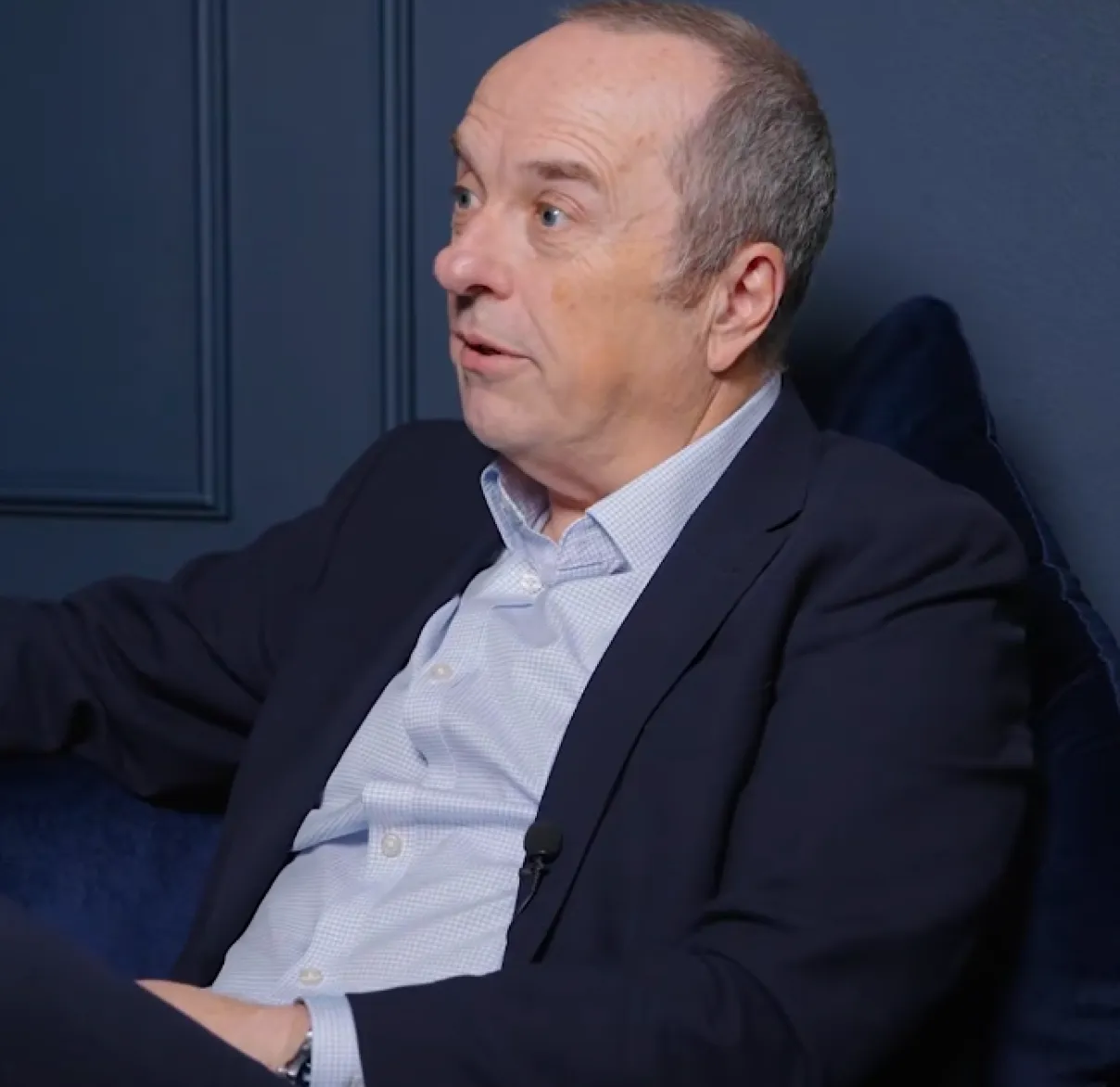
Watch David Coombs, Head of Multi-Asset Investments and Tom Whitfield, Multi-Asset Investment Specialist, as they provide an update on the Multi-Asset funds and Model Portfolio Service, covering recent performance, portfolio activity and their outlook for the months ahead.
This video is for information only and should not be taken as a recommendation or advice on how any specific market is likely to perform. Past performance is not a reliable indicator of future performance.
For more information about our Model Portfolio Service, visit our webpage.
Tom: Hello and welcome to the Multi-Asset Investment Update. I'm Tom Whitfield, Multi-Asset Investment Specialist, and today I'm joined by David Coombs, Head of Multi-Asset Investments.
We're going to take a look at what's been driving markets more recently and our current strategy and positioning.
Since our last update, bond yields have moved higher, parts of the technology market have faltered slightly, and geopolitical events have rumbled on.
Today we're going to focus on why we've been changing our bond exposure and adding to duration, what we make of the sell-off in parts of the technology sector and where we've been putting our money to work. We'll end on why diversification is looking increasingly important within portfolios.
David, let's start with bonds. At the beginning of the year, we took our duration down and now we've been adding a little bit of duration. Can you explain what we've been doing with the bond positions in the portfolios?
David: As you said at the beginning, bond yields rose through the summer. We'd reduced our duration, particularly in UK government bonds, probably way back in March or April when we had the first political Denton by-election and then the May local elections.
We took duration out because of the lack of certainty around what was going to happen with Starmer and Reeves. We maintained that low duration and weighting to bonds right through the summer, which turned out to be the correct answer.
What changed was probably as we got closer to the Budget, which was yawn-inducing and we're not going to talk about it today, everyone will be glad to hear. We thought it would be yawn-inducing, and it delivered.
What was quite impressive from my perspective and the team's perspective was that we didn't get the usual kite-flying, with lots of random ideas coming out of the Treasury ahead of the Budget like we saw over the last couple of years. That really unsettled markets and created a lot of volatility.
The last thing the UK government bond market needed was volatility when yields were rising across the globe because of what's been going on in the Middle East.
Yields went higher. The 10-year government bond went north of 5.4%, and we just felt that, even with inflation at 3.5% or 3.6%, those real yields were starting to look attractive.
There was much more discipline in terms of Treasury communications prior to the Budget. That made us feel a little more confident that Healey was going to be more fiscally responsible than his predecessor.
We didn't go all in. We took our duration to six years. The index is seven years, but that's still much longer than we'd been earlier in the year. And, net-net, we increased our exposure to gilts as well. We increased our weighting and increased duration going into the Budget.
Why didn't we go overweight to seven and a half or eight years? We're still nervous. We're still not seeing spending cuts from this government.
For us to get really positive on gilts, I do want to see something around welfare cuts coming through because I think that would give us the confidence that we weren't just maintaining where we are, but actually starting to reduce the deficit. I think that would be the trigger to go even further.
Tom: How surprising is it that the UK seems the more stable of the governments, particularly in Europe at this time? There's quite a lot going on in Europe, so it's quite reassuring that the UK seems to be on the right path, so to speak.
David: It's very surprising. Look at what's happened to France. French yields, even given the violence in the last few weeks, are still lower than UK yields, so that puts it into perspective.
Everyone focuses on the spread between French yields and German yields. We have no exposure to European government bonds.
We do have exposure to New Zealand and Australia. In fact, we've been trimming New Zealand this week because that's been working for us as yields have been falling in the last couple of weeks.
That's been helpful since we increased our duration. Bonds have started working and they've actually been working as a diversifier. I know we'll come on to talk about tech a little bit later but, as we've seen more volatility in the equity market, we have seen yields starting to come down over the last three or four weeks.
That's really encouraging from our perspective because it means that, finally this year, diversification is starting to work.
Tom: Just to give viewers an explanation of where we've come from since Covid, I guess, what are bond yields currently giving us and how does that give us some protection in portfolios, more than they have done in the past?
David: If you think about the period between 2008 and Covid, in fact right up to probably 2022, bond yields were very low in nominal terms. They were pretty low in real terms as well. That's the return above inflation. In Germany, we saw negative yields for a short period.
Bonds really didn't figure very highly as an asset class for diversification because the cost of buying bonds was quite high relative to the return, which was so low. I think that's why gold did quite well during some of those periods as well.
But now you're being paid to hold government bonds, as we said, at 5% or even 6% at the longer end of the bond market. So it's a very different feel.
The other thing to think about is bond yields versus equity earnings yields. When bond yields are 0% to 0.5%, there's not much pressure on equities because, clearly, if you're going to drive real returns, you have to be in equities.
Now, of course, you can get real returns in bonds. If you can get 6% on the 10-year government bond, the dividend yield on the FTSE is now down to around 3%. I think the earnings yield is higher than that, but the gap has tightened.
We call it the reverse yield gap. We used to talk about it 30 years ago. I haven't heard it for 20 years, but it's back, which is kind of reassuring for us old managers.
The reverse yield gap now looks as if it's favouring bonds over equities. If we were sitting here 30 years ago running multi-asset, we could well be overweight bonds right now because, relative to equities and for the risk you're taking, bonds look super-attractive.
As I mentioned earlier, we haven't gone overweight bonds. We've gone out to our neutral risk position, which is the most we've had for a very long time. But it's not beyond the bounds of possibility that we could go overweight bonds in the next few months. A lot will depend on what happens to equity markets.
Tom: We've been having that conversation with clients about what's going on in bond markets and then a few cracks forming. We can move on to AI, but equity markets are still powering on.
The market dynamic is slightly odd, with worry in the bond market and equity markets faltering slightly over the last couple of days. It's an interesting dynamic going on in markets.
David: The first seven or eight months of this year, no one was interested in bonds. Almost every question we were getting was: how much have you got in AI, and why haven't you got more?
When you said the risks were quite high, the valuations looked a bit stretched and the momentum and hype looked high, no one cared.
That's often the way when you get a very high-momentum, liquidity-driven hype train. When it's a gold rush, we've had a gold rush in AI.
It's not totally unfounded. There are lots of earnings out there and profits to be made, but we've definitely seen that huge wall of sentiment favouring that one trend. Nothing else mattered.
Diversification wasn't something people were interested in for the first eight months of this year. They're probably still not that interested today, to be honest, but they ought to be because it's now working at last, which, thank goodness for us, it is.
We've seen our portfolio work incredibly well over the last few weeks.
We were discussing this on the desk this morning. Sentiment drives markets in the short term, but ultimately fundamentals drive markets in the medium term. The trouble is, the gap can be six months to two years. People's time horizons are getting shorter and patience is thin, and I think this is a real problem that we need to address.
Right now, we're going through earnings season and I think we're starting to see the market really focusing company by company on earnings. We're seeing some incredibly big recoveries in those sectors outside AI that no one was interested in six months ago.
Tom: Just sticking with AI and bonds, we've seen some of the hyperscalers issue more and more debt. At the beginning of the year, we had them spending all of their cash on this AI build-out. Now they're actually starting to borrow.
At what point do these become attractive to look at in portfolios? Would the bonds themselves ever come into the portfolio?
David: There are a number of points to unpick there. Let's take a step back.
Two or three years ago, some of these companies were being criticised for holding too much cash on their balance sheets because it acted as a drag on earnings. The returns on the cash were low, so the message was: spend it or pay it back to shareholders.
We've gone from companies hoarding lots of cash to now being net borrowers.
It's a bit like what I described in the bond market. You went from really low potential returns, low real returns and low nominal returns, when people were chasing corporate bonds, to now having higher bond yields.
Then you've got the hyperscalers going from massive cash generation to negative cash generation, where they're borrowing. So that's another big shift.
You've got higher yields in the markets for equity markets to cope with than we did previously. Some equity strategies that performed very well between 2008 and 2022 are now underperforming, quality growth being a good example.
Going back to your question: do we buy a 30-year Google bond? Well, not if you've got a big position in the equity because, when we look at any company, we always look across the opportunity. Do you want to own the bonds or the equity?
Just to go on a tangent for a second, yesterday we took part in a Barclays new issue – a high-yield, seven-year bond at 8.5%. We thought, when inflation is at three and a half, that's a real return of 5% from a bond.
It's a high-yield bond. It's not an investment-grade Barclays bond, so it only sits one notch above equity in the corporate stack. But that's the first corporate bond issue we've done with any real degree of aggressiveness this year.
We got a 40% allocation out of the new issue, which is really encouraging because it was four times oversubscribed. There is demand for this kind of paper.
We don't own Barclays equity. We've bought that bond. We like the risk-return on that bond and that's why I'm using it as an example.
With Google, or Alphabet I should say, at the moment, do I want to own the equity or the bond? We own the equity.
But there will come a time because the spread between those hyperscaler bonds and the rest of the investment-grade bond market is actually quite high. They're having to pay up more than the rest of the market to borrow that money.
If you think the hyperscalers are having to do that, imagine what the start-ups in the AI world are having to pay. That's why you've seen this volatility, with some of the smaller tech companies raising capital now having to pay up to 10% to 15% in the high-yield bond or loans market.
What's driving that? Interest rates going up. What drove the dot-com crash? Interest rates going up. It always comes back to credit.
If we were to see Alphabet, Microsoft or Meta's credit go to 8%, 9% or 10%, then we would have to think about whether we reduce the equity position and add the bonds. You don't want to own both in full positions because then you've obviously got too much exposure to one company.
Tom: Just to explain the positioning on the corporate side, we still have a minimal position in corporate bonds. You said we've taken a position in Barclays but, across the piece in the government space, it's diverse across the globe. We still hold US bonds as well.
David: In the main, up until now, we've been mostly in sovereign bonds, which we've discussed on previous webinars and the podcast, because we didn't see the value in corporate bonds.
What I'm saying now is that you're starting to see cracks in the corporate bond market. We've seen spreads starting to widen. Nothing to be alarmed about, and it's certainly not super-attractive.
Barclays is just one issue that came out and we took advantage of it. We quite like the risk-return on that bond. That's not saying we're rushing into lots of corporate bonds. It's one issue. We're not buying the index and we don't own Barclays equity.
It was a decent-sized issue, so it was an opportunistic bite.
Tom: Is this something we're keeping an eye on going forward? If you see real returns of 6% from a seven-year bond in a name like Barclays, then we're going to take that?
David: Yeah, of course.
Tom: Moving on slightly to the AI build-out and the tech wobble recently, at the beginning of the year almost anything connected to the AI build-out had a phenomenally strong start. We've seen some of these names wobble a little bit.
Can you give an overview of what we've been seeing through earnings season and why this is happening?
David: Some of these stocks have halved, which I don't know is the actual definition of a wobble! It sounds like more than a wobble to me.
I think I go back to what I was saying earlier. The market is now saying: show me the money.
I was quoted in Money Marketing saying there's going to be some capital destruction, which is a bit melodramatic and not quite what I meant.
What I meant by capital destruction was that there's a lot of capital being spent where I don't think we'll get a return. And I think there's some capital that's being raised in credit that may never get paid back.
I didn't necessarily mean that we'd see a massive crash, but I do think the market is now starting to ask the questions.
In the first half of the year, it wasn't asking questions. It was: here's the money, the opportunity is so huge, I'm not worried about returns.
Now we've got to the stage where, if it's costing me 15% to borrow to build a data centre, I'm getting a bit nervous.
I think what we're really seeing is reality hitting. As always, when market momentum suddenly shifts, you get the opposite effect where everything gets sold off at the same time within the tech world, particularly those names that were strong in the first half.
We kind of see that as an opportunity to add some of these names. Some of them have halved and the valuations are now looking quite compelling. They're reporting excellent earnings growth.
There is nervousness around the supply of chips and there are lots of impacts from that. We saw Intel off 30% last week because PC demand has fallen. Prices are going up for memory. Apple may see an issue with iPhones.
The reason we sold Sony a few months ago was because we were worried about the costs being passed on in terms of the gaming console.
Tom: We're seeing that coming through now, aren't we?
David: Absolutely. It's not a total surprise.
We still think Intel – and we actually added on the day – has longer-term potential because the chip manufacturing piece of its business will be highly valued. We didn't buy it for the PC demand. We expect PC demand to continue to be difficult.
So I think you take advantage of these dips in tech names, and that's what we did on Friday.
Tom: As active managers, we've had some cash in the portfolio and we've managed to put that to work. You mentioned Intel. Are there any others you feel are worth mentioning that we've added to?
David: Arista Networks. We've also brought Meta into the portfolio.
I think now that the litigation is behind them and we're starting to see Muse being launched in the US, it's early days, but we're starting to see them using it and monetising that spend.
That's what we're looking for. We're looking for companies actually generating revenues from this capital expenditure.
It's still early days, so we don't have a market position in Meta, but we brought that into the portfolio given its recent weakness.
We've added to our semiconductors ETF.
We didn't just raise that from cash, though. We also trimmed some of the laggards from the start of the year that have now recovered strongly, like SAP and RELX. These were caught up in the software-as-a-service apocalypse at the start of the year, which we added to and concentrated our defensive portfolio on.
They've recovered strongly, so we trimmed those on Friday and put that into the tech stocks that were selling off. We kind of sold the software element and we're buying the hardware.
Tom: Zooming out slightly from individual names, when we look at the overall positioning in the portfolio, how have we moved between equities, bonds and diversifiers? How do you feel we're positioned moving into the back end of the year?
David: We haven't really changed very much in terms of the overall equity position. It has gone up and down during the summer as markets have moved, but we haven't made a conscious decision to move the equity weighting.
We've taken profits or added, whatever the case may be. That's how we work with the equity portfolio most of the time.
We worry more about each individual stock position than the overall position, within certain guardrails.
Obviously, we have increased fixed income, as I alluded to earlier. We haven't really done much to diversifiers either. Most of the action has been in government bonds, particularly the UK, which we've been adding to.
The turnover in the equity portfolio has been very high this year. There have been huge opportunities and huge moves in valuations that we've taken advantage of.
Some of those names didn't move for a few months and now we're just starting to see that happening, which is really reassuring that it's paying off.
There's been a lot of activity, but it's much more at the bottom-up level rather than the top-down.
Tom: Moving on to diversification, when you look at how markets have moved quite a lot recently, how key is having a diversified portfolio going into the back end of the year and into the new year, with these high valuations and high bond yields?
David: We've seen such extreme movements and huge amounts of retail money coming into the market. We've seen lots of leveraged money put to work in Asian markets and Korea this year, for example.
Markets have got away from reality in terms of valuations.
Look at a stock like IDEXX yesterday. It was up 21% on earnings. Now, the earnings beat expectations, but a 21% move in a company like that – these are large-cap companies – just goes to show what the volatility is like at an individual-name level.
You've got to be really active on a daily basis, making sure you're not overexposed to any one basket of stocks or any one stock in particular. If a stock halves and you've got 1%, that's half a per cent off the bottom line of your portfolio.
So diversification has never been more important, in my view.
Tom: Going back over the last four to five years, market dynamics have changed quite a bit and there's been a lot of concentration in markets.
How have we been tweaking our approach and how has it changed portfolio construction, mainly on the equity side?
David: What we've seen over the last three years in particular, starting in 2024 really, was obviously the elevation of the Magnificent Seven. I still hate that term, but it is what it is.
The problem was that the indices became increasingly dominated by a handful of stocks. It's not just the US. You're seeing it in emerging markets, in Europe and even in the UK. HSBC is around 10% of the UK index, for example.
That becomes problematic in terms of trying to provide portfolio diversification because often we would like to buy protection through put options on the index.
What we were finding was that maybe the median stock in the index was falling, but because the Magnificent Seven were going up, your put options were expiring out of the money even though most of the market had gone down.
We were finding it harder and harder to protect the portfolio with our risk budget.
What we've done is taken away the maximum position size in the portfolio, which was an internal risk control that we'd placed on ourselves. We decided to take that off to allow us to take bigger positions in some of the bigger index weightings.
Then, when we were buying a put option, we had a better match of risk against our position. Otherwise, we had a big mismatch.
That means the cost of protection becomes lower for us, effectively, and we can take it more often.
If you look at our fact sheets now, you'll see a bigger weight in Nvidia, for example, and a bigger weight in Alphabet.
Frankly, these hyperscalers are probably going to emerge as the ultimate winners from AI. Unfortunately, AI does reward those with the deepest pockets, and we want to have a bigger exposure to those.
It works both ways from a risk perspective, but we do want to have more of our capital in those companies because, like them or loathe them, they are probably going to emerge as dominant. Now, at least, we can protect the portfolio in a much more efficient way.
Tom: I want to finish by asking one or two questions that we've been getting from external and internal clients.
What external factors do you see really impacting markets for the rest of this year? Inflation is one we haven't mentioned, but it's probably quite key, as the war in Iran is still going on. Then there are earnings expectations and bonds going forward.
David: Yesterday, for example, the oil price was down 6%. Our portfolio does very well when the oil price is coming down.
That tells you that we are positioned for an end to the Iran conflict, or at least an end to the blockade of the Strait of Hormuz, and we get oil supplies flowing. Although oil supplies are about 70% to 80% back to where they were before the conflict because oil is being transferred elsewhere, albeit at a higher cost. So it's complicated.
The oil price is the biggest factor right now. That's not earth-shattering news, but that's something we have no control over or no real edge on.
The world is very good, as we saw after the Russia-Ukraine conflict, at adapting to these kinds of problems. We're seeing that happen.
I do think there'll be an element of demand destruction, where we see people spending less on oil.
I see it with my own heating system. We haven't put the heating on schedule yet because it's costing us about 70% more than it was at the start of the year. People will probably use their cars less and their heating less. You'll see people flying less.
Ultimately, I think the high oil price is disinflationary because what happens is people are spending money on their transport and heating, so they're not going out for their pizza or pint. They're changing the way they use their money.
So ultimately I do think the high oil price is disinflationary. It could even be recessionary.
Of course, we have the short-term impact on inflation because high oil prices push up inflation, and that's what we're seeing.
I think we will see inflation drift down next year. Big call, but I think we will. There'll be pockets. House prices are already starting to reduce in certain parts of the UK.
That's the biggest factor. You're right, it is inflation. I think there's cause to be optimistic but not complacent.
Obviously, as we're recording this, the US midterms are taking place. Some people say that if the Democrats win both houses, we'll have a lame-duck presidency. I'm not so sure. Anything can happen in the US with Trump.
The last two years have not been easy, should we say. I don't think they get any easier. There is all sorts of litigation. I think he'll still start throwing out executive orders. It's going to create turmoil, along with the things that he says and tweets.
So you've got Trump and you've got oil. I think they're the two biggest factors, which they've been all year. I don't think next year will be any different, to be honest.
Tom: If there is some sort of turmoil in the US, what would make us add to US bonds from here? What do you think would make them more attractive, or do you think we'll be moving slightly away from them?
David: The market thinks US rates are going up next year. They probably are, but I'm not convinced they're going as high as people think.
Do I want to buy more US bonds? On one level they look quite attractive. The 10-year is still 4.9%. Index-linked US bonds are quite attractive, but you could see dollar weakness and you could see more political instability in America next year.
So we're not rushing in right now. I think, as I say, we still prefer to be in New Zealand, Australia and Norway, and have a much more balanced approach to it. I think we'll stick with that for now.
Tom: Finally, because it's dominating markets, let's return to AI. In the portfolio, we're not too reliant on the AI theme.
Outside AI, what do you see as being key drivers of performance going forward? I know there's a lot that's connected and we invest across the whole piece, but away from hyperscalers and AI, what do you see driving portfolios forward?
David: We're pretty optimistic on US growth, actually, despite all the shenanigans going on.
Even the higher oil price is very good for certain parts of the States because the US is a producer of oil, so the oil industry in America is doing well. Look at the price of Chevron, for example.
There is a wealth effect from the high oil price in the US as well as it being a negative in other parts. So, net-net, higher energy prices aren't necessarily awful for the US.
Obviously, you've still got the AI build-out, so there will be growth in the US. I think there is a knock-on effect across the rest of the economy.
We do like US industrials. We do like some US consumer stocks. We hold things like Amer Sports, for example.
But I think there are lots of sectors that have been unloved for quite a long time. Dare I say medtech, which has been awful.
I do think that, with a better narrative around healthcare, if the Democrats regain control of the Senate and the House, we might see some positivity there.
There are lots of pockets of value. If we start to see inflation come down next year, and if we start to see the narrative around rates turn around and rates start to come down, I think that could be really good for the compounders that have been awful for the last two years.
The quality-growth stocks look really interesting, and even some cyclicals. I do think the market will broaden out.
I certainly hope so because I'm talking our book!
Tom: That would be good for our portfolios if it does broaden out and we are diverse across the piece.
David: Yesterday, when the oil price was down 6%, we outperformed because we've got much more exposure to US GDP. That's where our bets are – that the US economy outperforms.
Tom: Just to finish on the diversification of the portfolio, we feel like the portfolio is in a good position from where we are in markets. Hopefully, as you say, markets broaden out and, if the oil price comes down, the portfolio should perform relatively well.
David: The equity sleeves in particular over the last six to eight weeks have slightly outperformed when AI has been up and slightly outperformed on down days. Then, when you get a move like yesterday, we outperform quite a lot.
So the portfolio is quite stable in terms of reacting to the different moves right now. We feel we're in quite a good place.
As I said, during the year we've had the opportunity to buy a lot of companies we've been looking at for a long time because they've come down in value.
We will benefit from broadening out, no doubt about it. That's what we need.
If it's just AI, we'll do okay because we've got a lot of exposure. But where we'll probably really outperform is if we start to see that broadening out, inflation fears start to come down and rate fears start to come down. I think that's when we'll really do well.
Tom: Hopefully that comes to fruition at the end of the year and going into the start of next year.
Thank you very much for the update and thank you for watching. If you've got any further questions, please get in contact with your Rathbones sales representative.
Thank you for watching. We'll see you next time.
It all starts with a conversation. To find out more about our enhanced Model Portfolio Service, simply fill out the form below and a member of our dedicated adviser support team will be in touch.

11 mins
A discussion around our thinking and positioning of the multi-asset and model portfolios.

4 mins
Why transparency, flexibility and control are becoming more important in a Managed Portfolio Service (MPS).

3 mins
Passive investing is often viewed as a low-risk, diversified approach, but today’s market structure challenges that assumption. With a growing concentration in mega-cap technology companies, index-tracking MPS may introduce unintended risks and limit responsiveness to market shifts. This article explores the implications for advisers and highlights the role of active management in navigating an increasingly uncertain investment landscape.

11 mins
Our latest thinking and positioning for multi-asset and model portfolios.
Ready to start a conversation? Please complete our enquiry form, and our distribution team will be in touch.
The value of your investments and the income from them may go down as well as up, and you could get back less than you invested.
Wealth Management