Tom Whitfield
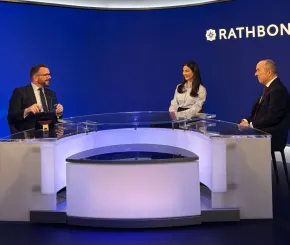
Hello and welcome to the Rathbones Multi-Asset and MPS quarterly webinar. My name is Tom Whitfield. I'm the investment specialist here at Rathbones and I'm joined today by David Coombs, head of Multi-Asset investments.
So today we are going to outline the strategies in the portfolios and the current positioning, specifically more on UK politics and how it's affecting the bond exposure, a higher for longer oil price and AI, trying to pick the winners and avoiding the losers. Just a bit of housekeeping, we are using Bright Talk, so we actually can't see you on our screens. So if you have any Q&A questions, there's a Q&A button at the bottom of your screens. If you post them there, we'll try and get to them at the end. And if we don't manage to get to your question, we will definitely ask answer them after this event. We are also recording this webinar should you wish to pass it on to any clients or colleagues, but we also do quite a lot of other content. So, we produce quarterly notes, monthly notes, and we also have a podcast called The Sharpe End. That covers off more of a macro view. Today, we're going to try and cover off a bit more of the positioning in the portfolios.
So, with that, I will kick off with UK politics if that's okay.
So, we started the year with the Gorton and Denton bi-election. Then we went into the May elections where Labour suffered some heavy defeats, and it's gone on then to a bit of a crisis within the Labour party and a leadership challenge. So, David going back to Gorton and Denton first, how have we changed the position in the portfolio and then we can go through the timeline on how it's evolved.
David Coombs
Sure. Yeah. I mean just when you thought things couldn't get worse, they got worse and we've been quite positive on gilts for some time because the real yields were quite attractive, then we've had two factors really affecting yields obviously the Iran war which we'll probably come back to later but in terms of the shenanigans going on in number 10 and the leadership challenge, that brings another element of risk to the gilt market and we've had to really rethink our approach to gilts, so having been overweight duration longer maturity than the benchmark or the index if you like, we've completely shifted our position and that started as you say just before the bi-election because it was very clear that there was a chance that Labour would lose that bi-election to reform.
Tom Whitfield
Probably not quite as heavily as we thought it actually did happen.
David Coombs
Indeed, but the opinion polls were pointing towards that and that made us think that if they did lose that election you would start to build that narrative of a challenge to Starmer and so we sold some gilts before the bi-election the day before in fact and obviously that turned out to be the right thing to do. Of course, then the narrative moved on fairly quickly towards the local elections. When I say quickly, it felt like an incredibly long time when you look at the markets on a daily basis, but clearly that was the next big kind of scorecard if you like for the administration. And again, you know, it didn't look overly positive, and so we reduced gilts just before the day of the election. And again as proved that was the right thing to do and then streeting put his name forward, oh sorry he resigned. So that was another signal.
Tom Whitfield
Yeah, it’s gone a little bit quiet now, hasn't it?
David Coombs
He has but of course that's opened the door to Burnham. He then got the bi-election for Makerfield. As these news stories are broken, we've lost more and more conviction around gilts in the short term. I have to say it is the short term because now we're in a situation where Burnham and Streeting are going to outdo each other in trying to appeal to the members of the Labour Party to vote them in. And let's just remember that one of the reasons Starmer is in this problem, mess if you like is because the backbenchers in the Labour party are more left-leaning which is why they weren't able to reduce welfare spending which has already unnerved the bond market to a certain extent, with what Burnham has said in terms of nationalisation, wealth taxes which Streeting is also talking about all of these are very much talking to that electorate in the Labour party rather than the wider electorate.
The point being though they are talking to that electorate that microcosm of electric but of course the bond market's watching and the bond market doesn't like what it's seeing, it's a bit like what Liz Truss was saying to the electorate but I mean we're literally in the same situation and this is to if you're an outsider looking in from a global investor if you're on New York or Tokyo going do I want to buy UK government bonds right now you're probably mm I think I might wait and see.
Tom Whitfield
It's the uncertainty, isn't it?
David Coombs
It is. Now, unfortunately, we've had this sell off in global bonds at the same time because of the Iran war and the oil price, and I know we're going to talk about that a bit more detail. So, you've had these two negative forces hitting the gilt market. And so, as I said we went underweight if you like, duration earlier around the original Denton bi-election.
We are probably natural buyers where the yields are now. The 10 year went to 5.2 a couple of days ago. Even with inflation at three that's still a 2% real yield. So on in some respects gilts look super attractive. The problem is the political risk is very high, and right now it’s a we'll wait and see, please.
You know, what do I think is likely to happen, if I had to put a bet on it, and I'm not going to I'm not a betting person, but it looks like Burnham with maybe Rayner as the dream ticket for the Labour Party, I don't think that's a dream ticket for the gilt market.
Tom Whitfield
I was going to say from an investment point of view, who is going to be a good outcome and who's going to be a bad outcome, do you think?
David Coombs
Well, I think it's who's the least worst outcome. Yeah. Okay. Yeah. Which is probably Starmer and Reeves actually. Although they haven't covered themselves in glory in the bond market because of all the U-turns and the issues we know about already, the
bond market knows what they're going to do. With Burnham and Streeting, I think Streeting would probably, despite the rhetoric he's saying be Starmer Esque. I think he is probably towards the center right of the party and the bond market would be reassured.
I just think it's unlikely he can win right now. I think it's very the odds are stacked against him and so we have to think about a Rayner and Miliband triumvirate.
Frankly as a bond investor, I'm a seller, we've even reduced in some of our multi- asset funds, the income funds where we have a bigger UK equity waiting. We've been trimming a lot of our UK domestic names because we are we just feel in the UK economy right now the risks are very high. So, what have we done with those gilts that we sold? We've bought some two-year gilts or quasi cash, and we've also diversified into US treasuries where yields are also being pushed up, and we've started buying some US index linked as well.
Tom Whitfield
Okay, very good. And so obviously yeah, we do see some value in that space. But if we think of what's the difference between buying government bonds and corporate bonds and our on our view so credit spreads are still quite tight and so credit spreads are the difference between yield of a government bond and a and a corporate bond but so talking about corporate bonds is there any space for them to squeeze into the portfolio at the moment?
David Coombs
Short answer, no. I mean, optically they look quite attractive because the yield on investment grade and high yield is 5 and a half 7%.
Tom Whitfield: They have they look like they got good balance sheets as well and they run quite well run better than the government anyway.
David Coombs
Well, yes indeed in most cases. I mean, there's a number of issues going on in the corporate bond market. First of all, to your point, spreads are quite tight and corporate bonds are less liquid than sovereign bonds. So, if you're needing to trade quickly to move your strategy around and be really active like we are and given what's going on, geopolitics is so volatile. We've also got Russia Ukraine which sounds like it could be coming towards the end but you know the geopolitics is so fast moving and with Trump tweeting this that and the other you want to be able to be dynamic, and you want to have liquidity.
Tom Whitfield
It's even more exacerbated when liquidity dries up, these will get hit a lot harder than the government bonds.
David Coombs
Yes, the point being with corporate bonds spread so tight that means you're not being paid for the extra risk or we call it liquidity premium. So, on a risk-reward basis, corporate bonds versus sovereigns don't look very attractive. Now, some would say, well, yes, but at the moment, you've got all the big hyperscalers, that's the, you know, the Amazons, the Google Alphabet, the Metas, etc., all borrowing loads of money and issuing corporate bond debt. And one might say, well, Alphabet's balance sheet looks more coherent than the UK right now. So, I have some sympathy with that and maybe they should have a better rating than the UK, you know, whatever. But right now, you're not being paid for the risk in the corporate bonds. You can't trade as actively in size and you can't be as active and as nimble in terms of reacting to these events. So, for us right now having a much broader sovereign bond exposure through US, Norway, Australia, New Zealand, and yes, still the UK to a certain extent. We can move quickly and react and hopefully take advantage of some of this volatility in geopolitics. You can't do that in the corporate bond market. And also, in the UK corporate bond market around 60% of that market is UK financials. So, it's quite a concentrated sector as well. So on a total return basis corporate bonds are quite interesting. So, I can understand why some of our peers are buying corporate bonds but for our style where we're using the fixed income to manage risk. We need that liquidity to help us be nimble and fast moving.
Tom Whitfield
Okay. So going moving sort of slightly away from bonds then when you talk about bonds you have to think about inflation and when well what's going on in the in the Middle East at the moment and the impact of a higher for longer oil price the Strait of Hormuz is the sticking point at the moment, but if it if the oil price does stay higher for longer, what are the implications of the portfolio and sort of how have we positioned ourselves for maybe a reopening at some point?
David Coombs
Well, I mean, how long is a piece of string? We don't know when the Strait of Hormuz will open. You know, my gut tells me that we've got the midterms, October, November, coming up in the States, and Trump's got himself into a bit of a pickle, to say the least. And therefore, that's the one thing that underpins my view that at some stage this crisis comes to an end in a relatively near term.
Tom Whitfield
And the straight needs to open up again and production needs to come out and it's going to take a little while to get it going.
David Coombs
Some Chinese ships have got through recently and hopefully that's a sign that things are going to ease but you know we can't guarantee it. So we have started to think about what does that look like without it being like our core view but you know we can't ignore the fact that the oil price could be $150 in six months’ time, we have to try and think about how we look through that, obviously the US economy is more energy neutral it is impacted by prices and again that's why Trump needs to find a solution because you know the gas price in the US is highly problematic to the administration if it's rising, it has a big impact. They travel a lot in cars, it's just the scale and the size of the country so that has a massive negative impact on the view of the ruling party right so but having said all that the economy is more energy neutral and I think it's much more resilient than say Europe and the UK so it does mean you want a new equity portfolio to probably have more of a tilt towards the US economy that is less impacted by oil prices than say Europe and even Asia to a certain extent.
Tom Whitfield
Well, we've seen it since the Iran war, the US market is outperformed.
David Coombs
Well, yes, but there are some other issues there. Yeah, we'll come on to that.
So, I mentioned earlier buying some US tips. They are US index link bonds. So, we're starting to think about some protection. We have some exposure to copper in the portfolio. We are looking at other commodities as potentially we haven't added yet, but we may well do so because you what you want to do is start to introduce to the strategy what's causing implications. We've already got a good oil exposure. We've got a market waiting in oil. So that's helpful. But we are looking and we and we own Freeport McMoran for example in copper mine. We've got the copper structure product that's capital guaranteed but gives us around 16 to 17% of the upside of copper and we are looking at what other areas whether it's agricultural commodities we haven't bought them yet but we are looking at that as a potential if we think this inflation story is has got a longer playbook then that's how we'll start tilting the strategy more and more. we've already started. We'll never be all in, but there's still more that we can do and that's what we're discussing on a daily basis right now. And as I said, it's not our core view that this goes on for another 12 months, but we've got to start, you know, kind of thinking about if yeah, as if it goes longer, what are we going to do? How are we going to navigate that?
Tom Whitfield
And prior to prior to the war, certain sectors were doing well and they've been hit hard. So, what sectors do you expect to do well after this and what exposures do we have?
David Coombs
Yeah, I mean just to give an example, one of the sectors that has done particularly badly is anything to do with transport and travel, right, for obvious reasons. And you know, we've seen some big deratings in some of the aerospace sector. We hold some already through Parker Hannifin and Thales, which is also linked to defense. So aerospace is a very good example of a sector. It also talks to the halo, you that kind of hard assets low obsolescence. It makes stuff right and its less AI disruptable and it gives you proper diversification of the portfolio aerospace because it does bring that element of cyclicality and as soon as the oil price starts rising aerospace does badly as does airlines, as does hotels and travel agents like booking.com etc. So we are starting to look at it, we talked about what happens to inflation if the crisis goes on but we're also looking at the other end of this telescope well what if it does come to an end which are the beaten up sectors that we should be adding to and that's what we're doing.
Tom Whitfield
Yeah, because it's really been sort of a one-way trade currently when the Iran war kicked off and people were sort of looking for the indispensable structural growth drivers and the future incomes of these AI stocks and the it's been a very concentrated market and the hyperscalers don't seem to be sort of slowing up in their spending. The S&P since the Iran war I think 75% of their returns came from eight stocks. It is all tech, all semiconductors and we have the high concentration of two names in Korea. So, is this the only trade in town and how do how do we navigate it now and then looking forward?
David Coombs
So, I mean here's a bit of a mere culpa right, our performance year to date is disappointing right we first to admit that, well it's disappointing relative say to a market weighted index because as you've just alluded to the concentration in markets has been incredible so since the war started the S&P 500 index is up 8%, the UK index is down over four. The S&P equally weighted index is down 1%. So, you can see how that concentration is having an impact. So, clients are looking at the S&P and think oh it's fantastic, but that's about eight or nine stocks. The rest of the market is down.
So if you've got a diversified portfolio, you have pretty much no chance of matching that unless you're a passive as you say because the passives are just reflecting that concentration and just adding in more and more and more to those favored stocks. I've also heard “oh yes, but we bought emerging markets. We diversified” No, you haven't. Diversified geographically but not actually in sector. So the so Taiwan semiconductors which is a stock we hold in the portfolio is you know 14% of the emerging markets index right the Korean market which is now bigger than the UK market, 55% of that market is two stocks linked to semiconductors, Samsung which by the way isn't just semiconductors I think they still make fridges for example and TVs and other stuff and 20% SK Highnix which is semiconductor so this these asset allocation calls geniuses, I'm sorry, it’s not it's one trade globally that's driving the markets up. It's got nothing to do with geographic allocation. So, since the war started it's all the growth in the industries has been semiconductors and it's not even been the hyperscalers really. You've had some very mixed results from you know from Meta and Microsoft. So, it's stocks like Intel, Advanced Micro Devices, SK Hynix. Now we had no exposure to those semis. Then why did we not have exposure to those types of businesses? Because typically they were highly cyclical, seen as quite poor-quality businesses that you didn't want to hold over the long term. And even now, you know, Intel is by no means, you know, a great company, although it has a new CEO who's trying to turn it around and you've got Trump as a new shareholder. Well, I should say the US as a new shareholder, not Trump personally, although he may well be, who knows? And so this is a highly cyclical sector. It's gone from 4% of the world index to 14%, Intel's up over 200% in a very short period of time. The semiconductor cycle in the past been one to two years. You have to time those stocks very quickly. That's kind of not what we do. So we haven't rushed out and bought those stocks and panicked and said we're missing out. But what we have done, we recognize there's a huge being shift in momentum that's driving the market. And so we need to reflect that momentum as a factor risk, which means that when stocks are moving really fast, if you if you don’t address that, you could miss out on a huge part of the market returns. Now, we don't want to go out and buy a load of those semiconductor stocks, right? For all the reasons I just talked about, they're highly volatile. They are very mixed quality. So what we've done to address that in the short term as a tactical position, we've bought an ETF for the semiconductors which includes those names I've just talked about and others. We've also bought an ETF for Korea to cover off the Samsung not emerging markets because we've already own Taiwan semiconductors in the portfolio and by the way we own ASML.
We have a market waiting now in chip makers but that's 14% of the portfolio. Okay. but where we hold direct stocks it's only those companies that we think long-term are winners of the AI trade. We think some of these others are just short-term winners because there is a supply blockage in chips and the market's getting over excited. so, we're dipping into this trade for now but because we're using an ETF, again, similar story to bonds really. It's very liquid. We can move in and out quickly and that's the kind of market we're in right now with the geopolitics driving it. We want to be as flexible as possible to tilt the portfolio quickly. And so, we're using those ETFs to kind of capture the upside risk and hopefully that's the way it'll play out. If not, we can get out really, really quickly.
Tom Whitfield
AI has been really great for certain sectors but also on the other side it's created some headwinds for other companies. So if we take these all these fantastic AI models that come out or agents that come out from anthropic and from Claude and they're basically coming out and saying oh we can do the lawyers job we can do the wealth management role. So, these models come out and then the market reacts extremely quickly, and these stocks sell off and we've had some in our portfolio. So it might be worth just touching on a few of them and how we're looking at the stocks in our portfolio and trying to avoid that Kodak trade. What who are actually going to be long-term winners? There could be some buying well there is some buying opportunities. I think the companies have been hit hard. So maybe worth just touching on that.
David Coombs
You're right. So again, going back to the performance year to-date which has been so challenging because you've had the AI winners which has been an incredible uplift in that part of the market as I say globally and then on the other hand you've had the AI disrupted and the Kodak traders. Kodak invented the digital camera; they didn't take it any further as they didn't think it would catch on. Whoops. Making photographic film suddenly wasn't very attractive and Kodak went bust. Okay, it's a bit like Blockbuster video, they had the opportunity to buy Netflix, and they turned them down quite arrogantly. They thought it would never catch on. Look where Netflix is now, Blockbuster went bust, your business model has been so badly impacted by new technology you are no longer relevant, and you go out of business. Yeah. That’s what we call the Kodak trait, and that's what the market's been doing, it's going sector to sector, and it's been data companies like Relx which we own, Experian which we don't. Platform companies like Booking.com that we had owned where we sold, the Ubers of this world, lots of so those sorts of businesses have been sold off, software companies across the board we and we own a few of them like Salesforce and Adobe which we've sold but some of the other software stocks we still hold were also hit quite hard, things like London Stock Exchange was hit hard as a data company so there were lots of sectors that got really sold off and that was extremely painful. So what we have done is reappraise those sectors and think okay, in many cases we think the businesses are fine but the markets now want to see proof. It's quite hard to prove a negative for those companies and so it will take years for a Salesforce or service now or Adobe probably to convince the market that they're not Kodak.
The trouble is you can't just leave capital there for two years and hope. So I think those companies will probably be okay, but it kind of doesn't matter what I think right now. The market doesn't care. So we've looked at software and rejigged our software portfolio. So, we still have a market waiting in software, but we own SAP which is much more involved in logistics and manufacturing, it's what we call seat based business and to just describe what that is. For example, at Rathbones, if we want to use a software product from Adobe, you would be charged by the number of users, whereas SAP is charged just on a fixed contract basis with a with a company rather than per employee.
Tom Whitfield
That’s why Adobe got hit so hard because more AI doing the jobs that Adobe can do, less seats.
David Coombs
In Salesforce, if you've got a team of 100 salespeople, that's 100 licenses you pay. If you reduce your Salesforce to 50, that's 50 less licenses. Or if you've reduced it to 10, because you replace people with AI, then these seatbased businesses, the models don't work anymore. And if AI replaces their product, which is what Anthropic is claiming in many of these kinds of press releases, then the entire business is wiped out. So, you can see there's a lot of threats to that business model. Now they can think about how they price at a company level rather than individual levels. There's lots of things they can do but it's going to take time, and the market isn't willing to wait.
So, we own SAP, we own Cadence. It's software but it's involved in chip design. You can see probably why and Cadence has rallied massively. We added to it during the during weakness and now it's rallied back. We own Shopify which again is linked to e-commerce, and we own Snowflake, which we think is important. It's about managing data that AI can then sit on top of but as often the case with market, it just sells off every software company and that gave us an opportunity to reappraise and really back the conviction in those business models that we felt were more likely to be reappraised by the market. That doesn't mean SAP is better than Salesforce. It's about understanding what the market is looking for and how quickly they can turn that around. But we've also looked at other sectors where actually AI isn't a disruptor, but they've also sold off really badly. I mean medtech has been a dreadful place, we own some high-quality businesses like Boston Scientific and Striker. Boston has gone from 40 times earnings to 15 times earnings. Now even if you don't understand what PE ratios are, that's basically saying the valuation of that company has gone down by 2/3 in the space of 6 months. It's been savage and part of that's due to Trump and health care spending in the US but on a long-term basis the demographics supporting medtech are still in place and we've been increasing our quality of our medtech exposure, and we are still have high conviction. The market doesn't agree with us at the moment, but we think we have to be patient, it might take 6 months, but at some stage the market will start looking for good valuations and medtech looks like a sector that has good valuations and it can't be disrupted by AI. So what we're doing right now is just looking through the carnage of what the market's done over the last 6 months and some of the stuff that's been thrown out, you really want to be buying, and we've been increasing the quality in various sectors across the portfolio. In financials, we've added Marsh McClennon and switched out to Brown and Brown. They're kind of in the same insurance subsector, but you're now buying a higher quality company at a much cheaper price. And that's what we're doing right now is not overreacting to this concentration, but where we can see sectors where company we wanted for a long time are falling. Hermes is another one, we switch from LVMH to Hermes, a much higher quality business, buying it at a price you've not seen for 5 years or more.
Tom Whitfield
So, we concentrated a fair bit on software and the negative parts. What's what's done well over the quarter in the portfolios?
David Coombs
Well, lots of stocks in the portfolio have done incredibly well. We’ve already touched on Nvidia and ASML, ASMI, TSMC, they've all performed extremely well, but also some of the other companies linked the AI trade, Weirdly, Caterpillar Because it's linked to the power story. So, obviously with all these data centers being built, they all need power. So companies like Schneider Electric, Caterpillar, companies that are involved in building the data centers, getting the contracts of those data centers or the owners of the data centers, Equinex, which is owns a lot of data centers in the US and in Japan, those share prices have done incredibly well and some staples like Costco have done incredibly well. Whereas a lot of consumer discretionary businesses I mentioned have done badly there have been pockets and Coca-Cola again has been very strong over the quarter. So, there's been lots of strong performance in the portfolio, but it's been offset by trade this AI trade that is so binary, you've the core portfolios performing pretty well. You’ve then got the technology pieces stratospheric on the one side and then you've got these software data companies and others I've talked about who are seen as the AI disruptables. We didn't quite have enough of the tech even though we had a lot but the market waiting is now so huge and we have probably too much of the ones that were hit but we've been adding as I just mentioned to those sectors that have been hit. So, we think from a valuation point of view the portfolio looks in really good shape. I would also say the turnover has been very high. So people see the turnover has picked up. Don't be alarmed by that, that's what active management is about, this is when you get this volatility when you get these macro crises, that's when we see these opportunities, buying companies on a 5 year view that they've been on our bench for a long time. So, it's painful, it's frustrating, I’m frustrated. But as an investor, a professional investor, you have to be patient and I know one wants to be patient, right? And everyone's worried about missing out, but it’s about staying disciplined because it's about the next three-to-five-year returns, we need to focus on, not next three days or 3 weeks.
Tom Whitfield
Just conscious of time, we've got a few questions coming through, one has asked: They look at ARC as a competitor, is that a good analysis versus our portfolios?
David Coombs
There's nothing wrong with ARC. I mean I think ARC does a really great job. I think that’s the first thing to say and I think they really help clients, particularly in the multi-asset space where people are targeting inflation plus returns. It's quite hard to compare. So I think it's it's helpful. I think the problem we have is that we you know in the MPS for example we have seven risk strategies in the Multi-Asset funds we have five plus an income strategy, they don't map directly, none of those funds have ARC in the objectives of the fund they are not a benchmark or comparator for any of the funds or the MPS and so some of our funds will sit in two funds, will sit in one sector and sometimes three in the arc sectors so I think you got do a bit more work, you can't just compare the funds to ARC because they just don't sit in there. So, for example, the strate growth fund sometimes the equities will be in one arc index and sometimes if we're adding equities it'll slip into the other ARC index, they don’t stay in the same arc index all the time. So I think have a look at them, use them, but be careful. I think that would be a watch word. You have to remember that when we're looking at de facto or dynamic planner, they have much narrower windows of risk tolerance compared to the ARC indices. So what I mean by that is the equity ranges in ARC are much wider than you have in those other risk agencies. And so we're kind of trying to thread through the narrower windows. We don't have the breadth that ARC would have because typically if we were looking at ARC, we'd have probably more risk in the funds.
Tom Whitfield
It's probably worth noting because we've had questions about the reporting as well of ARC and timing wise for clients.
David Coombs
Because everyone wants everything now ARC have to provide estimated performance numbers at the quarter end and most of the time that's okay they're pretty reasonable but in Q1 when you had a lot of volatility on the last day for example, the ARC indices were revised when they got the actual numbers in for Q1, it was four or five weeks after the quarter end, they revised them down quite significantly and that was a bit unfortunate because the quarterly numbers went out to underlying clients showing this number but the actual number was lower and so performance of funds or portfolios if it was in DFM world probably look worse relative than they actually were, that was also impacted by the fact that our Multi-Asset funds priced at midday on the last day of the month and the US market rallied on the last day of the month like a 3 to 4% and that wasn't captured in our quarterly numbers. So, when the quarterly numbers went out in our fact sheets we were hampered by the 12’oclock cut off and missing off the rally at the end of the quarter, plus the ARC indices had a much higher number than actually ended up being the case.
Tom Whitfield
I think maybe one more question. SpaceX, what are we thinking and are we going to participate in the IPO?
David Coombs
Well, we discussed this as a team yesterday and one of the team said, obviously on the inside, space is quite big, that's one thing we could all agree on and what we were talking about was obviously this theory that Musk was going to put data centers in space. Yeah, clearly there's room and then you try and get your head around, well, there's this great image going around at the moment on social media of this data center in the US being built. It's the size of Manhattan and everyone's trying to think about what rocket do you need to get that up there or how many rockets do you need?
It sounds silly, but actually if we take a step back and you think about some of the claims that are coming out. You mentioned anthropic as well. Yeah, there's some big companies IPOing this year. The hype around these names is huge and Space X is no different. I think the trouble with SpaceX is it's become a bit of a conglomerate because it's got X in the X is X now which is the old Twitter which frankly isn't worth very much. So that it's not just space in the business and it's not just Starlink and I think you can look at parts of SpaceX and think about what the valuation should be but we're working on it, there's going to be a huge amount of hype just about every bank in the world is involved with the IPO so they're going to want to get it away. You know I think at this stage I'm very skeptical. Not of Starlink, I think you can certainly see how Starink can have an economic value you've got the governance issues as you have with Tesla to overcome but do I think space is an area you want to invest in? Absolutely. It you know thanks to Musk and I'm not always his biggest fan, but they have brought down the price of getting satellites into space. So, it is making lots of sectors much more commercially viable using space in the pharmaceutical industry. For example, we met with AstraZeneca recently, you could see that certain testing will be done in space that in a vacuum you can't do on Earth. So, I think it's interesting, but I'm very nervous around the hype. You want to buy in the secondary market rather than the primary as in wait for the IPO, get the hype out the way. Wait till you can see a bit more bit more transparency as well. So, what's the reality rather than the hype? So we will see, we’ll keep an open mind.
Tom Whitfield
I will watch this space. On that note, thank you very much, David, for attending. I hope you all found that very useful, sorry if we didn't get back to any of your questions, we will endeavor to get back to you after. Thank you for joining and we'll see you next time.