




We look past the headlines as earnings resilience battles AI worries, bond-market nerves, and geopolitical uncertainty.
Article last updated 14 September 2026.
|
Quick take
|
Breakneck technological development has transformed the battlefield – and therefore the risks and opportunities for portfolios. But for all the investment potential in upstart defence-technology companies, technological advance has far from destroyed the investment case for established players.
The interminable war in Ukraine increasingly shows modern warfare as a contest of endurance rather than of rapid battlefield advances. Militaries are struggling to break the deadlock, as technological innovations are quickly replicated.
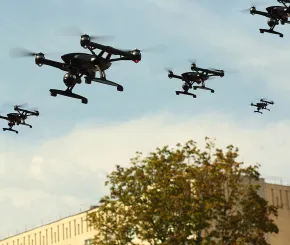
Drones are central to this. Both sides have deployed vast numbers of inexpensive Unmanned Aerial Vehicles (UAVs) to target tanks, logistics hubs, ships, and even energy infrastructure. This means precision targeting – the ability to strike with pinpoint accuracy – is no longer exclusive to advanced militaries.
Continuous drone and satellite surveillance has also greatly increased battlefield transparency, heightening the need for concealment and deception. As both sides seek to counter each other’s drones, electronic warfare techniques such as jamming, AI-powered targeting, and autonomous navigation have become crucial. Ukraine shows one scenario for future fighting: attritional warfare – trying to win by gradually wearing your opponent down – that’s dominated by drones.
The Iran War shows another scenario: asymmetric warfare. Iran has relied on swarms of low-cost drones and missiles. That forced defenders to use up interceptors worth millions per shot, at a high overall cost. This means the economics of defence, as well as the tactics, need rewriting.
Innovation across the defence industry
Drones capture the most attention, but we see innovation everywhere. Spending on software is growing fast, driven by factors such as complex planning for missions, cyber warfare, and using AI to support decisions. Battles over cyber security could challenge drones as they move from models operated by a person to autonomous versions.
In the twentieth century, wars moved into the air. In the twenty-first, they could move into space. For example, low-Earth-orbit satellite constellations mean a metamorphosis in space-based intelligence, surveillance, and reconnaissance. Modern militaries depend on satellites for GPS navigation, intelligence gathering, secure communications, and missile early-warning systems.
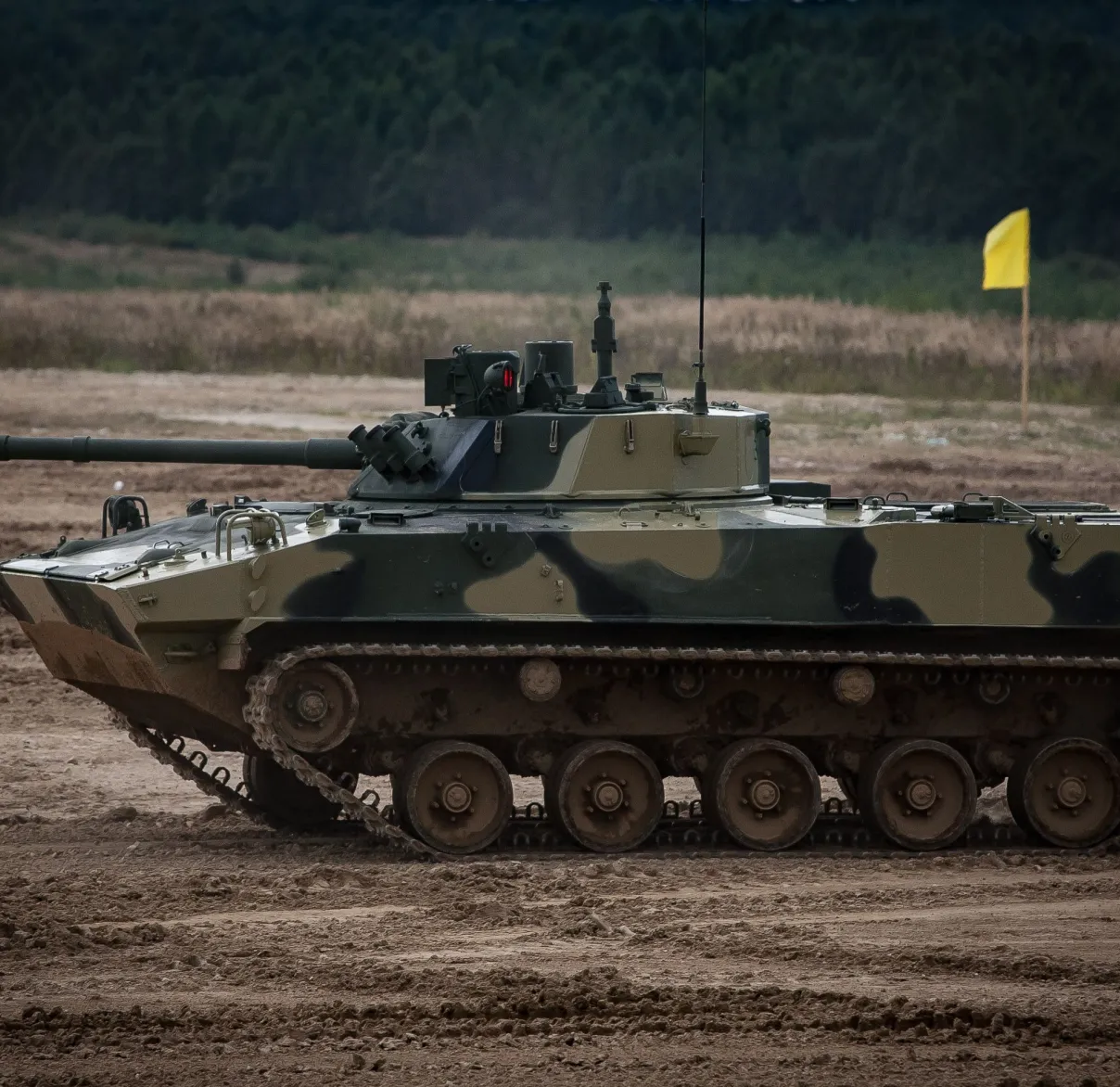
Military aircraft, ships, and armoured ground vehicles are being retrofitted with sensors, processing, and electronic warfare capabilities to create a connected, network-centric battlefield, where people can see their present situation more easily.
Meanwhile, autonomy is spreading across the combat zone – and beyond. Uncrewed surface vessels are emerging. Ground robots are used for resupply and casualty evaluation, or to carry mounted weaponry.
Traditional military capability still matters
Recent conflicts highlight the evolution of warfare. But the US and Israeli strikes on Iran show conventional superiority still matters. Their airpower rapidly degraded Iran’s military infrastructure. Critical advantage still lies in precision strikes, advanced intelligence, and using integrated networks to hit targets.
And humans are still part of the picture. But to cut costs and reduce casualties, militaries are shifting to hybrid forces, where humans and drones are combined. Crewed platforms act as command centres, while uncrewed assets handle the riskiest tasks. This extends the reach of aircraft, ground vehicles, and warships – if people aren’t put at risk, militaries can be bolder.
For example, the UK’s Defence Investment Plan, announced in June, details how the Royal Navy is becoming hybrid. At least six Common Combat Vessels (CCVs) will act as motherships alongside crewed frigates. People on the CCVs will coordinate uncrewed fleets.
Affordable air defence
Integrated air and missile defence is vital on the battlefield. It also protects populations and infrastructure, such as airports and power grids, from missiles and UAVs. Saturation attacks, in which massed volleys of cheap projectiles seek to overwhelm advanced defences, are pushing defence systems towards cost-effective models with different layers of protection. That could include affordable interceptors, electronic jamming, and lasers that neutralise drones at minimal cost per shot.
France’s Thales can benefit from the growing demand for affordable air defence through ForceShield. It offers a cheaper means of countering drones and other low-flying threats than expensive interceptors.
Funding the future
Novel technologies are set to account for a growing share of UK defence procurement.
Up-ending procurement
The Iran and Ukraine wars have utterly changed procurement. Historically, a small number of expensive military assets have taken years to build. But increasingly, these advanced weapons systems are blended with affordable solutions delivered at scale and at speed – and speed has always mattered in warfare, by giving one side a technological edge.
The UK’s Defence Investment Plan reflects this. It still prioritises naval nuclear deterrence and the Global Combat Air Programme, a stealth jet developed with Italy and Japan – both highly expensive undertakings. But there are no destroyers in it – heavily armed surface ships with a price tag to match. Like the Army and Royal Navy, the Royal Air Force is expected to move towards hybrid squadrons, in which swarms of uncrewed drones support pilots.
What this means for investors
Heightened geopolitical tensions are prompting increases in defence spending. Various conflicts have depleted stocks of munitions, missile-guided seekers, and sensors. This requires years of restocking. The US’ RTX is benefiting from efforts to restock and strengthen air and missile defences. It has leading positions in, for example, air-to-air missiles (the AMRAAM).
Agile defence-technology companies can develop disruptive solutions at speed. But established contractors also stand to gain if they can embrace innovation and combine it with their close ties to customers and deep understanding of combat missions. Start-ups and specialists are innovative. However, they often need to partner with major firms to scale production and manage the regulatory frameworks and compliance standards needed for government contracts.
Finding investment opportunities in drones is more challenging. First-person view drones, operated by people using cameras on the drones, have become commoditised: no company has a competitive edge. Ukraine alone produces eight million drones annually, across more than 100 manufacturers, and any easing of hostilities could flood the market, hitting margins. Supply of more sophisticated drones is dominated by large defence companies, but these account for only a small share of revenue.
The UK’s BAE Systems, for example, has rapidly expanded its drone business, becoming one of the largest European producers outside Ukraine. Yet drones still account for only a single-digit proportion of group sales. US-listed specialist manufacturers such as AeroVironment are growing rapidly, although investors are already paying a premium for that growth.
In other words, the strongest investment potential doesn’t, at the moment, lie in drones. But there are plenty of investment opportunities in both directing them and adapting to the revolution in warfare they have unleashed.