


Article last updated 1 May 2026.
Quick takeJohn Wyn-Evans explains our investment response as the Iran conflict continues to push up the price of energy and create shortages in key materials:
|

We help a wide range of clients invest well so that they can focus on what matters.
Who we helpFocusing on you and your individual goals.
Helping turn the success of your business into financial security for your family.
Working with you, for your clients.
Helping charities invest in line with their mission and values.
We work with lawyers, accountants and other professionals.
Looking for someone to create an investment portfolio for you?
Our combined investment and planning service for a holistic approach to your finances.
Need help reorganising your finances and planning for the future?
Structure your wealth for the future by bringing together legal, tax, family, and investment considerations.
Looking for investments that align with your values? See our sustainable investment options.
Rathbones’ dedicated personal injury (PI) and Court of Protection (COP) team.
Helping clients with £5m or more to protect, grow and structure their wealth for the long term.
Private, corporate, and investment banking services through our partnership with Investec bank.
Learn more about what it’s like to work at Rathbones, and search our current vacancies.
Learn more about our Board, Executive Committee and our approach to corporate governance.
Find the Rathbones Group Plc financials, reports, investment case and key events.
Read the latest news from Rathbones Group.
Our secure online portal and app, designed to give clients a clear view of their investments with us.
Our driving purpose is to help more people invest well, so they can live well.
We believe in doing the right thing for our clients and for others too.
Our awards and industry recognition reflects our commitment to exceptional wealth management.
Explore a range of topics affecting your finances, from retirement planning to the latest legislative changes.
Read about the key investment themes affecting global markets.
Listen in to or watch our specialists in one of our podcasts.
Explore our articles, reports and events on investing responsibly.
Timely insights, real conversations. Watch live or catch up anytime.
Whether you have a question about our services, or need to talk someone specific, we can help.
ContactsFind your local Rathbones office. We have 21 across the UK and Channel Islands.
Find the contact details for your Rathbones team by searching our people’s directory.
Our team will be in touch to help you book a no obligation consultation with an adviser.
Access the contact details for our media team.
Need to contact us about something else? Here you'll find all the options.
Stay informed with our 14-minute investment update video, explaining what the Iran conflict means for financial markets.
Article last updated 1 May 2026.
Quick takeJohn Wyn-Evans explains our investment response as the Iran conflict continues to push up the price of energy and create shortages in key materials:
|
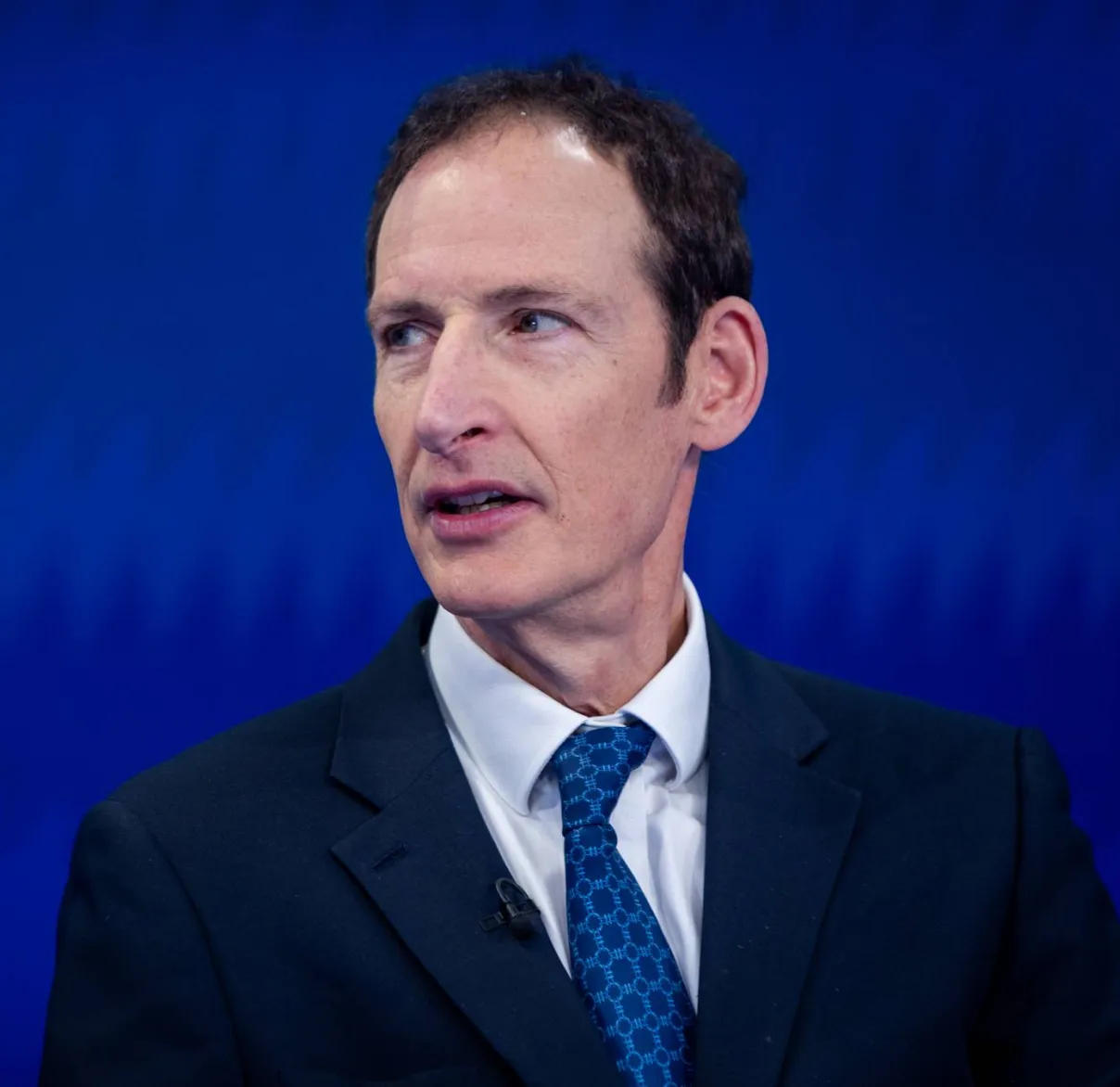
Hello, I’m John Wyn‑Evans and I am Head of Market Analysis at Rathbones. Welcome to our latest video update.
If I had suggested six weeks ago, at the time of the last update, that the Strait of Hormuz would still be closed but that global equity indices would be within a hair’s breadth of all‑time highs, you might have taken me for a fool. However, that is precisely where we are.
While equity markets did continue to fall through most of March, they rallied sharply on news of a ceasefire in the Middle East – one that continues to hold as I currently speak. Of course, that is a situation that could easily change. Despite the fact that it is hard to argue that the world is in a substantially better place than it was before the United States and Israel initiated their attacks on Iran at the end of February, there are several reasons why investors have reverted to a more positive outlook.
A key factor in all of this is the historical performance of financial markets around geopolitical events. In the past, there has tended to be an initially negative response as trading positions have swiftly been taken off the table owing to uncertainty. However, markets have historically tended to regain lost ground within a few weeks of whatever the incident might have been. Investors have been rewarded once again for following that particular playbook.
Even so, there will always be exceptions to such rules. For example, markets bounced quickly in the immediate aftermath of Russia’s invasion of Ukraine early in 2022, but they subsequently had to contend with central banks aggressively tightening monetary policy in response to inflationary impulses that had been evident even before that war began. As we now know, the ultimate trough for markets was not reached until much later in the year.
A more extreme example of further market falls was seen in 1973 when, in response to actions pertaining to the Yom Kippur War, Arab oil producers curtailed supplies to certain Western countries, including the United Kingdom and the United States. This led to a quadrupling of oil prices amid rationing of supplies.
Thus, we remain on our toes and on the lookout for any such risks in the current situation, and that is a subject I shall return to in a moment.
Another factor working in investors’ favour is the growth of corporate earnings. We are currently working our way through the first‑quarter results season, and it is clear that many industries entered the period having built up a good head of steam. In the US, for example, consensus expectations were for year‑on‑year earnings growth of 12%, and we are already somewhat ahead of that so far.
Factors such as currency translation headwinds meant that earnings growth forecasts in regions such as the UK and Europe were not quite so punchy, but what we have seen so far has been generally favourable. If we look further ahead, current consensus forecasts see almost 20% growth in global annual earnings in 2026.
Technology remains a key driver of that growth, thanks to capital expenditure on data centres and all things related to artificial intelligence. Remarkably – and possibly surprisingly to many – emerging market earnings are forecast to grow by 40% this year, driven by companies such as Taiwan Semiconductor Manufacturing Company and South Korean chip makers Samsung and SK Hynix. It might also surprise you to know that the market capitalisation of Taiwan’s stock market surpassed that of the UK’s during March.
That said, these estimates will be dependent upon the outcome of current negotiations between the US and Iran and are certainly not written in stone.
Finally, and perhaps more prosaically, there is still a great deal of investment capital looking for a home in a world where publicly quoted risk assets remain somewhat scarce. It will be interesting to see how this factor evolves later in the year should the projected IPOs of companies such as Elon Musk’s SpaceX and the AI innovators OpenAI and Anthropic come to market.
Market peaks have often been associated with high levels of equity issuance, and this trio promises to add up to by far the biggest combined offering in history. SpaceX alone could offer investors US$75 billion worth of shares – more than three times the size of the current IPO record holder, Saudi Aramco.
So, what of the situation in the Middle East?
Our stance throughout the conflict – and one that I emphasised in the last update – is that the current situation is to no one’s benefit, and one has to have a modicum of faith that we are not headed towards some form of mutually assured destruction. That continues to suggest that we should not materially reduce overall market exposure, especially as any further rally could be quite sharp and immediate on any firm news of a resolution. Indeed, we have already seen that happen a couple of times.
We also recommend that regular savers maintain their commitments and take advantage of lower prices. Should there be more wobbles, that advice is likely to stand. As ever, we characterise ourselves as investors, not traders.
As things currently stand, we are encouraged that the US and Iran appear to be in negotiations and that the ceasefire is holding. However, it is not abundantly clear what either side will settle on as being sufficient to declare some sort of victory. In Iran’s case, this could be the lifting of sanctions allowing the current leadership to remain in place, combined with some form of future revenue generated from ships passing through the Strait of Hormuz, potentially under the guise of reparations. For the US, the key objective appears to be some form of oversight of Iran’s nuclear capabilities, and this does seem to be the key sticking point.
As for timing, Iran may have the mettle to display more patience than the US and therefore argue for better terms. For President Trump, the clock is ticking toward the mid‑term Congressional elections in November, and he will want to ensure that the economy is on a strong footing to maximise the Republican Party vote.
Even so, we cannot ignore the potential risks, which may increase exponentially the longer the Strait of Hormuz remains closed. We are now at the point where cargoes of oil and other vital commodities that left the Gulf before hostilities began have reached their destinations. We could soon be witnessing not just higher prices, but actual shortages with more pronounced economic consequences.
It is worth remembering that while oil prices dominate headlines, other commodities potentially in short supply include urea, ammonia and sulphur – all key components of fertiliser – just as we enter the spring planting season in the northern hemisphere. Butane and propane are crucial fuels in parts of Asia and Africa, particularly for food preparation. Helium is vital for cooling semiconductor manufacturing equipment and MRI scanners. Around a quarter of the world’s aluminium supply originates in the Middle East, and this lightweight metal is critical for construction, transport, packaging and the transition to cleaner energy. A typical 3‑megawatt wind turbine contains roughly three tonnes of aluminium.
UK consumers will already be aware of higher petrol and diesel prices at the pump and may have experienced higher airfares. However, the full impact on travel may not be felt until holiday flights begin to be cancelled more frequently as airlines run short of jet fuel or are forced to ration supplies. There has already been some reduction in global flights, with capacity down around 3% so far, much of it linked to routes originating in or passing through the Middle East. German airline Lufthansa recently cut 20,000 flights from its schedule – only 1% of its capacity, but potentially the thin end of a much thicker wedge.
I have likened this delay between events in the Gulf and their global impact to the time between a lightning flash and the sound of thunder – the so‑called flash‑to‑bang time. The UK is relatively distant, but we will inevitably hear something soon. The only question is how loud that bang will be.
You may ask why we are not taking a more defensive stance. We continue to believe that investors will look through short‑term negatives as long as they expect longer‑term resolution. We have also constructed various scenarios and assigned probabilities to them. We continue to place the greatest weight on de‑escalation, involving a reopening of the Strait of Hormuz, perhaps gradually. This could see oil prices return to around US$80 per barrel from current levels above US$100, although still higher than before due to an embedded risk premium and the need to rebuild strategic reserves.
A muddling‑through scenario with restricted traffic could leave oil prices closer to US$110 per barrel. The worst‑case scenario – to which we assign the lowest probability – would involve further escalation and a severe energy shock, with oil potentially reaching US$150 per barrel or higher, alongside significant shortages of other commodities.
What would this mean for policy? Central banks are the key players. Expected interest rate cuts have largely been priced out. Only two months ago, markets expected the Bank of England to cut rates two or three times this year, from 3.75% to as low as 3%. We now expect a wait‑and‑see approach, with continued vigilance around inflation expectations. Monetary policy tools are better suited to managing excess demand than constrained supply, and market rate expectations remain volatile.
At one point, four quarter‑point rate hikes were priced in, only to be fully priced out again two weeks ago. Today, markets expect two or three quarter‑point increases this year. Were that to occur, it could further weaken the housing market and place additional strain on government finances.
So, what have we been doing in portfolios?
In terms of asset allocation, we remain fully invested, with risk exposure in line with benchmarks. However, we have made adjustments to improve resilience against less favourable Middle Eastern outcomes. We have reduced exposure to UK and European equities in favour of the US. The former are more exposed to commodity price rises and potential shortages and lacked strong momentum even before the conflict began.
We have also stepped back from smaller UK companies, which are highly sensitive to domestic economic conditions that have become more uncertain. The US economy is more insulated due to energy self‑sufficiency and its leadership in technology, particularly artificial intelligence.
Within fixed income, we have increased exposure to inflation‑linked gilts at the expense of conventional gilts. This is not a forecast for higher inflation so much as an insurance policy against that risk. We continue to favour shorter‑dated instruments to avoid volatility, as longer‑dated bonds are more sensitive to yield movements.
Overall, our message remains consistent. We are balancing risk and reward, mindful of geopolitical threats but also of the opportunities presented by technological innovation. Clients with short‑term liabilities may wish to be more cautious, but those with longer‑term horizons are encouraged to stay the course and continue contributing as planned.
Should our assessment change, we will act accordingly.
Thank you for your time, and I look forward to updating you again in a few weeks – hopefully with greater clarity and reduced uncertainty.
Get more our views on the latest economic and market developments and what they mean for you.
See how we can help grow your wealth over the long term, with peace of mind.
Ready to start a conversation?
The value of your investments and the income from them may go down as well as up, and you could get back less than you invested.
Wealth Management