



An ageing society is reshaping the consumer staples sector
Article last updated 8 May 2026.
|
Quick take
|
What is perhaps the greatest achievement in human history also poses one of today’s greatest challenges. The solution offers a clear investment opportunity.
The good news is that average life expectancy has risen greatly. But longer lives come at a cost. People aged 65 and above need substantially more healthcare: spending on each one is on average 3.4 times higher than for other adults.
A big reason is the high prevalence of multiple chronic conditions – long-term health problems that can’t be cured. In the US, almost 80% of older adults belong in this category. Age-related conditions include physical problems such as cardiovascular disease, type 2 diabetes, and various cancers. Neurological problems include cognitive decline and mental health issues.
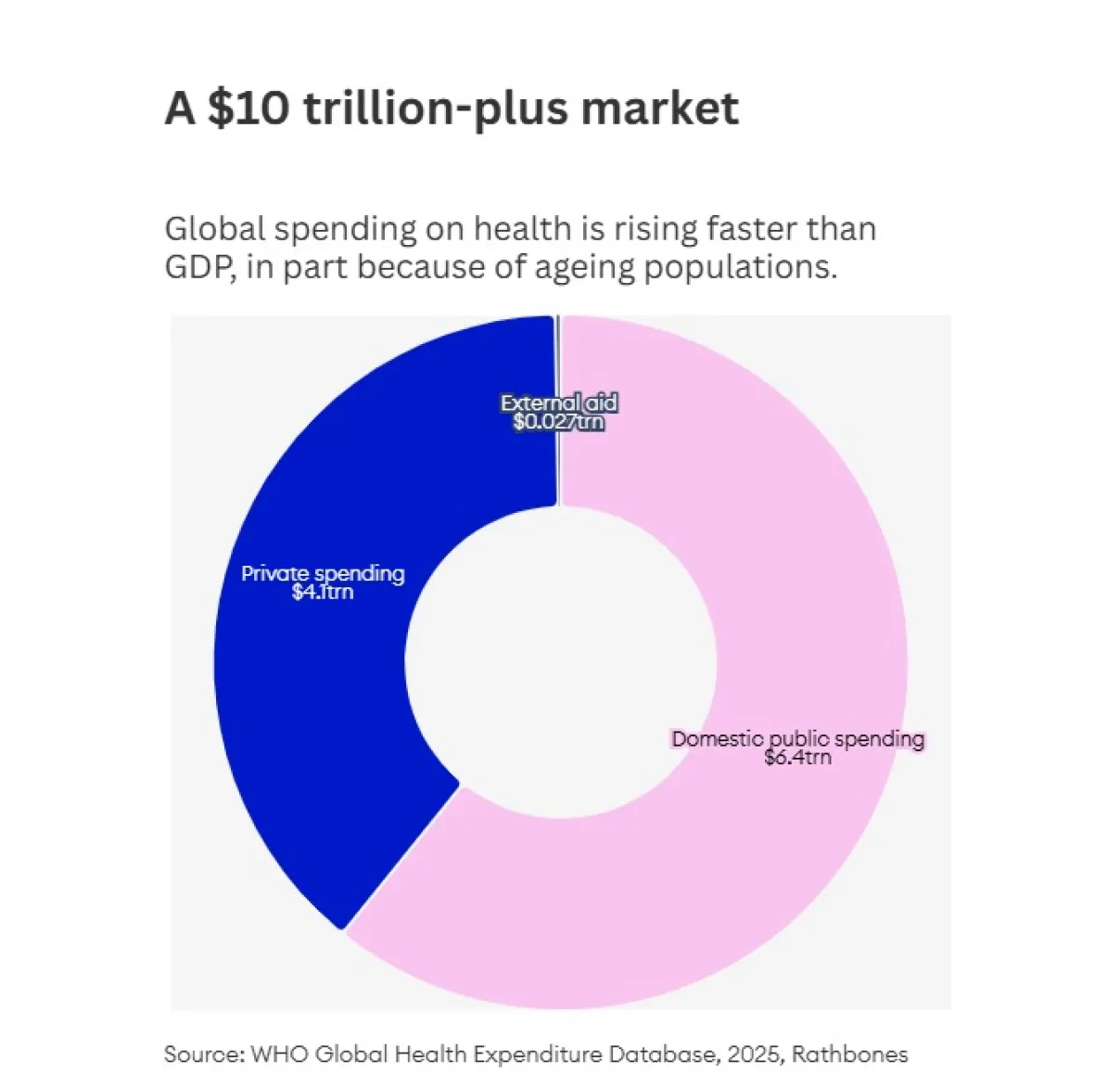
These demographic pressures have contributed significantly to the expansion of global healthcare expenditure – now above $10trn a year. That comes to 10% of total global GDP – and it continues to outpace GDP growth.
What kind of companies are tapping into this expanding demand? In the pharmaceutical industry, the firms that stand to benefit most include those with leading positions in treatments for cardiovascular and metabolic diseases, respiratory illness, and oncology. In medical technology, demand growth is strong in fields such as orthopaedics (hip and knee implants), cardiovascular devices (such as pacemakers and stents), and minimally invasive surgical equipment. Managed care companies that serve the Medicare Advantage market will gain from rising numbers of older beneficiaries. Medicare Advantage plans are private insurance schemes within the US federal healthcare system that provide cover for older people.
Here, as in every other industry, AI rears its head. AI-powered diagnostic tools can alleviate the burden of providing patient care by enabling earlier and more accurate detection of age-related diseases. So too can robotics and remote monitoring, which can help reduce the need for hospital stays. Technology can also address labour shortages by improving operational efficiency, easing administrative pressures, and freeing clinicians to focus on patient care.
Benefiting from the bulge
Several large-cap healthcare companies are benefiting particularly from this bulge in healthcare spending on older people. About 80% of sales of the UK’s AstraZeneca come from the treatment of conditions associated with ageing.
The Swiss company Roche combines large businesses in areas such as oncology, neurology, and immunology with the world’s leading in vitro diagnostics business.
Several US companies also have strong exposure to this theme. Eli Lilly is a leader in diabetes and obesity, conditions closely linked to ageing. It also has a strong business in oncology, immunology, and neuroscience, including one of the few therapies that modifies Alzheimer’s disease. Johnson & Johnson has innovative pharmaceuticals and medical devices, in areas such as immunology, oncology, and cardiovascular and metabolic disease.
Lastly, showing that we are already in the age of the robot, Intuitive Surgical supports surgeries with its robotic devices. That means shorter hospital stays, fewer errors and complications, and more efficient workflows.