




  • Wealth Management
  • Asset Management
  • Wealth Management
  • Asset Management
Location
  • United Kingdom
    Language
  • Jersey
    Language
  • Guernsey
    Language
  • US
    Language
  • MyRathbones login
  • Financial Planning login
  • Donor Advised Fund login
Home
  • Who we help
    Who we help

    We help a wide range of clients invest well so that they can focus on what matters.

    Who we help
    • Individuals and families

      Focusing on you and your individual goals.

    • Financial advisers

      Working with you, for your clients.

    • Professional partners

      We work with lawyers, accountants and other professionals.

  • Our services
    Services

    See our wide range of services tailored for your needs.

    Our services
    • Investment Management

      Looking for someone to create an investment portfolio for you?

  • About us
    About us

    A leading UK wealth manager with roots dating back to 1742.

    About us
    • Careers

      Learn more about what it’s like to work at Rathbones, and search our current vacancies.

    • Corporate governance

      Learn more about our Board, Executive Committee and our approach to corporate governance.

    • Media centre

      Read the latest news from Rathbones Group.

    • MyRathbones – Our digital platform

      Our secure online portal and app, designed to give clients a clear view of their investments with us.

    • Our purpose

      Our driving purpose is to help more people invest well, so they can live well.

    • Responsible business

      We believe in doing the right thing for our clients and for others too.

  • Insights
    Insights

    Read the latest news and market commentary from our specialists.

    Insights
    • Investing

      Read about the key investment themes affecting global markets.

    • Responsible investing

      Explore our articles, reports and events on investing responsibly.

    • Webinars

      Timely insights, real conversations. Watch live or catch up anytime.

  • Contacts
    Contacts

    Whether you have a question about our services, or need to talk someone specific, we can help.

    Contacts
    • Our offices

      Find your local Rathbones office. We have 21 across the UK and Channel Islands.

    • Our people

      Find the contact details for your Rathbones team by searching our people’s directory.

    • Let's talk

      Our team will be in touch to help you book a no obligation consultation with an adviser.

    • Our media contacts

      Access the contact details for our media team.

    • Other contacts

      Need to contact us about something else? Here you'll find all the options.

Let's talk

SearchStax standalone input

Investment in the age of the drone

7 August 2026

A revolution in modern warfare is posing questions for investment portfolios.


Claire Titmarsh, Equity Analyst
  1. Home
  2. Guernsey
  3. Knowledge and Insight
  4. Investment in the age of the drone

Article last updated 7 August 2026.

Quick take

  • Drones are reshaping warfare, turning defence from a contest of expensive weaponry into one of speed, scale, and constant adaptation.
  • Conflicts in Ukraine and Iran show cheap drones and missiles can strain advanced defences, forcing militaries to rethink costs as well as tactics.
  • Investors may find the bigger opportunity not in drones themselves, but in the software, sensors, air defence, and contractors adapting to drone-led warfare.


Breakneck technological development has transformed the battlefield – and therefore the risks and opportunities for portfolios. But for all the investment potential in upstart defence-technology companies, technological advance has far from destroyed the investment case for established players.

The interminable war in Ukraine increasingly shows modern warfare as a contest of endurance rather than of rapid battlefield advances. Militaries are struggling to break the deadlock, as technological innovations are quickly replicated.

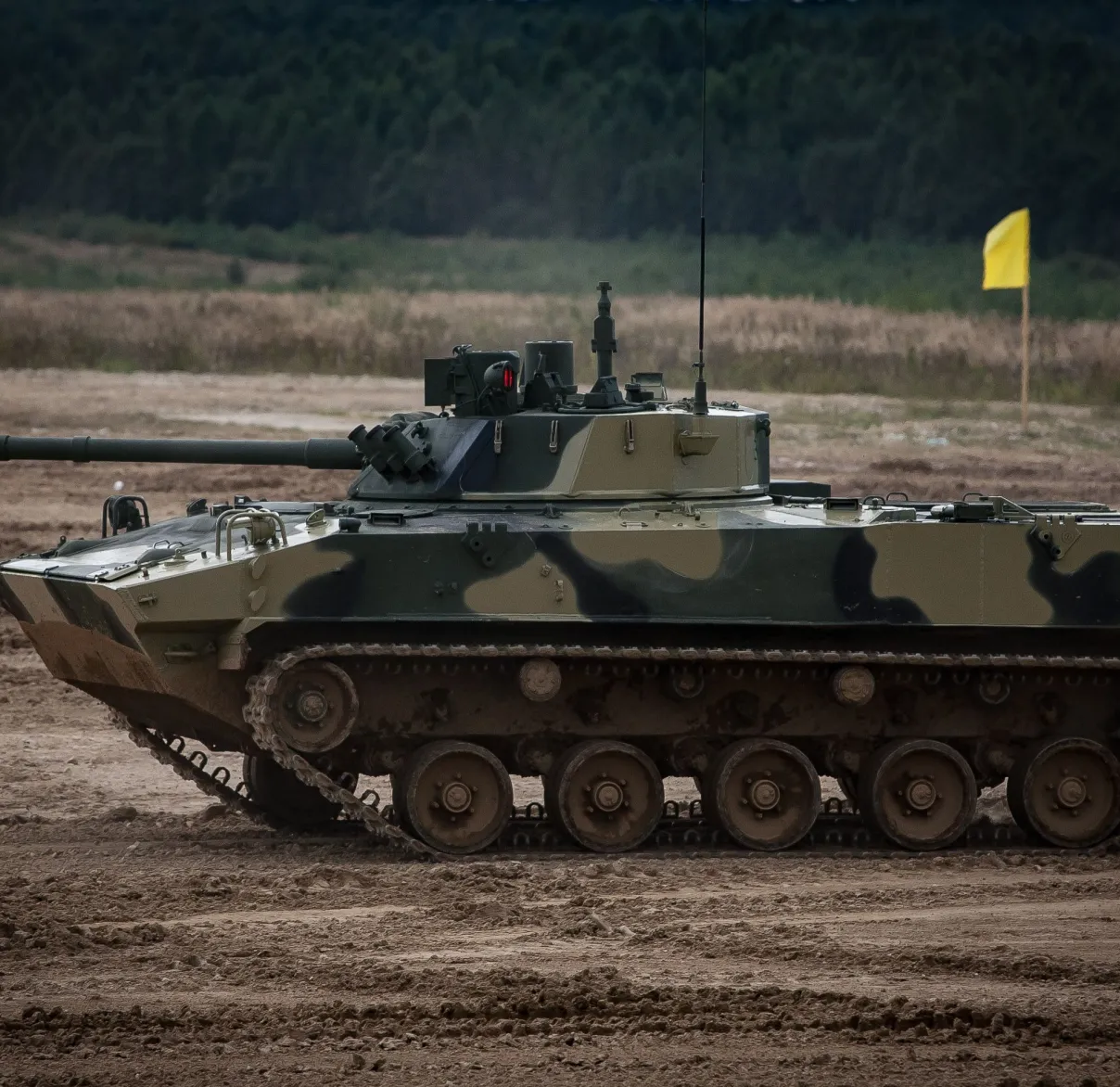
Drones are central to this. Both sides have deployed vast numbers of inexpensive Unmanned Aerial Vehicles (UAVs) to target tanks, logistics hubs, ships, and even energy infrastructure. This means precision targeting – the ability to strike with pinpoint accuracy – is no longer exclusive to advanced militaries.

Continuous drone and satellite surveillance has also greatly increased battlefield transparency, heightening the need for concealment and deception. As both sides seek to counter each other’s drones, electronic warfare techniques such as jamming, AI-powered targeting, and autonomous navigation have become crucial. Ukraine shows one scenario for future fighting: attritional warfare – trying to win by gradually wearing your opponent down – that’s dominated by drones.

The Iran War shows another scenario: asymmetric warfare. Iran has relied on swarms of low-cost drones and missiles. That forced defenders to use up interceptors worth millions per shot, at a high overall cost. This means the economics of defence, as well as the tactics, need rewriting.


Innovation across the defence industry

Drones capture the most attention, but we see innovation everywhere. Spending on software is growing fast, driven by factors such as complex planning for missions, cyber warfare, and using AI to support decisions. Battles over cyber security could challenge drones as they move from models operated by a person to autonomous versions.

In the twentieth century, wars moved into the air. In the twenty-first, they could move into space. For example, low-Earth-orbit satellite constellations mean a metamorphosis in space-based intelligence, surveillance, and reconnaissance. Modern militaries depend on satellites for GPS navigation, intelligence gathering, secure communications, and missile early-warning systems.

Military aircraft, ships, and armoured ground vehicles are being retrofitted with sensors, processing, and electronic warfare capabilities to create a connected, network-centric battlefield, where people can see their present situation more easily.

Meanwhile, autonomy is spreading across the combat zone – and beyond. Uncrewed surface vessels are emerging. Ground robots are used for resupply and casualty evaluation, or to carry mounted weaponry.


Traditional military capability still matters

Recent conflicts highlight the evolution of warfare. But the US and Israeli strikes on Iran show conventional superiority still matters. Their airpower rapidly degraded Iran’s military infrastructure. Critical advantage still lies in precision strikes, advanced intelligence, and using integrated networks to hit targets. 

And humans are still part of the picture. But to cut costs and reduce casualties, militaries are shifting to hybrid forces, where humans and drones are combined. Crewed platforms act as command centres, while uncrewed assets handle the riskiest tasks. This extends the reach of aircraft, ground vehicles, and warships – if people aren’t put at risk, militaries can be bolder.

For example, the UK’s Defence Investment Plan, announced in June, details how the Royal Navy is becoming hybrid. At least six Common Combat Vessels (CCVs) will act as motherships alongside crewed frigates. People on the CCVs will coordinate uncrewed fleets.


Affordable air defence

Integrated air and missile defence is vital on the battlefield. It also protects populations and infrastructure, such as airports and power grids, from missiles and UAVs. Saturation attacks, in which massed volleys of cheap projectiles seek to overwhelm advanced defences, are pushing defence systems towards cost-effective models with different layers of protection. That could include affordable interceptors, electronic jamming, and lasers that neutralise drones at minimal cost per shot.

France’s Thales can benefit from the growing demand for affordable air defence through ForceShield. It offers a cheaper means of countering drones and other low-flying threats than expensive interceptors.


Funding the future

Novel technologies are set to account for a growing share of UK defence procurement.


Up-ending procurement

The Iran and Ukraine wars have utterly changed procurement. Historically, a small number of expensive military assets have taken years to build. But increasingly, these advanced weapons systems are blended with affordable solutions delivered at scale and at speed – and speed has always mattered in warfare, by giving one side a technological edge.

The UK’s Defence Investment Plan reflects this. It still prioritises naval nuclear deterrence and the Global Combat Air Programme, a stealth jet developed with Italy and Japan – both highly expensive undertakings. But there are no destroyers in it – heavily armed surface ships with a price tag to match. Like the Army and Royal Navy, the Royal Air Force is expected to move towards hybrid squadrons, in which swarms of uncrewed drones support pilots.


What this means for investors

Heightened geopolitical tensions are prompting increases in defence spending. Various conflicts have depleted stocks of munitions, missile-guided seekers, and sensors. This requires years of restocking. The US’ RTX is benefiting from efforts to restock and strengthen air and missile defences. It has leading positions in, for example, air-to-air missiles (the AMRAAM).

Agile defence-technology companies can develop disruptive solutions at speed. But established contractors also stand to gain if they can embrace innovation and combine it with their close ties to customers and deep understanding of combat missions. Start-ups and specialists are innovative. However, they often need to partner with major firms to scale production and manage the regulatory frameworks and compliance standards needed for government contracts.

Finding investment opportunities in drones is more challenging. First-person view drones, operated by people using cameras on the drones, have become commoditised: no company has a competitive edge. Ukraine alone produces eight million drones annually, across more than 100 manufacturers, and any easing of hostilities could flood the market, hitting margins. Supply of more sophisticated drones is dominated by large defence companies, but these account for only a small share of revenue.

The UK’s BAE Systems, for example, has rapidly expanded its drone business, becoming one of the largest European producers outside Ukraine. Yet drones still account for only a single-digit proportion of group sales. US-listed specialist manufacturers such as AeroVironment are growing rapidly, although investors are already paying a premium for that growth.

In other words, the strongest investment potential doesn’t, at the moment, lie in drones. But there are plenty of investment opportunities in both directing them and adapting to the revolution in warfare they have unleashed.

Individuals and families

Individuals and families come to Rathbones for the care, diligence and intelligence they receive from their dedicated wealth management team. Begin your own investment story with Rathbones.

Let's talk
Man and woman laughing on a vespa
  1. Home
  2. Guernsey
  3. Knowledge and Insight
  4. Investment in the age of the drone

How can we help you

In Rathbones, our clients find a trusted partner that can help guide their long-term wealth plans with reassurance, through all life stages, generation after generation. We offer you a total wealth solution, from planning to investing — our approach focuses on your wealth in its entirety.


For us every client relationship starts with trust and every investment starts with a client story. We listen to understand your priorities and aspirations to create a wealth plan and investment strategy that’s as individual as you are. You and your family can determine your level of involvement in defining your investment strategy and management — whether you prefer a dedicated Rathbones investment professional to manage the portfolio on your behalf or keep direct control of your investment decisions.

Download our brochure

Investing, growing and preserving your wealth

If you are looking for help growing your investments, our services could be right for you:


Managed
Investing in the ready-made and globally diversified portfolio that’s suitable for you. This service is typically for clients with at least £250,000 to invest.


Bespoke
A bespoke investment strategy and portfolio built and managed for you by a dedicated Rathbones investment manager. This service is typically for clients with at least £500,000 to invest.

Let's talk
two women eating in an outdoor cafe

Global perspective. Individuals focus.

The way we invest is shaped around you. To help deliver to your long-term objectives, we insist on a direct relationship with your dedicated investment manager.


We build our investments around a structure that combines clear guidance with genuine flexibility. It allows us to anticipate future needs and respond in the moment to both opportunities and challenges. 
The value of your investments and the income from them may go down as well as up, and you could get back less than you invested.

Learn about our investment approach
Group of volunteers shaking hands

Responsible investing

We offer individually tailored portfolios that reflects your client's values. We use the extensive experience of our in-house team and Greenbank which is our specialist ethical, sustainable and impact investment team formed in 1997. 

Find out more

Learn more about our services

Investment management

Looking for someone to create an investment portfolio for you?

Find out more

Greenbank sustainable investing

Looking for investments that align with your values? See our sustainable investment options.

Visit Greenbank

Asset management

Are you looking to invest in a fund? See our full range.

Visit Asset Management

Investment Insights

A picture of drones flying over a tree

3 mins

7 August 2026

Drone defence and AI cyber risk: Investment Insights August 2026

Our thought-provoking monthly analysis of markets, economies, and investment opportunities and risks in particular sectors

Drone defence and AI cyber risk: Investment Insights August 2026
A twisting reel of film

3 mins

7 July 2026

Investment Insights July 2026: Stalled house prices, reshaped media, and resilient assets

Our thought-provoking monthly analysis of markets, economies, and investment opportunities and risks in particular sectors

Investment Insights July 2026: Stalled house prices, reshaped media, and resilient assets
Large red rocks reflecting in water

3 mins

8 June 2026

Investment Insights June 2026: Ageing, AI, and new investment fault lines

Our monthly look at investments, economies, and markets

Investment Insights June 2026: Ageing, AI, and new investment fault lines
Image of cat on lap

3 mins

7 May 2026

Investment Insights summary: May 2026

Our monthly look at what’s driving global markets

Investment Insights summary: May 2026

Sign up for insights

Subscribe for Rathbones news, insights, and upcoming events delivered directly to your inbox.

I’ve read Rathbones’ Privacy Policy, which explains how my personal information is used, and understand that I can always unsubscribe at any time.

GA Consent trigger

Ready to start a conversation?

Make a plan with one of our experts

Your investment journey starts today
Let's talk
Rathbones Logo
  • Important information
    • Important information
    • Financial Services Compensation Scheme
    • Complaints and the Financial Ombudsman Service
    • Privacy policy
    • Accessibility
    • Cookies
    • Update cookie preferences
  • Important information 2
    • Fraud: Reporting and preventing it
    • Interest rates
    • Climate reporting
    • Corporate governance
    • Modern Slavery Statement
    • Sitemap
    • Website status and updates
Address

Rathbones Group Plc
30 Gresham Street
London
EC2V 7QN

© 2026 Rathbones Group Plc
Incorporated and registered in England and Wales.
Registered number 01000403

Follow us
  • Facebook
  • Instagram
  • LinkedIn
  • X
  • Youtube

The value of your investments and the income from them may go down as well as up, and you could get back less than you invested.