  • Wealth management
  • Asset management
  • Asset management
  • Jersey
  • Guernsey
  • USA
  • MyRathbones login
  • Financial Planning login
  • Donor Advised Fund login
Home
  • Who we help
    Who we help

    We help a wide range of clients invest well so that they can focus on what matters.

    Who we help
    • Individuals and families

      Focusing on you and your individual goals.

    • Entrepreneurs and business owners

      Helping turn the success of your business into financial security for your family.

    • Financial advisers

      Working with you, for your clients.

    • Charities

      Helping charities invest in line with their mission and values.

    • Professional partners

      We work with lawyers, accountants and other professionals.

  • Our services
    Services

    See our wide range of services tailored for your needs.

    Our services
    • Investment Management

      Looking for someone to create an investment portfolio for you?

    • Wealth Management

      Our combined investment and planning service for a holistic approach to your finances.

    • Financial Planning

      Need help reorganising your finances and planning for the future?

    • Asset Management

      Looking to invest in a fund? See our full range.

    • Tax and Trust

      Helping you pass on your wealth, manage a trust or gift to charity.

    • Greenbank Sustainable Investing

      Looking for investments that align with your values? See our sustainable investment options.

    • Personal Injury and Court of Protection

      Rathbones’ dedicated personal injury (PI) and Court of Protection (COP) team.

    • Private Banking with Investec

      Private, corporate, and investment banking services through our partnership with Investec bank.

  • About us
    About us

    A leading UK wealth manager with roots dating back to 1742.

    About us
    • Careers

      Learn more about what it’s like to work at Rathbones, and search our current vacancies.

    • Corporate governance

      Explore our reports and accounts which ensure we comply with the UK Corporate Governance Code.

    • Investor relations

      Find the Rathbones Group Plc financials, reports, investment case and key events.

    • Media centre

      Read the latest news from Rathbones Group.

    • Our purpose

      Our driving purpose is to help more people invest well, so they can live well.

    • Responsible business

      We believe in doing the right thing for our clients and for others too.

  • Insights
    Insights

    Read the latest news and market commentary from our specialists.

    Insights
    • Tax tips for the new tax year

      Every pound saved in tax today is a pound that could be compounding to grow your wealth for the future.

    • Financial planning

      Explore a range of topics affecting your finances, from retirement planning to the latest legislative changes.

    • Investing

      Read about the key investment themes affecting global markets.

    • Podcasts

      Listen in to or watch our specialists in one of our podcasts.

    • Responsible investing

      Explore our articles, reports and events on investing responsibly.

    • Webinars

      Timely insights, real conversations. Watch live or catch up anytime.

  • Contacts
    Contacts

    Whether you have a question about our services, or need to talk someone specific, we can help.

    Contacts
    • Our offices

      Find your local Rathbones office. We have 21 across the UK and Channel Islands.

    • Our people

      Find the contact details for your Rathbones team by searching our people’s directory.

    • Let's talk

      Our team will be in touch to help you book a no obligation consultation with an adviser.

    • Our media contacts

      Access the contact details for our media team.

    • Other contacts

      Need to contact us about something else? Here you'll find all the options.

Let's talk

Autocomplete

Divining the decade

8 April 2026

We see inflationary pressure and opportunities in equities


Oliver Jones, Head of Asset Allocation
  1. Home
  2. Divining the decade

Article last updated 8 April 2026.

Quick take

  • We think the global economy is in an era of structurally higher and more volatile inflation, compared with the 2010s.
  • Staying invested in equities still makes sense, even though it can feel uncomfortable in the face of greater economic volatility.
  • Productivity could be higher than in the 2010s, boosting economic growth.


The relentless churn of today’s 24/7 news cycle makes it easier than ever for investors to miss the wood for the trees. That’s why, from a personal perspective, one of the most rewarding parts of my team’s work is our annual review of Rathbones’ 10-year projections for the world’s major economies and a range of markets.

This process – which informs the long-term mix of assets in our portfolios – is always a welcome opportunity to step back from the headlines. It’s designed to ensure we’re focused on the structural forces shaping the investment landscape.

This year, two major themes stood out as we refreshed our forecasts. Both have important implications for investors.

First, we think the global economy is in an era of structurally higher and more volatile inflation, compared with the 2010s. The consistently subdued inflation of that period doesn’t appear likely to return soon – it was a historical anomaly. 
 

Ups and downs in inflation

Investors will, it seems, need to get used to ups and downs in inflation once more, just as before the turn of the century. The past few years have seen overlapping, interconnected changes across three spheres – political, geopolitical and environmental – that are likely to contribute to this. We’ve factored these changes into our forecasts.

One inflationary pressure is that in domestic politics, the one-time electoral support for tight fiscal policy has evaporated. Since the pandemic, structurally larger fiscal deficits have become the norm. Austerity no longer even makes it onto the ballot paper. In the US, 2025 saw the passage of tax cuts worth trillions of dollars over the next decade via US President Donald Trump’s One Big Beautiful Bill Act. Germany rewrote its once-sacrosanct fiscal rules to allow far more spending on defence and infrastructure, while the EU announced a €150bn joint-borrowing scheme for similar purposes.

Our inflation forecasts factor in differences in countries’ fiscal outlooks. In geopolitics, multilateralism has weakened and ‘great power’ competition has intensified, adding to inflation risk. The US had been retreating from its role as the lynchpin of global free trade since the late 2010s, even before Trump’s much stronger ‘protectionism’ – the name for a policy of imposing trade barriers. Higher trade barriers increase inflation risk for several reasons. One is that they make it harder for firms to compete on price across borders. We account for this in our inflation forecasts by measuring the extent to which each country consumes products made outside its own geopolitical bloc. 
 

Rising geopolitical tensions 

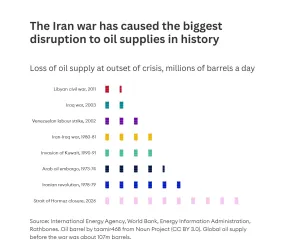
Beyond trade, relations between major global powers have become more confrontational, to the point of outright war. In war zones, commodities are harder to produce and then transport. The conflicts in Ukraine and Iran have already caused shocks to global commodity supply larger than those in the 2010s. The weakening of US security guarantees has also helped propel the resurgence in military spending across Europe and Asia. This tends to raise inflation too, by loosening fiscal policy.

Climate change may also add an inflationary impulse. Its physical impact has recently caused volatility in the prices of some food commodities, like cocoa and olive oil. And the reconfiguring of energy production and infrastructure – also driven by geopolitical considerations – will drive higher investment. Ultimately, this should help to contain inflation by improving energy security. But in the short term, the associated investment spending may add to inflationary pressure. 
 

Implications for portfolios

This profound change in the inflation backdrop requires a different approach to keeping portfolios resilient. The traditional approach no longer works, of holding conventional government bonds with maturity dates far in the future as protection against periodic bouts of weakness in equities. As the global economy has entered a more inflationary regime, the correlation between the returns from stocks and from these bonds has turned from negative to positive. This means they more often rise and fall together, rather than in an offsetting pattern.

We’ve responded to this. When investing in government bonds, we favour shorter over longer maturities, because their prices are typically less sensitive to changes in the inflation outlook. We hold inflation-linked bonds, whose cash flows have inbuilt protection against rising prices. We also favour a couple of other ways of providing diversification amid inflationary shocks. One is investing in gold, which despite its recent pullback has a strong track record at such points. The other is certain actively managed strategies that can capitalise on inflationary shocks, such as macro funds. These take positions across asset classes based on macroeconomic views.Staying invested in equities 

The second theme is that staying invested in equities still makes sense, even though it can feel uncomfortable in the face of greater economic volatility. The extremely quiescent inflation and ultra-low interest rates of the 2010s reflected, in part, global economic weakness. Consumer demand was weak in the years after the Global Financial Crisis. And fiscal policy was overly tight, choking off investment spending. It was also a dreadful decade for productivity growth. 


Volatility is not an enemy

US stock returns can be high even when US inflation and GDP are volatile.


Progress in productivity 

In other words, not all change since that period is a bad thing. Greater fiscal support for public investment, for example, could enhance growth in productivity – and therefore in GDP. There’s also tentative evidence that productivity growth has picked up since the pandemic. Stronger demand may have accelerated it, as this can foster technological change. AI advances are also likely to play an increasing role over the coming decade; we factor this into our forecasts too.

More generally, history shows that stocks can deliver inflation-beating returns even when inflation and GDP are higher and more volatile. In the US and elsewhere, this is the normal historical experience aside from the extremes of the 1970s and the period around the Global Financial Crisis. And in the 2020s, stocks have delivered returns well above inflation despite the covid pandemic, conflicts in Ukraine and the Middle East, and a historic shock to trade.

The changes in the global economy we’ve discussed have caused the leaders and laggards among different stock sectors and national markets to change more frequently – and that’s likely to continue. But they haven’t altered the importance of equities as the key driver of our clients’ long-term returns. That, at least, has not changed.


More insights

This piece is part of our April Investment Insights magazine — Access the other articles below.

tanker terminal

3 mins

7 April 2026

Investment Insights summary: April 2026

Our monthly look at what’s driving global markets

Investment Insights summary: April 2026
Nodding donkey on sand

6 mins

2 April 2026

Iran and geopolitical risk update: what does the long view teach us?

It’s best to stick to long-term strategies, rather than trying to trade on the unpredictable twists and turns of this war.

Iran and geopolitical risk update: what does the long view teach us?
Aerial view of Oman

1 min

23 March 2026

Iran conflict: inflation, interest rates, investments

The Iran conflict has expanded across the Middle East. In an unpredictable situation, we see good ways of mitigating risks and protecting portfolios.

Iran conflict: inflation, interest rates, investments
John Wyn Evans

12 mins

13 March 2026

Investors, not traders

Stay informed with our 12-minute investment update video, explaining what the Iran conflict means for financial markets.

Investors, not traders
Download these articles in a single PDF file

Let's talk

Ready to start a conversation? Please complete our enquiry form, and our distribution team will be in touch. 

Enquire
Rathbones Logo
  • Important information
    • Important information
    • Financial Services Compensation Scheme
    • Complaints and the Financial Ombudsman Service
    • Privacy policy
    • Accessibility
    • Investor relations centre
    • Cookies
    • Update cookie preferences
  • Important information 2
    • Fraud: Reporting and preventing it
    • Client help hub
    • Interest rates
    • Climate reporting
    • Corporate governance
    • Modern Slavery Statement
    • Sitemap
    • Status of our websites
Address

Rathbones Group Plc
30 Gresham Street
London
EC2V 7QN

© 2025 Rathbones Group Plc
Incorporated and registered in England and Wales.
Registered number 01000403

Follow us
  • Facebook
  • Instagram
  • LinkedIn
  • X
  • Youtube
Also of Interest
  • Benchmarks
  • Wealth Management E-Communications
  • Wealth and Investment Management Stories

The value of your investments and the income from them may go down as well as up, and you could get back less than you invested.