



Our experts unpack the Autumn Budget announcements and explain what it could mean for you and your wealth.

Article last updated 30 October 2026.

Article last updated 30 October 2026.
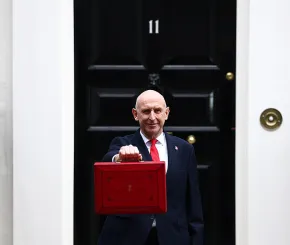
Chancellor John Healey's 2026 Autumn Budget outlined the government’s tax and spending plans in the House of Commons. This page details every tax measure announced at the time.
Please use the page navigation to jump to topics of interest to you.
The information in this document should not be taken as financial advice or a recommendation and is based on our current understanding of HMRC tax regulations in the UK.
Tax treatment depends on your individual circumstances which could change in the future. We do not offer tax advice and you should speak to a tax adviser if you’re unsure.
‘Breathing space’, ‘small wins’, ‘steady as she goes’. The language accompanying this year’s Budget is distinctly different from last year’s.
After two Budgets which raised over £67 billion in taxes, a new chancellor and prime minister were always unlikely to aim for a big revenue-raising hat trick for their first fiscal event. They were helped by the fact that those earlier Budgets had left over £23 billion of fiscal ‘headroom’.
Unfortunately, that comforting figure was calculated by the Office for Budget Responsibility (OBR) at the start of March 2026, just as the Iran war was beginning. Over 34 weeks later, President Donald Trump’s “short excursion” has changed the economic backdrop of the OBR’s latest calculations.
The main personal allowance for 2027/28 will remain at £12,570, the higher rate threshold at £50,270 and the additional rate threshold at £125,140. The freeze to these thresholds remains until the end of 2030/31.
The 0% band for the starting rate for savings income for 2027/28 will remain at its current level of £5,000 up to and including 2030/31.
The tax rate on savings income will rise by a further two percentage points above the levels announced in Budget 2025, taking the rates to 24%, 44% and 49% from April 2027.
The tax rates on property income in England, Wales and Northern Ireland will also rise by two percentage points above previously announced rates, to 24%, 44% and 49% from April 2027.
The tax-free mileage rates for employees and self-employed people who use their own car or van for work will be permanently increased to 55p per mile for the first 10,000 miles and 35p per mile for mileage above 10,000 miles.
HMRC will automatically offset child benefit overpayments against the high income child benefit charge (HICBC), reducing payment and repayment transactions.
This will be introduced with retrospective effect from HICBC’s introduction in January 2013.
The NIC thresholds for employees and self-employed individuals remain frozen at their current levels and will not change before April 2031. The class 1 secondary threshold is also to be held at its current level of £5,000 until then.
The Government will increase the Company Share Option Plan (CSOP) individual option limit from £60,000 to £120,000 and remove the interaction with the Enterprise Management Incentives option limit.
The change allows eligible employees to receive the full options under each scheme. The CSOP exercise period will increase from ten to 15 years. The changes will apply from 6 April 2027 and be introduced through the Finance Bill.
The scale rates for 2030/31 will be one percentage point above 2029/30 rates across all vehicle bands.
As previously announced, interest rates for Plan 2 and Plan 3 student loans will be capped at 6% from 1 September 2026 to 31 August 2027.
| Main personal allowances and reliefs | 2027/28 | 2026/27 |
| Personal allowance1 | £12,570 | £12,570 |
| Marriage/civil partners’ transferable allowance | £1,260 | £1,260 |
| Blind person’s allowance | £3,370 | £3,250 |
| Rent-a-room relief | £7,500 | £7,500 |
| Property allowance | £1,000 | £1,000 |
| Trading allowance (each) | £3,000 | £1,000 |
1. Personal allowance reduced by £1 for every £2 of adjusted net income over £100,000.
| Income tax rates and bands | 2027/28 | 2026/27 |
| UK taxpayers excluding Scottish taxpayers’ non-dividend, non-savings income | ||
| 20% basic rate on taxable income up to | £37,700 | £37,700 |
| 40% higher rate on next slice over | £37,700 | £37,700 |
| 45% additional rate on income over | £125,140 | £125,140 |
| All UK taxpayers | ||
| Starting rate at 0% on band of savings income up to2 | £5,000 | £5,000 |
| Personal savings allowance at 0%: basic rate taxpayers | £1,000 | £1,000 |
|
higher rate taxpayers |
£500 | £500 |
|
additional rate taxpayers |
£0 | £0 |
| Tax rates on savings and property income:3 basic rate taxpayers | 24% | 20% |
|
higher rate taxpayers |
44% | 40% |
|
additional rate taxpayers |
49% | 45% |
| Dividend allowance at 0% – all individuals | £500 | £500 |
| Tax rates on dividend income: basic rate taxpayers | 10.75% | 10.75% |
|
higher rate taxpayers |
35.75% | 35.75% |
|
additional rate taxpayers |
39.35% | 39.35% |
2. Not available if taxable non-savings income exceeds the starting rate band.
3. Property rates apply to England, Wales and Northern Ireland. Scottish property rates to be announced.
| Scottish taxpayers’ non-dividend, non-savings income | 2027/28 | 2026/27 |
| 19% starter rate on taxable income up to | TBA | £3,967 |
| 20% basic rate on next slice up to | TBA | £16,956 |
| 21% intermediate rate on next slice up to | TBA | £31,092 |
| 42% higher rate on next slice up to | TBA | £62,430 |
| 45% advanced rate on next slice up to | TBA | £125,140 |
| 48% top rate on income over | TBA | £125,140 |
The Scottish Budget will be published on 3 December 2026.
| Trusts | 2027/28 | 2026/27 |
| Income exemption generally | £500 | £500 |
| Dividends (rate applicable to trusts) | 39.35% | 39.35% |
| Savings and property income4 | 49% | 45% |
| Other income (rate applicable to trusts) | 45% | 45% |
4. Property rates apply to England, Wales and Northern Ireland. Scottish property rates to be announced.
High income child benefit charge: 1% of benefit per £200 adjusted net income between £60,000 and £80,000.
The annual subscription limits will remain at £20,000 for ISAs, £4,000 for lifetime ISAs and £9,000 for junior ISAs and child trust funds for 2027/28. The reduction in the maximum annual cash ISA subscription for under-65s from 6 April 2027, which was legislated for in September, has been abandoned.
The Government will explore a new ISA incentive for people investing in a stocks and shares ISA for the first time.
A new FTB ISA will be launched from April 2029, with a maximum subscription of £4,000 a year and a property purchase price cap of £450,000. It will provide a 25% Government bonus (maximum £20,000), calculated on the account’s final balance. Until 2029/30, LISAs will remain available and will continue under existing terms for existing investors once the product is withdrawn.
The withdrawal charge for purchases of properties above the LISA property price cap of £450,000 will be reduced from 25% to 20% from 30 October 2026.
From April 2027, the Your First Home scheme will provide 20% equity loans to first-time buyers who would not otherwise be able to purchase a residential property. Income caps will be set at £110,000 per household outside London and £140,000 inside London. Purchase price caps will be set based on local authority median prices, with inner and outer London caps of £650,000 and £500,000 respectively.
The deposit requirement will be a minimum of 2.5%, with a maximum of 15%.
A new pension tax allowance will be introduced for 2027/28–2029/30 for those who have reached state pension age by the end of the tax year. The value of the pension tax allowance is calculated by applying the basic rate of income tax (20%) to the difference between the full new state pension and the personal allowance. For individuals with total income above the value of the full new state pension, the pension tax allowance will be withdrawn at a rate of £1 for every £3 of income above this level.
For payments made on or after 28 October 2026, beneficiaries will no longer be taxable solely because tax-free pension and lump sum death benefits are paid more than two years after the member’s death.
The Finance Bill will make changes to the way tax is assessed and collected when a deceased member’s lump sum death benefit allowance is exceeded. The excess will no longer be treated as pension income of individual beneficiaries. Instead, a tax charge will be raised against those beneficiaries on their portion of the excess by reference to their marginal rate of income tax for the year the lump sum was paid.
The Finance Bill will make changes to the definition of terminal illness to make it easier for terminally ill individuals to access their pensions savings and allow for overseas-registered medical practitioners to provide medical evidence.
The CGT annual exempt amount for individuals and personal representatives will remain at £3,000 for 2027/28. The annual exempt amount for most trusts will stay at £1,500 (minimum £300).
The lower main rate of CGT will remain at 18%, and the higher main rate will remain at 24%, for disposals made in 2027/28.
The IHT nil rate band will remain at £325,000 and the residence nil rate band will stay at £175,000, with its associated taper threshold remaining at £2 million. These levels are frozen to the end of 2030/31.
With effect for deaths and other chargeable events occurring on or after 28 October 2026, the IHT legislation will be amended to align the treatment of liabilities affecting trust property with personal liabilities, and to strengthen anti-avoidance provisions.
For disposals made on or after 6 April 2027, the lifetime limit on gains eligible for BADR will be cut from £1 million to £500,000.
Following a technical consultation, a new Founders’ Relief will be introduced from 6 April 2027, providing a 10% CGT rate on up to £10 million of lifetime gains for qualifying founders of high-growth, innovative companies.
Following two rounds of consultation and the publication of draft legislation in July, the Finance Bill will introduce the Securities Transfer Tax to replace stamp duty and stamp duty reserve tax from late 2027.
All rates of the NLW and NMW will increase by 3.9% on 1 April 2027.
See the table below for rates.
The government will pilot a Young Entrepreneurs Allowance in England, providing successful applicants with support towards their living costs during the first year of their business. Funding will be provided to all current mayors to provide tailored support to young people and employers, particularly SMEs, to create more apprenticeship opportunities.
The UC standard allowance is scheduled to rise by 4.3% to approximately £102.28 a week.
The Government is strengthening pathways into work by delivering the Jobs Guarantee for eligible 18 - to 24-year-olds on UC and investing £100 million in local apprenticeship services.
Other working age benefits will be uprated in line with the September 2026 CPI inflation rate of 3.5% from April 2027.
The basic and new state pension will be uprated by 3.9%, bringing the full new state pension to £250.70 a week, or £13,036.40 a year. The pension credit standard minimum guarantee will also be uprated by 3.9% from April 2027. The triple lock will be reformed from April 2030.
The VAT cut to domestic electricity is extended until July 2027.
A new household energy payment will pay £100 directly into bank accounts from January 2027 for households in England in council tax bands A–D. Devolved governments will receive their share of this funding via the Barnett formula.
Domestic gas standing charges will be removed in 2027 or early 2028 and domestic electricity standing charges will be reformed – details to be announced in 2027.
The 5p road fuel duty cut and freeze is extended to 1 July 2027.
| Rate | Age | £ per hour from 01/04/27 | Increase over 2026/27 |
| National living wage (NLW) | 21 and above | £13.21 | 3.9% |
| National minimum wage (NMW) | 18–20 | £11.27 | 3.9% |
| Under 18 | £8.31 | 3.9% | |
| Apprentice rate | All | £8.31 | 3.9% |
Corporation tax rates remain unchanged at 25% main rate and 19% small profits rate from 1 April 2027 and 2028.
The main rate first-year allowance will be increased to 50% for expenditure incurred after 31 December 2026, while the main rate writing down allowance will be reduced to 12% from 1 April 2027 for corporation tax and 6 April 2027 for income tax.
The trading allowance for individuals is increased to £3,000 (from £1,000) from 6 April 2027. Self-employed individuals can claim this relief instead of deducting their actual business expenses. The trading income reporting threshold for self-assessment will also rise to £3,000.
Companies will no longer have to submit a claim notification form for R&D claims made from 1 April 2027. From autumn 2027, the information required in the additional information form will be simplified.
The small business rate relief threshold for retail, hospitality and leisure (RHL) properties will increase from £12,000 to £18,000 for 100% relief and from £15,000 to £21,000 for tapered relief from 1 April 2027.
Business rate relief for pubs, social clubs and live music venues will rise by 20 percentage points to 35%, also from 1 April 2027.
Legislation will clarify that the existing exemption from corporation tax for companies receiving payouts under investment life insurance contracts is available only when the contract is held otherwise than for the purposes of a trade the company carries on.
New legislation will be introduced for cryptoasset loans and liquidity pools. Certain transfers by individuals and trustees into and out of qualifying arrangements will be on a ‘no gain, no loss’ basis until an economic disposal, from 6 April 2027.
The foreign permanent establishment regime for companies will be mandatory with effect from corporation tax accounting periods beginning after 31 December 2026.
Amendments will be made to the multinational top-up tax and domestic top-up tax to implement the OECD’s ‘side-by-side’ package.
Future legislation will repeal the ACT regime with effect from 1 April 2031, at which point all remaining unrelieved surplus ACT balances will be extinguished.
The Government will proceed with proposals published at ‘Tax Update 2026’ to modernise the taxation of distributions and repayments of capital from companies. The changes will take effect from April 2028.
The VAT registration threshold will remain at £90,000 from 1 April 2027. The deregistration threshold will stay at £88,000. The rates remain unchanged.
The VAT OMPL rules will be extended to UK businesses from October 2027. Online marketplaces will be responsible for collecting VAT on sales by UK VAT-registered businesses and any other UK business with a minimum annual sales threshold per platform of £90,000. The rules will not apply to personal sales, second-hand goods or business-to-business transactions. The annual sales threshold per platform and the implementation date will be set in 2027.
Where supplies of passenger transport services by taxi or private hire vehicle are supplied through an agent, the services will be deemed to be made by the agent and not the driver. This means that from 2 January 2028 the private hire vehicle operator will have to charge VAT on the full value of the fare. The deeming will apply only to businesses whose annual fare turnover exceeds a specified threshold, which will be subject to consultation but possibly £50 million annual fare turnover.
New legislation will clarify that electricity supplied through publicly accessible electric vehicle charging points is standard rated for VAT.
The rate of VAT relief for energy-saving materials will revert to 5% from 1 April 2027. From the same date heat batteries will be included in VAT relief for energy-saving materials when installed in residential accommodation or charity buildings in the UK.
A new zero rate of VAT will be introduced from 1 April 2027 on the sale of land to registered social housing providers (relevant housing associations).
The VAT exemption for a supply of a deputy for a medical practitioner will be removed from 1 May 2027. Such supplies will then be subject to the standard rate of VAT. Deputising services will remain in scope of the medical exemption where they are primarily providing medical care.
HMRC will be given the power to make regulations requiring VAT invoices to be issued and received in a prescribed electronic format. A consultation on the details has been published.
From April 2027, the reverse charge for supplies of services from overseas will be restricted so that it applies only if the receiving UK business is VAT registered. Where the UK business is not VAT registered, the overseas supplier will be required to charge and account for UK VAT.
Changes will be made to legislation in respect of distance sales of goods to consumers in Northern Ireland from the European Union, to take effect from 1 January 2027.
The Government is consulting on the VAT treatment of travel services, including the tour operators’ margin scheme.
No penalties will be charged for late submissions of quarterly updates in 2027/28 for income tax self-assessment taxpayers required to join MTD in April 2027 (turnover over £30,000).
The following groups will be exempt from using MTD until further notice:
Taxpayers will come under a general obligation to correct inaccuracies in tax returns and to document when they are identified. HMRC will have a new power to issue a customer correction notice where it has reason to suspect an inaccuracy. This will require taxpayers to check their tax affairs and either correct the inaccuracy or explain why no correction is needed. The changes will take effect from 1 April 2028.
Self-assessment taxpayers who make payments on account will have to make more regular in-year payments towards their final tax bill from April 2029. Payments will be automated, with eligible taxpayers able to choose to pay through PAYE.
HMRC’s civil information and inspection powers and certain provisions relating to computer records will be reformed with effect from Royal Assent to the Finance Bill.
Taxpayers will have to set up a direct debit instruction for VAT and PAYE return liabilities by April 2029, subject to defined exceptions. Businesses will continue to be able to use other payment methods to pay their liability before a specified cut-off date. The direct debit instruction will be used to collect any unpaid balances.
The penalties regime, where a person fails to submit a UK property disposal return on time, will be amended from 28 October 2026, so that those penalties will cease accruing further where that person later reports the disposal on their self-assessment return.
New legislation will enable a court to disqualify an individual from acting as a company director for up to five years following conviction for a qualifying offence under HMRC securities legislation. The measure will apply to qualifying tax security offences committed after 31 March 2027.
The Government will introduce mandatory software standards for Electronic Point of Sale and Mobile Point of Sale systems to tackle electronic sales suppression – ‘till fraud’. A technical consultation in summer 2027 will set out detailed implementation proposals. The implementation date will be determined following further policy development and consultation.
The Government will expand the amount of information HMRC can publish about the deliberate non-compliance that led to publication of an individual or business’s details. HMRC will also be able to publish details of personal liability notices issued when a company’s liability to a penalty for deliberate non-compliance is transferred to its company officer. The change will take effect from Royal Assent to the Finance Bill.
The statutory definition of a finance lease will be expanded when specifically applied to lease and leaseback arrangements, restoring – from 28 October 2026 – the policy’s application to the relevant lessees whether they have a finance lease or a relevant right-of-use lease.
Following consultation, the Government will proceed with prescribing corporation tax computations on a longer and more flexible implementation timetable. Mandatory online filing of amended company tax returns will be introduced from 1 April 2028. Enforcement arrangements for prescribed computations will not be implemented at this time.
Amendments to legislation aimed at tackling promoters of tax avoidance will take effect from Royal Assent to the Finance Bill. The Government will also consult on further measures to tackle the promotion and use of tax avoidance schemes. It is also reviewing its approach to addressing persistent non-compliance by a small minority of larger businesses.
Class 1
| Employee – Primary | Employer – Secondary | |
| NICs rate | 8% | 15% |
| No NICs for employees generally on the first | £242 pw | £96 pw |
| No NICs for younger employees1 on the first | £242 pw | £967 pw |
| NICs rate charged up to | £967 pw | No limit |
| 2% NICs on earnings over | £967 pw | N/A |
1. No employer NICs on the first £967pw for employees generally under 21 years, apprentices under 25 years and veterans in first 12 months of civilian employment. No employer NICs on the first £481pw for employees at freeports and investment zones in Great Britain in the first 36 months of employment.
Employment allowance
| Per business | £10,500 |
Not available if the sole employee is a director.
| Limits and thresholds | Weekly | Monthly | Annual |
| Lower earnings limit | £133 | £576 | £6,916 |
| Primary threshold | £242 | £1,048 | £12,570 |
| Secondary threshold | £96 | £417 | £5,000 |
| Upper earnings limit (and upper secondary thresholds for younger/veteran employees and apprentices under 25) | £967 | £4,189 | £50,270 |
Class 1A Employer
| On car and fuel benefits and most other taxable benefits provided to employees and directors | 15% pa |
Class 2 Self-employed
| Flat rate (voluntary) | £3.80 pw | £197.60 pa |
| Small profits threshold | £7,355 pa |
Class 4 Self-employed
| On annual profits of | £12,570 – £50,270 | 6% |
| Over £50,270 | 2% |
Voluntary
| Class 3 flat rate | £19.05 pw | £990.60 pa |
If you would like to talk to one of our team about the announcements in the Budget and how we could help you make a plan, please fill in the form below and we'll get in touch. Alternatively, please feel free to call us on 0330 390 9191 and we’d be happy to help.

.jpg?changed=1793110259)