



Article last updated 17 June 2026.
Quick takeGlobal equity indices remain near all-time highs, boosted by strong corporate profits. John Wyn-Evans explains why – and what the risks are.:
|

We help a wide range of clients invest well so that they can focus on what matters.
Who we helpFocusing on you and your individual goals.
Helping turn the success of your business into financial security for your family.
Working with you, for your clients.
Helping charities invest in line with their mission and values.
We work with lawyers, accountants and other professionals.
Looking for someone to create an investment portfolio for you?
Our combined investment and planning service for a holistic approach to your finances.
Need help reorganising your finances and planning for the future?
Structure your wealth for the future by bringing together legal, tax, family, and investment considerations.
Looking for investments that align with your values? See our sustainable investment options.
Rathbones’ dedicated personal injury (PI) and Court of Protection (COP) team.
Helping clients with £5m or more to protect, grow and structure their wealth for the long term.
Private, corporate, and investment banking services through our partnership with Investec bank.
Learn more about what it’s like to work at Rathbones, and search our current vacancies.
Learn more about our Board, Executive Committee and our approach to corporate governance.
Find the Rathbones Group Plc financials, reports, investment case and key events.
Read the latest news from Rathbones Group.
Our secure online portal and app, designed to give clients a clear view of their investments with us.
Our driving purpose is to help more people invest well, so they can live well.
We believe in doing the right thing for our clients and for others too.
Our awards and industry recognition reflects our commitment to exceptional wealth management.
Explore a range of topics affecting your finances, from retirement planning to the latest legislative changes.
Read about the key investment themes affecting global markets.
Listen in to or watch our specialists in one of our podcasts.
Explore our articles, reports and events on investing responsibly.
Timely insights, real conversations. Watch live or catch up anytime.
Whether you have a question about our services, or need to talk someone specific, we can help.
ContactsFind your local Rathbones office. We have 21 across the UK and Channel Islands.
Find the contact details for your Rathbones team by searching our people’s directory.
Our team will be in touch to help you book a no obligation consultation with an adviser.
Access the contact details for our media team.
Need to contact us about something else? Here you'll find all the options.
Stay informed with our 13-minute investment update video explaining why the global stock market remains near all-time highs – and the potential risks to portfolios.
Article last updated 17 June 2026.
Quick takeGlobal equity indices remain near all-time highs, boosted by strong corporate profits. John Wyn-Evans explains why – and what the risks are.:
|
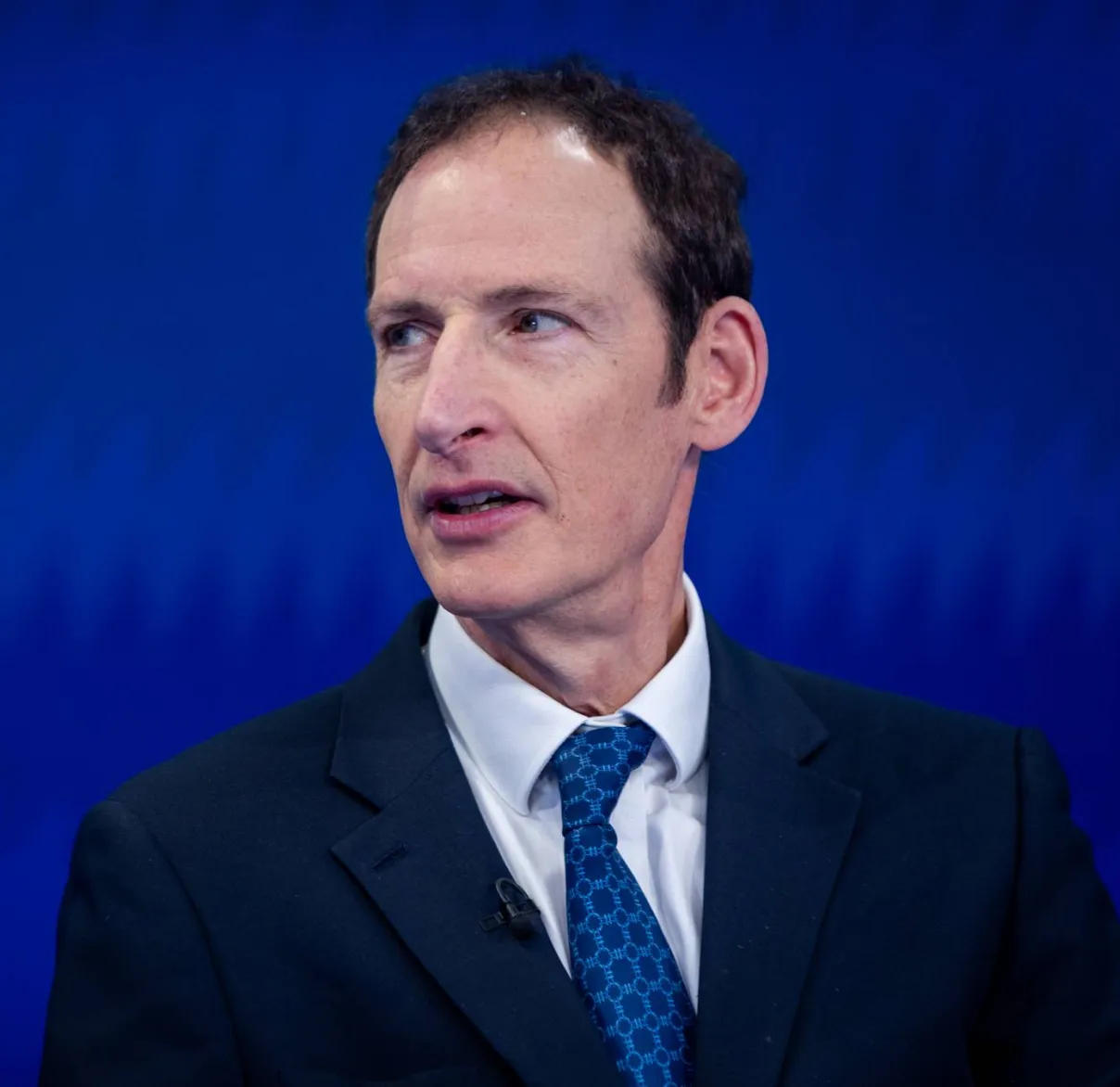
Hello. I’m John Wyn-Evans and I am Head of Market Analysis at Rathbones. Welcome to our latest video update.
Since we last met, a lot of water has flowed under a lot of bridges, but hardly any oil, or any other cargo, has flowed through the Strait of Hormuz, the now well-known geographical chokepoint that lies to the south of Iran. Surprisingly, perhaps, global equity indices remain near all-time highs in spite of that. One reason is the strength of corporate profits, another factor discussed last time. With the first quarter earnings season now complete, we’ll have another look at what has been driving that.
You will be less surprised to hear that artificial intelligence and the enormous amounts of capital expenditure required to drive its development remains a key influence, and the imminent initial public offerings of SpaceX, Anthropic and now OpenAI mark a historic milestone in the industry’s evolution. But they also present investors with some challenges.
Closer to home, May’s local and mayoral elections saw the Labour Party receive the thrashing it was expected to, but, for now, there has been no change in the leadership. The forthcoming Makerfield by-election could represent a watershed moment, not only for the party, but also for the country.
Everything might sound much as it was. However, there has been a subtle shift in sentiment in recent days as some of the more high-flying technology shares have retreated, sometimes quite violently, from their peaks. Following such rapid gains, this should not be unexpected. But we do need to ascertain whether this is a pothole that can be driven over with impunity or whether there is a more destructive sinkhole beneath it.
First, to Iran. The latest exchange of missiles between Iran and Israel reminds us that the situation remains volatile. Even so, we are sticking to the playbook that delivers a resolution in the end. We note the various red lines in the negotiations, with the US not wanting to concede tolls for passage through the Strait of Hormuz and Iran unwilling to give up its nuclear capabilities. We also are of the opinion that it remains in neither camp’s interest to extend the war indefinitely.
Still, we are painfully aware that the longer it goes on, the greater the risk of fuel and other commodity shortages impacting growth. The negative consequences of the closure of the Strait of Hormuz have been much less than feared. Alternative pipeline access to Gulf crude has been a key element of maintaining some of the flows, while flexibility has been seen elsewhere in the supply chain. For example, some sanctioned Russian oil has been allowed to return to the market. Refiners in Europe have stepped up production of jet fuel to take advantage of attractive crack spreads. Jet fuel might be more expensive, but at least it’s still available. There is evidence, too, of lower overall demand as consumers have switched to alternatives.
It also now seems that there was a lot more inventory of oil immediately available than first thought, either in strategic reserves, notably in China, or stored in tankers at sea. It might well be why the US administration has been willing to string out the negotiating process for so long. Even so, this cushion won’t last forever and some sort of peace plan needs to be agreed soon. The Polymarket betting site - a reasonable proxy for market expectations - prices the probability of Strait of Hormuz traffic returning to normal by the end of June at just 10% and even only 28% by the end of July. A re-escalation of hostilities, especially anything that resulted in the destruction of more physical infrastructure, would be a definitively negative development. We will continue to monitor the situation closely and act accordingly.
One concern about US equities, which continue to dominate global indices, is that they look expensive. But this has been a concern for some time and it has not hindered their progress. Our opinion has long been that a simple Price/Earnings (or PE) ratio does not capture the profitability of the leading companies in terms of their ability to generate profits well above their cost of capital, nor their ability to recycle those profits into new, equally profitable, growth opportunities.
Remarkably, despite the fact that the S&P 500 index of leading US shares has risen 8% so far this year, the 12-month forward PE ratio has fallen slightly to below 22x thanks to a steady upgrading of earnings forecasts. First quarter earnings growth of 26% over the previous year came in well ahead of expectations of around 12%. As long as earnings continue to improve, it is hard to see equities coming under sustained pressure. US earnings growth is forecast to be 24% for calendar year 2026 followed by 13% in 2027.
Even so, we don’t want to get carried away. Around a third of the first quarter growth was attributable to Amazon and Alphabet marking up the value of their stakes in AI developers Anthropic and OpenAI. Certainly, both companies have generated value from their investments, but asset-based gains are not as valuable to shareholders in the long-term as recurring profits from business operations, even if accounting conventions call from them to have equal standing in the headline numbers.
Operating profit growth across various markets has been boosted by the huge investment in datacentres. The primary beneficiaries have been semiconductor chip manufacturers, especially those making memory chips, which are in high demand as datacentres’ workload shifts from training large language models to providing the computing power for AI agents. With limited production capacity for the foreseeable future and ballooning demand, it appears that the chip makers could be generating supernormal profits for some time to come.
Some of the biggest winners are located in Asia and their success has been reflected in the strong performance of emerging market indices. We have noted frequently that today’s emerging market index is very different in composition to that of the past and that its performance will correlate much more closely with, for example, the tech-heavy US NASDAQ index. That’s not necessarily a problem, but it’s important when constructing portfolios to be aware of the themes and narratives one is exposed to.
Japan’s equity market has also been a beneficiary of this theme, leaving both the UK and Europe as laggards. It’s galling, to say the least, that Cambridge-based chip designer ARM Japan’s Softbank for (£24bn) in 2016. Now relisted in the US, its current market capitalisation is the equivalent of £276bn. It would comfortably be the largest company listed on the London Stock Exchange were it still here.
We are always on the alert for what might derail this strong profit growth and the equity markets’ progress. Other than the situation in the Middle East, there are two main potential impediments – higher interest rates and the sheer volume of impending share issuance.
At the start of this year, it was generally expected that interest rates would keep falling in most regions, including the US, the UK and Europe, with Japan being the main exception. Thanks to a combination of stronger US growth and the effects of the Iran war, especially on fuel prices, inflation is proving to be stickier and central banks are now expected to take action to prevent inflation from rising further and, crucially, to keep expectations of future inflation well anchored. Currently, markets are pricing in around a half percent of increases in the US, UK and Europe and that should be enough to do the trick, especially if we see productivity benefits emerging from the adoption of AI tools. But tighter monetary policy has often in the past been a catalyst for weaker economies and markets and this is another development that we will need to monitor closely. As for the tidal wave of share issuance, that begins now with the debut of Elon Musk’s
on the US stock market. It launches with a projected valuation of close to $1.8 trillion, making it the sixth largest company in the US. It is initially raising a total of around $86bn, a record figure by some distance. There’s plenty of cash on the sidelines to accommodate that, but it’s not alone. Large language model developers Anthropic and OpenAI have both now filed their listing plans with the relevant authorities and we can expect both to debut some time this year with initial market capitalisations of around $1 trillion and share offerings running into the tens of billions as well.
Furthermore, hyperscaler Alphabet is also looking for $85bn from shareholders to fund its spending with reports that Meta wants to so the same. Those numbers add up to something substantial pretty quickly and will test investors’ appetite for a supporting an industry which, although long on a promising narrative, remains short of actual profits.
While we believe that direct comparisons with the technology boom and bust at the turn of the millennium are not exactly appropriate, there are certainly echoes of the unseemly dash for cash that occurred at that time. At least now there is day one demand for new computing capacity rather than the purely speculative digging of holes in the ground to install broadband connectivity. And the current AI leaders have a lot more substance to them than some of the dot.com dross that was on offer a quarter of a century ago. Even so, once these new companies are in the public domain, there will be a greater burden on them to provide proof of a path to sustainable profitability.
As for the AI industry as a whole, our opinion is that we remain in the early days of both product development and adoption. When it comes to envisaging the future of AI, I am reminded of the comment made by Henry Ford, eponymous founder of the car maker: "If I'd asked the people what they wanted, they'd have said 'a faster horse.'" We can still not really fully imagine what lies ahead as companies and employees adapt to working with what is still, in many ways, a nascent technology.
Turning to the domestic situation, political uncertainty has been somewhat overwhelmed by more global events following the local elections. We are also waiting for the outcome of the Makerfield by-election where Labour currently leads in the polls, although we have learnt over the years never to take voting intentions on trust. Should Manchester Mayor Andy Burnham win his seat in Westminster, that is expected to trigger a leadership contest with Mr Burnham the favourite to win that too. Despite fears that such an outcome will shift policy further to the left and promote more “tax and spend”, there is still some belief that bond investors will keep the party to heel and respectful of its fiscal boundaries. There was a bit of a wobble in the bond market in May but that has settled for now.
Another barometer of political sentiment is the pound, and that remains at the upper end of its post-Brexit range on a trade-weighted basis – although, to some extent, that reflects the sluggish European economy and the fact that Europe remains by far our biggest trading partner.
Generally, we are happy to remain very fully invested in equities and believe that the latest market wobbles are a healthy correction of over-extended enthusiasm and more than a hint of retail investor speculation – predominantly in the US and parts of Asia rather than here in the UK.
On a lighter note, and looking at longer term outcomes, you will not have failed to be aware that the FIFA football World Cup is kicking off in North America. Remarkably, it’s thirty years since I found myself at Wembley watching England destroy the Netherlands in the Euro ’96 tournament. At least as a Welshman I was able to return there three years later to witness Scott Gibbs and Neil Jenkins combine to beat England’s rugby team in the final minutes! Euro ’96 was the tournament at which the song Three Lions emerged as the unofficial anthem of English football supporters, evoking the thirty years of hurt since England had won the World Cup in 1966. And here we are contemplating sixty years of hurt. Never mind. If a supporter had invested £1000 in the FTSE 100 index the morning after England’s semi-final defeat to Germany on penalties, today they would have £6,586 with dividends reinvested. Although it was not so easy to access global equities via low-cost index funds as it is today, a similar investment in a global total return tracker would have turned into more than £12,000. Investing in the US’s S&P 500 index would mean a healthy nest egg of £21,000 today. The respective annualised returns don’t sound so impressive, being 6.7%, 8.9% and 10.8%. The power of compounding sometimes has to be seen in the numbers to be believed. UK inflation, as measured by the consumer price index, has average 2.5% over the same period. Again, that sounds like a small number, but it means that prices have mor than doubled. Put another way, a 1996 pound is worth slightly less than 50p today. And so equities have delivered strong real returns, which we would expect them to do over such a long period.
For those with a long investment horizon, it’s worth thinking about what a steady investment habit might return over the next three decades, whether England has reached ninety years of hurt or not! Of course, this comes with the disclaimer that past returns are not guaranteed to be repeated in the future. And, in the absence of Wales, I wish the best of luck to England, Scotland and the Republic of Ireland.
Thank you very much for your time and I look forward to updating you in another few weeks.
Get more our views on the latest economic and market developments and what they mean for you.
See how we can help grow your wealth over the long term, with peace of mind.
Ready to start a conversation?
The value of your investments and the income from them may go down as well as up, and you could get back less than you invested.
Wealth Management