



Article last updated 2 July 2026.

We help a wide range of clients invest well so that they can focus on what matters.
Who we helpFocusing on you and your individual goals.
Helping turn the success of your business into financial security for your family.
Working with you, for your clients.
Helping charities invest in line with their mission and values.
We work with lawyers, accountants and other professionals.
Looking for someone to create an investment portfolio for you?
Our combined investment and planning service for a holistic approach to your finances.
Need help reorganising your finances and planning for the future?
Structure your wealth for the future by bringing together legal, tax, family, and investment considerations.
Looking for investments that align with your values? See our sustainable investment options.
Rathbones’ dedicated personal injury (PI) and Court of Protection (COP) team.
Helping clients with £5m or more to protect, grow and structure their wealth for the long term.
Private, corporate, and investment banking services through our partnership with Investec bank.
Learn more about what it’s like to work at Rathbones, and search our current vacancies.
Learn more about our Board, Executive Committee and our approach to corporate governance.
Find the Rathbones Group Plc financials, reports, investment case and key events.
Read the latest news from Rathbones Group.
Our secure online portal and app, designed to give clients a clear view of their investments with us.
Our driving purpose is to help more people invest well, so they can live well.
We believe in doing the right thing for our clients and for others too.
Our awards and industry recognition reflects our commitment to exceptional wealth management.
Explore a range of topics affecting your finances, from retirement planning to the latest legislative changes.
Read about the key investment themes affecting global markets.
Listen in to or watch our specialists in one of our podcasts.
Explore our articles, reports and events on investing responsibly.
Timely insights, real conversations. Watch live or catch up anytime.
Whether you have a question about our services, or need to talk someone specific, we can help.
ContactsFind your local Rathbones office. We have 21 across the UK and Channel Islands.
Find the contact details for your Rathbones team by searching our people’s directory.
Our team will be in touch to help you book a no obligation consultation with an adviser.
Access the contact details for our media team.
Need to contact us about something else? Here you'll find all the options.
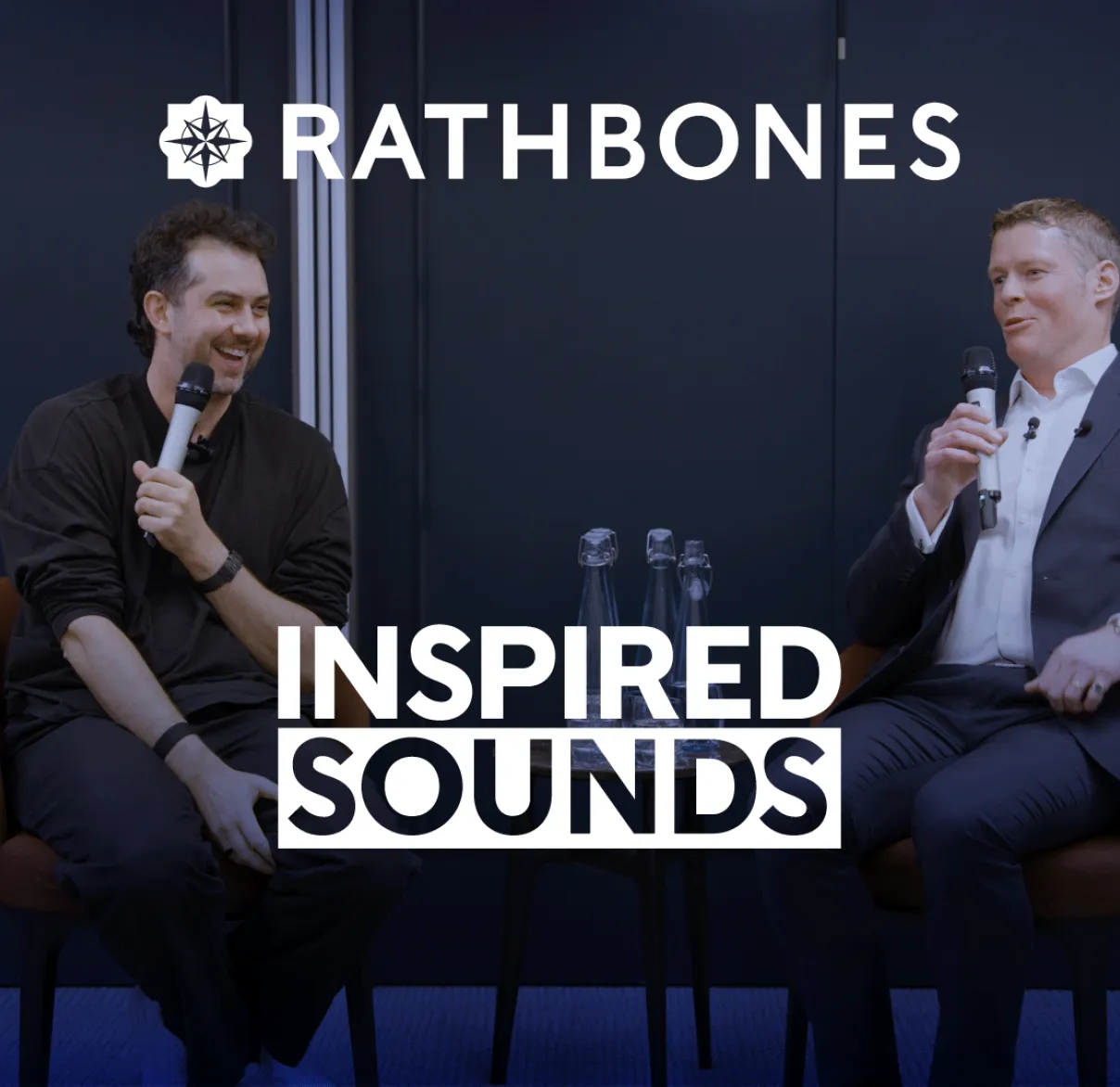
Serial entrepreneur and globally recognised AI expert, Dr Daniel Hulme, joins us for our latest Inspired Sounds episode to share insights from a 27-year journey at the forefront of artificial intelligence. In conversation with Chris Noble, Financial Planning Director, Daniel reflects on growing Satalia from the initial idea to its acquisition by global marketing powerhouse WPP in 2021.
Daniel highlights that earning client confidence in the early days isn’t always about scale. It’s about thinking creatively, leaning on your network, and seizing opportunities.
Tune in to hear from one of the world’s leading voices in AI.
Article last updated 2 July 2026.
Dr Daniel Hulme
Actually, I would argue that the biggest reason why companies fail is not because they’ve run out of money, but because the founders are misaligned. Having those hard conversations upfront to understand what you’re expected to deliver over the next year is really important. If you don’t, that misalignment will eventually surface.
Chris Noble
Hello and welcome to Inspired Sounds, Rathbones’ exclusive podcast dedicated to supporting and empowering entrepreneurs. We hope you enjoy listening.
Good evening everyone. Thank you for coming, and thank you, Daniel, for taking time out of your very busy schedule. It’s great to have you here.
I was reflecting that I first met Daniel about five years ago. I think we were both in our bedrooms trying to work out how video conferencing worked. It feels like things have moved on exponentially since then, so it’s really interesting to hear from someone who’s been at the forefront of all this.
I think the first question is: Daniel, could you tell everyone a bit about your story — where you’ve come from and where you are today?
Dr Daniel Hulme
Thanks, Chris. I’ve been involved in AI for about 27 years. I did my undergraduate degree in AI at UCL — there were only two people on my course, which shows how much things have changed.
I then went on to do a master’s, a PhD, and postdocs in AI. I also ran a master’s programme in applied AI at UCL for five years, sending hundreds of students out into the world to apply these technologies. I’m now an entrepreneur-in-residence at UCL, helping spin out deep tech companies, and I sit on boards of academic institutions to help them commercialise their IP.
I started a company about 20 years ago from my PhD, building AI solutions for organisations like Tesco and PwC. I never took any external capital into that company, as I didn’t like how venture capital worked — we can come back to that.
Eventually, I sold the company to WPP, the world’s largest marketing company, despite knowing nothing about marketing — something I still like to claim, as it gives me licence to ask ‘dumb’ questions. I now lead AI across WPP, which has about 120,000 people. They give me a huge amount of freedom, and I’ve also spun out a few companies from within WPP, including one focused on machine consciousness.
Chris Noble
Thank you. How have you found the transition from running your own company to working in a large corporate like WPP?
Dr Daniel Hulme
There’s the honest answer and the politically correct answer. Like many entrepreneurs, I’m probably unemployable — and WPP likely knows that. But they give me a lot of freedom because I add value.
I still run my original company, Satalia, which now has around 400 experts. WPP understands the importance of AI and the need for deep, foundational knowledge.
While there are challenges in large organisations — bureaucracy and so on — if you can demonstrate value, you can thrive. This acquisition has been one of their most successful in recent years, partly because of how transformative AI has become.
Chris Noble
Looking back, what are your key tips for people trying to build, scale, or exit their businesses?
Dr Daniel Hulme
Satalia was quite a unique organisation. Twenty years ago, I had the idea of “AI as a service” — connecting real-world problems with cutting-edge academic research.
We started as a services company backed by technology people didn’t fully understand. Over time, we built a reputation for solving very hard problems — whether in machine learning or optimisation.
One of our first major clients was Tesco. At the time, we didn’t even have an office, so we borrowed space and asked friends to pretend to work for us. Fortunately, we did know what we were doing, and that project helped us grow significantly.
We eventually built both services and products, solving problems for companies like Tesco and PwC, then productising those solutions.
Chris Noble
Looking back, is there anything you wish you’d known earlier that would have made the journey easier?
Dr Daniel Hulme
There are so many mistakes. A common one is founders splitting equity evenly without clearly defining expectations — what each person is going to deliver over the next year.
That misalignment is, in my view, the biggest cause of business failure, not lack of funding.
Another key lesson is networking. It sounds like a cliché, but it’s critical. In the US, people actively introduce you to their network. In the UK, we tend to be more cautious.
Networking is the lubricant of innovation. I wish I’d done more of it earlier on.
Chris Noble
What would you say is your number two piece of advice?
Dr Daniel Hulme
If you forced me to give just one piece of advice, it would be: surround yourself with people who know what they’re doing.
Build an advisory board. In areas like AI, where there’s a lot of noise and misinformation, having trusted experts around you is essential.
Chris Noble
What about the UK tech scene — how does it compare to the US?
Dr Daniel Hulme
In the US, you have multiple generations of entrepreneurs who’ve built companies, made money, and reinvested that knowledge and capital into the next generation.
In the UK, we’re still building that first wave. I think what we need is more successful entrepreneurs reinvesting in future businesses.
Scaling is harder in Europe due to fragmentation — different laws, markets, and regulations. But over time, as more companies succeed, we should see more growth capital.
Chris Noble
With technology moving so quickly, how can businesses stay relevant?
Dr Daniel Hulme
AI today is like an intoxicated graduate — impressive, but limited. It’s rapidly progressing, though, and within this decade, we could have systems that are incredibly advanced.
The key is to build not just for today, but for where things are going.
In organisations, I recommend three things:
Also, differentiation comes from three things:
Chris Noble
Before we open up to questions, could you briefly talk about machine consciousness?
Dr Daniel Hulme
We’re moving quickly toward highly advanced AI, possibly within five years. The question is whether we end up with “zombie” systems — powerful but lacking understanding — or something conscious that can understand concepts like suffering and empathy.
My work explores whether building conscious AI could actually be safer for humanity.
There are also important considerations around AI governance, ethics, and responsibilities — not just toward humans, but potentially toward AI itself in the future.
Chris Noble
Thank you for joining us today. We hope you’ve enjoyed listening and watching.
To tune in for our next guest in the Inspired Sounds series, please follow and subscribe.
Goodbye.
Hear more inspiring stories from a range of successful entrepreneurs who've previously spoken with us on Inspired Sounds.
Whether it's stories from successful entrepreneurs, how to make the most of your money and manage your personal finances or hearing what inspires acclaimed writers, scientists and thinkers, our podcasts explore the pursuit of living well.
Ready to start a conversation?
The value of your investments and the income from them may go down as well as up, and you could get back less than you invested.
Wealth Management