




Strong profits are helping markets remain resilient, but the concentration of growth may make share prices more volatile.
Article last updated 3 July 2026.
|
Quick take
|

Article last updated 3 July 2026.
|
Quick take
|
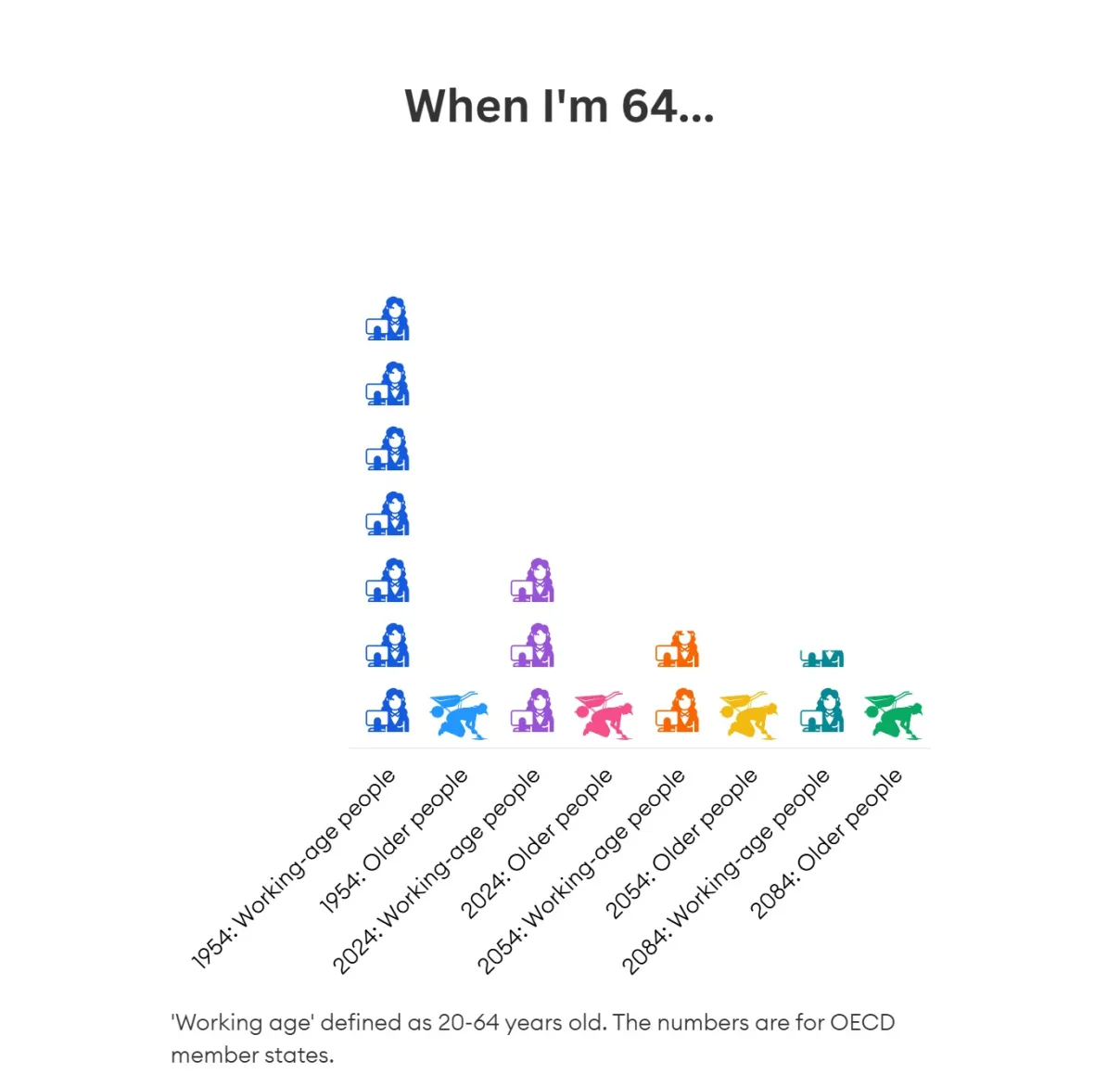
In wealthy nations, there are now only about three people of working age for every older person. By mid-century, this ratio will drop to under two. Back in the 1950s, it was seven. This has massive implications for economies – and for investors, sometimes in surprising ways.
A diminishing number of babies becomes an economic problem when it turns, a couple of decades later, into a diminishing number of workers. This economic problem is aggravated by the growth in life expectancy, one of the great triumphs of modern civilisation. That’s because governments have to tax a diminishing number of workers to fund the pensions of an increasing number of older people.
Take the UK. In the year the British group The Who released its classic song My Generation, the UK population’s generation – its production of children – was quite strong. The fertility rate – the number of children the average woman had over her lifetime – was close to three. By 2025, it was down just to one-and-a-half. The United Nations actually predicts a slight increase by 2050, although this view is hotly contested.
This smaller pool of workers will also have to fund government spending on healthcare. That’s risen fairly steadily since the early twentieth century, apart from the temporary dip after the Covid pandemic ended. Ageing populations will force spending even higher.
All these pressures are already contributing to governments' widening fiscal deficits – the gap between their spending and their income.
That’s inflationary. Higher inflation could mean higher interest rates. That would raise corporate borrowing costs and hit company profits. And fiscal deficits could eventually reduce the price of government bonds by forcing down governments’ credit ratings.
In many developing countries, the fertility rate has often dropped even more steeply than in developed nations. For example, the average Indian woman now has almost four fewer children than in 1965. Developing countries with falling fertility rates face their own challenge, often summed up as the race to get rich before they get old. It could be harder for them to join the stratum of wealthy nations if they start to age significantly before they achieve this. One reason is that younger adults are more likely to start companies than older people. Another is that they’re usually more iconoclastic about accepted business practices. Both tendencies foster innovation.
Older people also generally spend less. This is partly because their income tends to fall with retirement, and they typically become less active as they grow older. This lower spending could hit the profits of companies we invest in.
These demographic pressures have contributed significantly to the expansion of global spending on healthcare – now above $10tn a year. That’s 10% of the total global economy. Ageing populations, therefore, present strong investment opportunities in the pharmaceutical industry. That includes companies leading in cardiovascular diseases and cancer. Companies leading the way in medical technology, such as hip and knee implants, will also do well.
Sales will suffer for products for people with busy working lives, such as instant coffee. But other products will benefit from an ageing world – ground coffee, for example, for the discerning older person with time to spare. And older people are not only more likely to keep pets, as they seek companionship. They also commonly pamper their pets more. Taking the US consumer staples market as an example, spending on cat treats is higher in relative terms than any other category among older people.
So, ageing populations present some possibilities for investors. And they’re certainly good news for investors’ cats.

.jpeg?changed=1790692916)