



.jpeg?changed=1790692916)
Strong company profits offset the pressure of high inflation, helping balanced portfolios make small gains in an uncertain quarter.
Article last updated 8 September 2026.
|
Quick take
|
Pretty much as soon as investors started growing excited about the launch of ChatGPT, back in 2022, talk turned to the picks and shovels needed to lay the groundwork for future breakthroughs in generative artificial intelligence (Gen AI). By this, we mean AI that can generate content in response to prompts from a user.
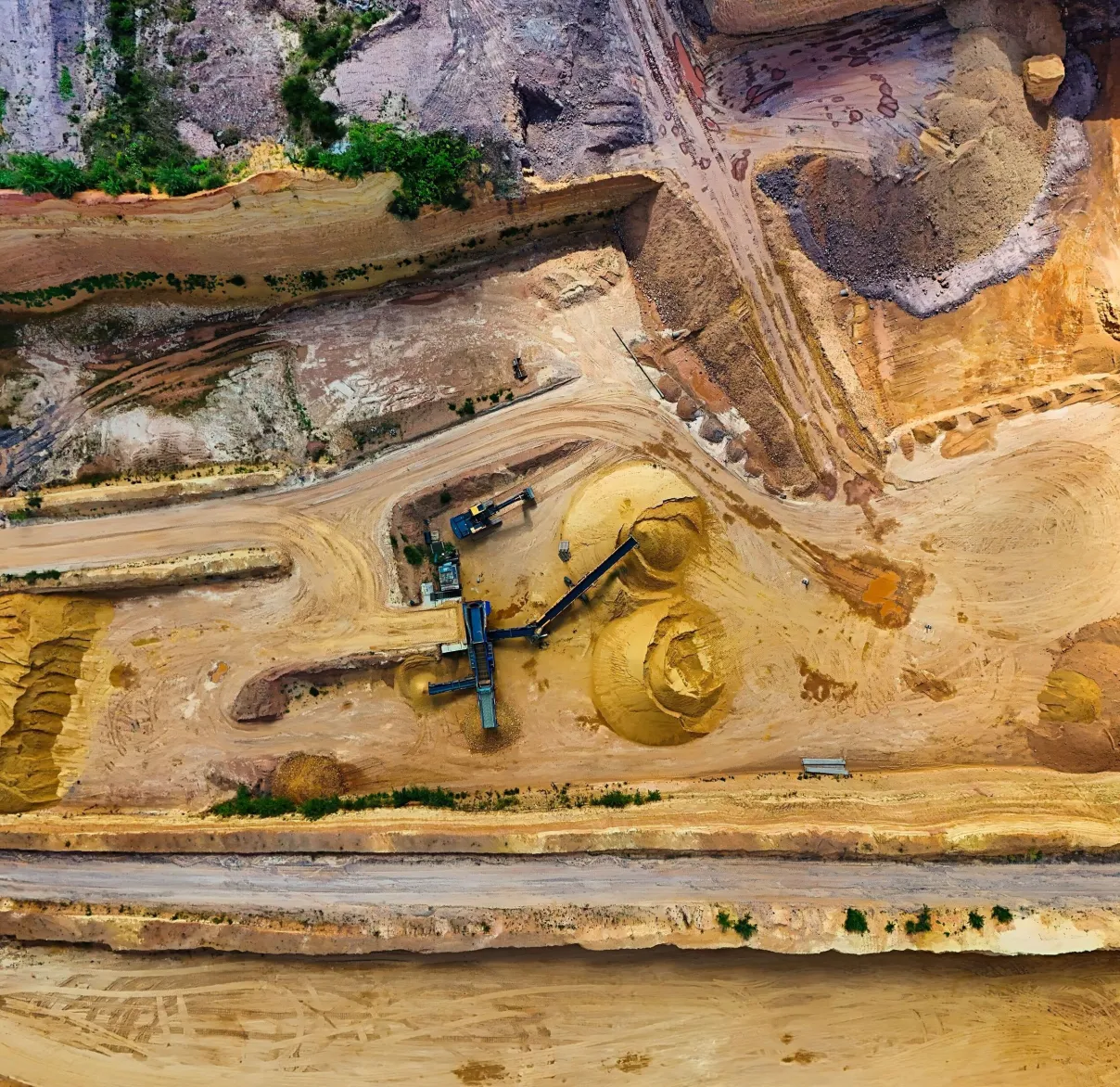
The term ‘picks and shovels’ stems from the California Gold Rush of the 1840s and 1850s. Most of the miners made little or nothing, while others built fortunes selling them equipment. Meanwhile, San Francisco, where the miners congregated and kitted up, grew from an obscure port with a population about the same as today’s Norfolk village of Little Snoring into a small city.
Since then, picks and shovels has served as shorthand for companies making money supporting an investment boom without taking the primary risk experienced by those on the front line.
As investors, we see promise in the picks-and-shovels companies. They’re usually long-established businesses with many years of profitability. Some have become extremely expensive. But others may trade at attractive valuations, particularly before the extent to which they benefit from the theme is widely appreciated. They often have other revenue streams not linked to the theme. This can help protect portfolios by mitigating their underperformance, should the AI theme fall out of favour.
A data centre coming somewhere near you
Projected growth in annual global capital spending on data centres
Frontier labs at the front
At the front of the line stand the frontier labs with their own large language models – the soup from which chatbots generate their answers. These include Anthropic with Claude, OpenAI with GPT, and Alphabet with Gemini. Companies such as DeepSeek and Meta, with Llama, also have open-weight models, allowing users to download and host the models themselves.
However, frontier labs are difficult to invest in. Sometimes they’re part of much larger entities – for example, investors in Alphabet are exposed to the fortunes of a number of other themes as well as Gemini. As with the picks-and-shovels companies, this can make them more resilient.
Some investors may prize purity, but Anthropic and OpenAI are unlisted, though both aim to go public soon. Most of these labs also require greater scale to reach meaningful profitability. Some investors may also baulk at the lack of a track record of profitability.
Also close to the front line are hyperscalers, named for the vast scale of their data centre infrastructure, which can encompass hundreds of thousands of servers – roughly the footprint of several football pitches. These include Amazon, Microsoft, Alphabet (once more), and a few others. They provide the gargantuan computing power needed for AI. But if investors focus just on the tiny number of hyperscalers, they may be concentrating their portfolios too much.
Picking picks and shovels
Picks-and-shovels plays tend to be less exposed to the success of one particular AI model. One area is semiconductors. Graphics processing units (GPUs), developed by Nvidia and Advanced Micro Devices, enable the parallel processing required for Gen AI: splitting a task into multiple components that can be handled simultaneously.
Another type is application-specific integrated circuits (ASICs), as created by Broadcom and Marvell. Increasingly important for ‘inference’ work – the stage where a trained model is run to produce an output, such as a prediction, answer, or classification – they support the ongoing use of trained models.
The chips themselves are produced by semiconductor foundries – chiefly Taiwan Semiconductor, but also Samsung, Intel, and others. The need to expand production capacity has, in turn, raised demand for the wafer fabrication equipment required to make them.
Beneficiaries include ASML, which produces lithography equipment, as well as Lam Research, Tokyo Electron, and Applied Materials, which make deposition and etch equipment. Deposition applies ultra-thin layers of material to chips, while etching removes selected material according to the lithographic pattern.
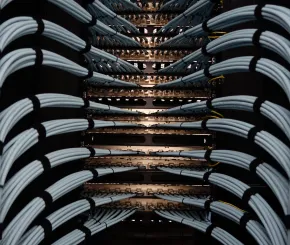
However, the data centres that supply AI services require far more than GPU and ASIC chips. A data centre contains thousands of racks, filled with servers. As well as GPUs, these house central processing units (CPUs) and memory chips.
CPUs, produced by companies such as Intel and Advanced Micro Devices, schedule jobs, provide storage, and orchestrate AI agents. Memory has emerged as a vital component for Gen AI. The ability to store, access, and move large volumes of data is central to the performance, speed, and cost of AI models.
Memory has become a bottleneck to AI infrastructure growth – there’s a shortage of memory chips. We identify three reasons. First, there are only three main global memory producers: Micron, SK Hynix, and Samsung. Second, companies are cautious about adding extra capacity, given the memory market’s historical cyclicality. Lastly, building new capacity takes significant time and many billions of dollars.
Several of the major chip companies are in emerging markets. We wrote about the increasingly tech-heavy make-up of emerging markets earlier this year.
AI is only as fast as its networking. Copper connects chips and moves data within servers; optical interconnects link servers and racks; the emerging technology of co-packaged optics helps thousands of GPUs communicate fast enough to function like a unified computing system. Companies such as Amphenol, Lumentum, and Coherent offer solutions.
Powering the boom
Another obstacle is the enormous amount of power that data centres require. Data centre operators are increasingly resorting to on-site generation. Renewable energy can supply some of this power. Data centres also use gas turbines, fuel cells, or even, in the future, small modular nuclear reactors. This creates opportunities for manufacturers of power-generation equipment.
Data centres also emit huge amounts of heat. Standard fans and ventilators can’t dissipate this fast enough. Liquid cooling systems from companies such as Vertiv and Schneider can solve this problem.
Providers of construction and maintenance services for data centres also benefit from the unprecedented levels of capital investment in this sector. Companies supplying building materials should benefit too. That includes suppliers of steel, concrete, and raw materials such as copper, provided by companies such as Anglo American and Freeport McMoRan.
A better pick or shovel?
As with any exciting new investment theme, alongside the opportunities come risks. One is that a new pick or shovel proves better than an old one. For example, co-packaged optics could displace many copper solutions within networking.
Another risk is a pause in spending. This might emerge from scepticism about whether the hyperscalers can demonstrate attractive returns on their investment in data centres.
Naturally, we’re monitoring the AI market carefully. But at present, we think the risks are outweighed by the opportunities from an unprecedented capital investment boom. This means rapidly growing revenues for hyperscalers and frontier labs – and picks-and-shovels opportunities. We believe in diversification, which can help protect your portfolios and your wealth.
As we survey today’s AI gold rush, we might see a lesson from history. The original rush eventually came to an end. But humanity’s appetite for finding and buying gold did not – a new gold rush had already begun in Australia, enabled by more picks and shovels. We believe we’re still in the early innings of the development of GenAI.